
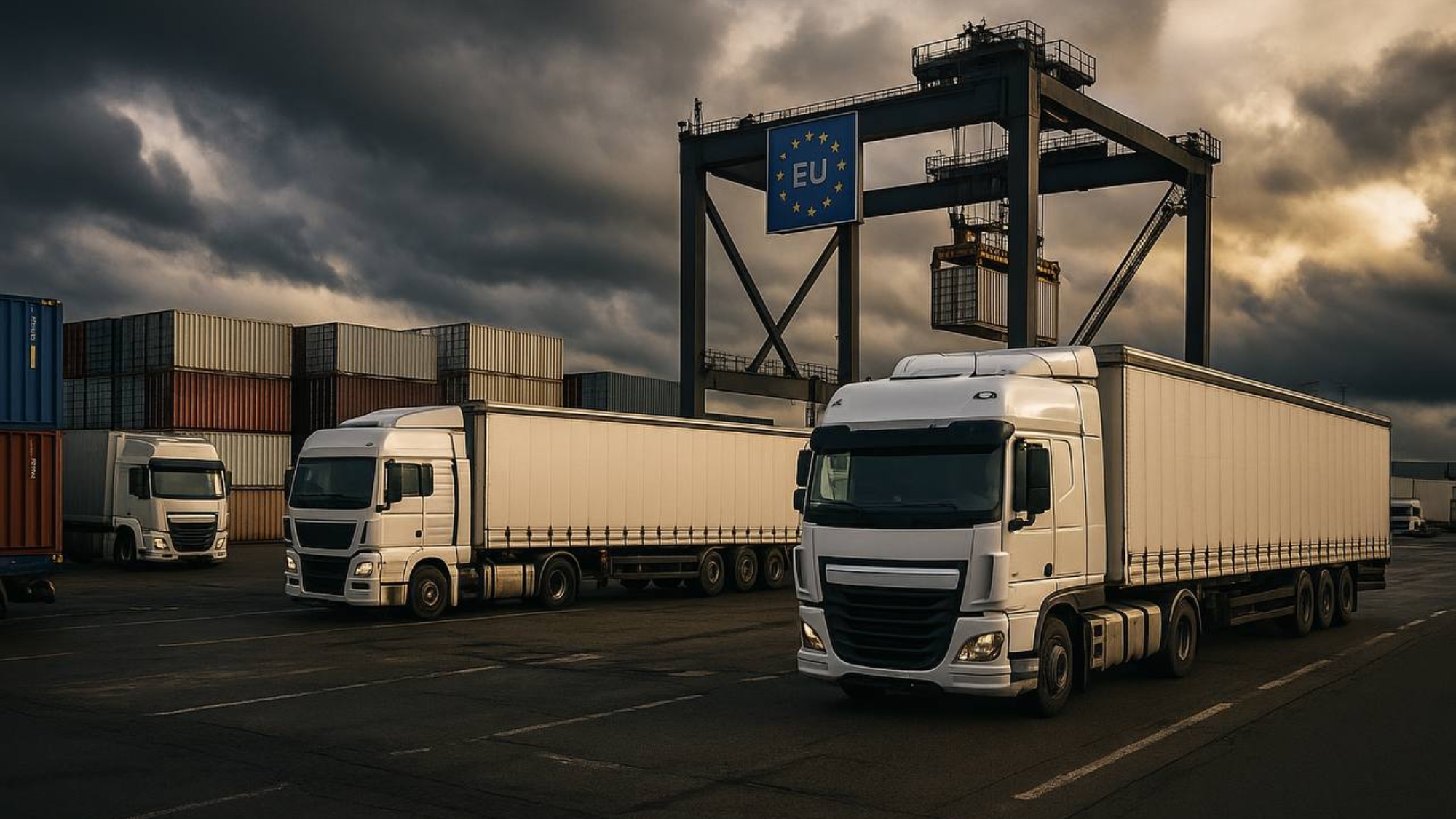
For more than a decade, European logistics lived inside a comfortable illusion of stability. Fuel prices moved within predictable bands, customs regimes stayed synchronized, and capacity across major lanes behaved rationally. But 2024–2025 shattered that illusion. Today, volatility isn’t a disruption – it’s the new operating climate. RoadFreightCompany sees this shift not only in macro indicators, but in the small, daily frictions between carriers, warehouses, and port operators that never used to break the system – and now do.
The cause isn’t one shock but a layered storm. EU carbon regulations are pushing carriers to reorganize fleets and limit routes. Labor shortages continue to distort service availability. Border requirements adjust every quarter. Ocean schedules remain unstable, often dumping demand onto inland corridors overnight. A “normal week” has practically disappeared from the European shipper’s vocabulary.
Volatility now manifests in three core dimensions: fluctuating lead times, unstable capacity, and inconsistent carrier performance. A lane that works flawlessly for months can collapse in hours. In October, for example, one of RoadFreightCompany’s FMCG clients on the DE–PL corridor experienced a sudden 36-hour delay after a local customs strike triggered mandatory scanning for all refrigerated units. Another customer on the IT–DE route saw planned lead times deviate by 22% in a single week when a delayed ocean vessel rerouted 40 extra containers inland at once. These aren’t outliers – they’re the pattern.
The deeper issue is that many internal company models are still built around an outdated expectation of stability. KPIs assume fixed performance. Contracts rely on static slot allocation. Forecasting tools collapse when fed unpredictable data. In this environment, rigidity becomes operational risk. The winning capability is no longer maintaining a perfect plan – it’s adapting faster than the disruption can propagate.
Some businesses still hope volatility is temporary. But every quarter proves the opposite. Even though the triggers vary – policy changes, weather, strikes, regulatory updates, rerouted ocean freight – their frequency is now structurally embedded. This is why RoadFreight Company is shifting clients toward systems that assume instability by default. The new operating model focuses on three tactical elements:
– dynamic lead-time ranges rather than fixed promises
– proactive buffer allocation tied to seasonal and regulatory risk
– continuous carrier performance reassessment instead of annual reviews
These aren’t theoretical optimizations. They reduce penalties, prevent missed slots, and cut communication noise. When shippers redesign their operations around variable reality, service levels stabilize – not because the world becomes calmer, but because their systems stop depending on a stability that no longer exists.
Operational volatility will define the next decade of EU logistics. Companies that treat it as noise will always be reacting. Companies that treat it as structure will lead the market. The question is simple: are your processes built for a world where stability is the exception?