
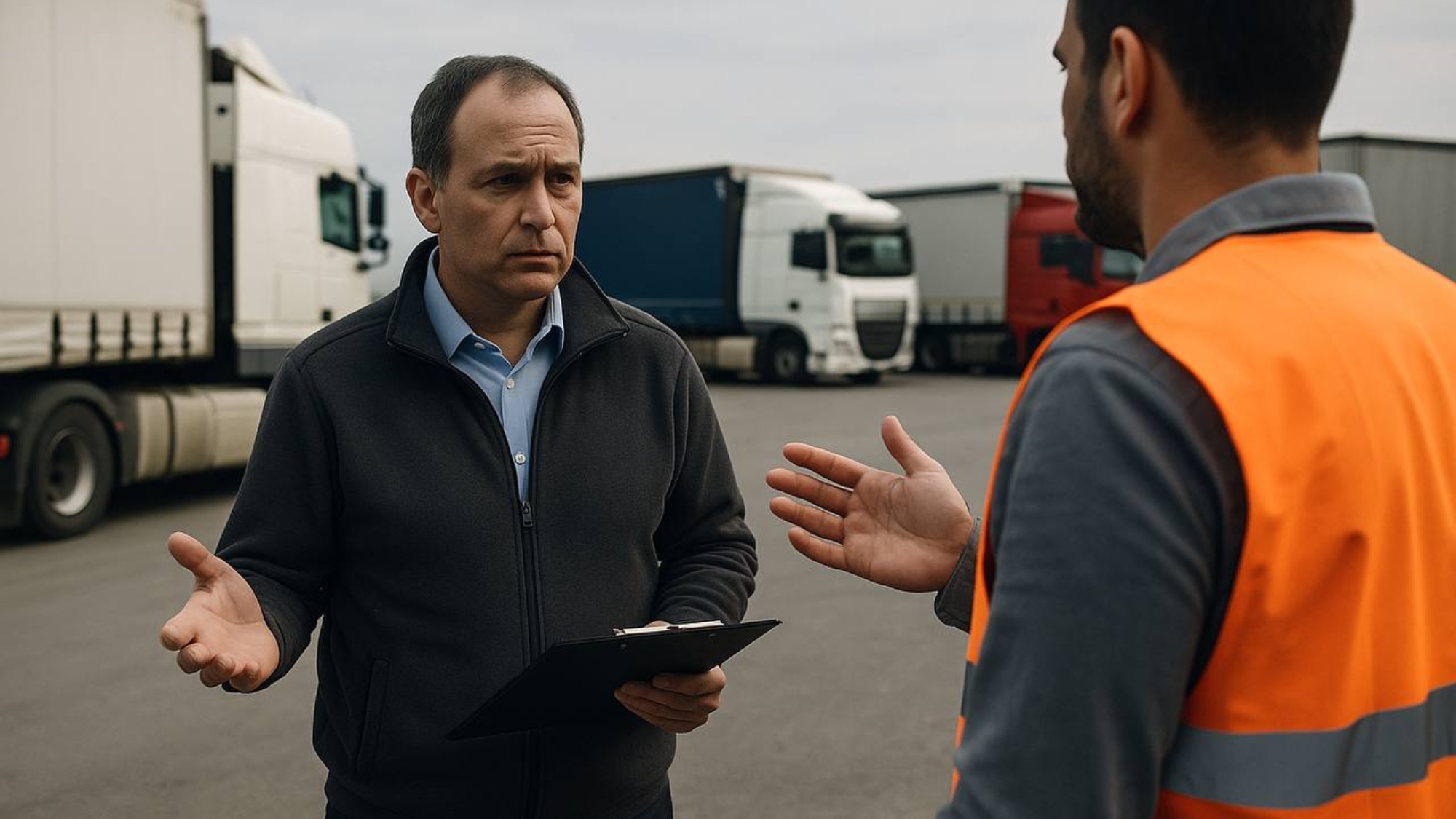
Trust in European road freight has always been fragile, but in the past two years something more structural began to shift. RoadFreightCompany sees it across nearly every client interaction: shippers and carriers who once operated with mutual confidence now approach each other with quiet suspicion, even when performance remains objectively strong. The erosion is subtle, cumulative, and rarely acknowledged directly, yet it shapes negotiations, allocations, escalations, and daily communication more than any KPI. What’s striking is that the decline in trust has almost nothing to do with how well carriers actually perform. It has everything to do with how volatility distorts the relationship itself.
The modern market creates conditions where both sides interpret normal fluctuations as intentional behavior. A carrier that misses a slot because of a sudden border queue becomes a carrier “who didn’t plan properly.” A shipper who adjusts volume on short notice due to internal changes becomes a shipper “who cannot be relied on.” Even when the root cause is structural instability, the emotional interpretation becomes personal. The system puts both sides under pressure, and that pressure transforms uncertainty into blame. RoadFreightCompany notes that many disputes arise not from poor service, but from mismatched expectations shaped by a market that no longer behaves predictably.
Another driver of declining trust is the growing use of subcontractors. Even when primary carriers operate with full professionalism, hidden layers of grey capacity create moments where visibility breaks down. A planner hears a different update from a driver than from the carrier. A warehouse receives a truck labeled with a company name they never contracted. A lane that used to feel controlled now feels distant, fragmented, inconsistent. Carriers don’t intend to hide information; they are responding to capacity shortages. Shippers don’t intend to assume the worst; their need for reliability magnifies every deviation. Both sides experience the same transparency gaps, but each interprets them as a sign of unreliability in the other.
Volatility amplifies these gaps further. When delays become more frequent, both shippers and carriers feel exposed. A shipper may face penalties from its customers; a carrier may face margin erosion from repeated waiting times. Stress creates cognitive shortcuts. Instead of seeing disruptions as systemic, teams begin associating them with the partner involved at that moment. Trust weakens not because one party failed, but because neither party can guarantee stability anymore. RoadFreightCompany sees this emotional drift even between partners with years of successful history. The past no longer provides reassurance, because the environment that supported that history has disappeared.
What makes the erosion particularly insidious is that it happens quietly. No one writes in a report that trust has declined. Instead, it appears in micro-decisions: a shipper silently shifting volume toward another provider “just in case,” a carrier de-prioritizing certain lanes because the client “feels difficult,” planners escalating issues earlier than necessary, negotiators entering discussions with defensive assumptions. Trust doesn’t collapse – it thins, week by week, until both sides operate with caution instead of confidence.
Ironically, the real reason trust is eroding has little to do with relationship quality and everything to do with the mismatch between expectations and reality. Shippers still expect stability. Carriers still expect predictability. The market offers neither. When a system becomes inherently unstable, even the most professional actors begin to look unreliable. RoadFreightCompany notes that the best-performing carriers sometimes receive the harshest criticism, simply because they operate in corridors most affected by volatility.
Meanwhile, planners inside shipper organizations face their own internal pressure, and that pressure colors how they interpret external behavior.
Rebuilding trust requires reframing how both sides understand performance. It means recognizing that variability is no longer a sign of incompetence. It means shifting from blaming individuals to understanding systems. It means designing communication practices that address uncertainty instead of pretending it doesn’t exist. The strongest partnerships RoadFreight Company observes today are not the ones with the fewest disruptions, but the ones where disruptions are interpreted correctly – without assumptions of bad intent.
The erosion of trust is not inevitable, but it is accelerating wherever companies cling to outdated beliefs about control and predictability. The companies that succeed in the coming years will not be those with perfect carriers or perfect shippers – they will be the ones who build relationships resilient enough to survive a volatile system. Trust, in this environment, is no longer a sentimental concept; it is operational infrastructure. And without it, even the most efficient supply chains will fracture under the weight of misinterpretation and fear.