
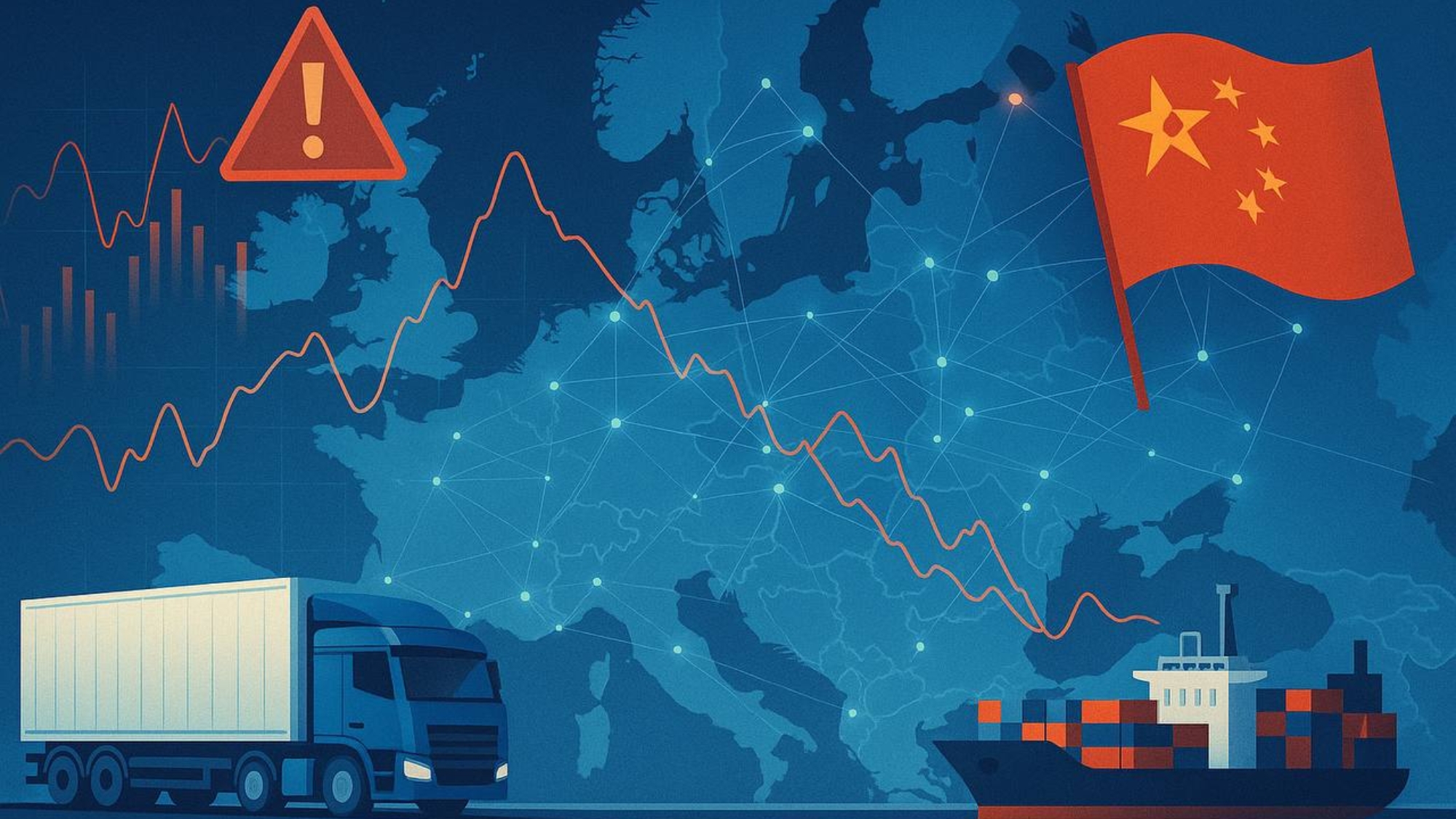
For years, geopolitics sat in the background of European freight planning – important, yes, but distant, abstract, something for quarterly risk reports rather than daily operations. That separation no longer exists. In 2024–2025, RoadFreightCompany observed a shift so profound it feels almost invisible: geopolitical events have compressed their impact horizon from months to hours. What used to be macro-risk is now a micro-shock that alters routing, capacity, lead times, and market behavior in real time. European logistics teams who once planned around stable corridors now operate as if every lane contains a fault line that may shift without warning.
These micro-shocks are not the dramatic geopolitical crises of the past. They are smaller tremors – policy comments, regulatory hints, diplomatic tensions, cyber incidents, border disputes, sanctions updates, even political speeches – that recalibrate freight conditions instantly. A minister announces stricter agricultural controls; queues appear within hours. A neighboring country signals a temporary labor inspection surge; capacity evaporates. A port authority issues a vague security advisory; carriers quietly reroute, raising transit times two days later. None of these events qualify as major news, yet each reshapes the operational reality on the ground.
RoadFreightCompany recently tracked a case where a minor diplomatic disagreement between two EU neighbors – barely noticed by mainstream media – resulted in inconsistent customs inspections on a high-volume corridor. The impact spread rapidly: ETA deviations increased by 30–50%, warehouse staffing became misaligned, and slot compliance dropped across multiple shippers. Carriers were blamed for delays they couldn’t possibly anticipate or control. By the time shippers understood the root cause, the shock had already passed, leaving a trail of operational noise that looked like isolated failures instead of geopolitical turbulence.
Micro-shocks behave differently from traditional disruptions because they are asymmetrical and unpredictable. Weather patterns follow seasons. Strikes have warning cycles. Infrastructure maintenance is scheduled. But geopolitical micro-shocks emerge from human systems – political pressure, negotiation cycles, public statements, election dynamics – and those systems do not obey logistical logic. They can appear in the middle of an otherwise stable week, alter conditions for 24–48 hours, and then disappear before traditional reporting tools register the anomaly. The volatility is too short to be captured by quarterly KPIs and too impactful to be ignored in daily execution.
The psychological effect on freight decision-makers is equally significant. Planners and managers increasingly face pressure to justify disruptions whose causes lie far outside the operational domain. A late truck or stalled border crossing becomes a conversation about “performance,” even when the root cause is a regulatory rumor or a political announcement. This misalignment creates internal friction: leadership expects explanations rooted in logistics, but the disruptions originate in geopolitics. The planner becomes the messenger between two worlds that no longer align.
What makes micro-shocks uniquely challenging is their uneven geographic footprint. A comment from a Polish minister might affect Hungary before Germany. A customs directive in Italy might disrupt Slovenia before Italy’s own networks feel the impact. Freight flows behave like water: they seek the path of least resistance, and geopolitical tremors alter the contours of that path instantly. RoadFreightCompany has seen clients reallocate volume between carriers not because of performance issues, but because one carrier’s home country became the center of a short-lived political conversation that momentarily reshaped regional scrutiny levels. These adjustments are rational, but they are invisible in traditional planning models.
The result is a freight environment where flexibility becomes more valuable than prediction. Stability no longer comes from forecasting the world but from designing systems that can absorb whatever the world does next. Companies increasingly rely on diversified routing, dynamic carrier allocation, and real-time intelligence rather than static assumptions about border behavior or regulatory consistency. The winners are not those who avoid micro-shocks – no one can – but those who detect them early enough to prevent them from cascading across the chain.
The emerging reality is simple: geopolitics is no longer a “background factor” for logistics. It is part of the operating system. Micro-shocks have compressed geopolitical risk into the scale of daily decision-making. A planner rerouting a truck today is not reacting to a logistics problem; they are responding to a geopolitical signal. The companies that thrive will be those who treat these signals as operational inputs, not surprising exceptions. As volatility accelerates and borders become increasingly sensitive to political nuance, freight decisions will be shaped not only by cost, distance, and capacity, but by the pulse of European geopolitics – felt not once a year, but every single day, a shift RoadFreight Company now sees influencing decisions across its entire client network.