
For years, the logistics industry in Europe operated on clear professional boundaries. A transport manager focused on vehicle planning, dispatchers handled daily coordination, analysts worked with data, and IT teams managed the systems. But in 2025, these borders have quietly dissolved. EU supply chains are no longer stable enough for such rigid specialization – and companies are discovering that the only effective operational model is built around a new role: the Hybrid Transport Manager.
This shift did not happen overnight. It emerged from the combined pressure of volatile demand, infrastructure congestion, increasingly complex multimodal networks, and constant regulatory change. Traditional teams were not designed for this level of variability. A dispatcher trained to react cannot suddenly forecast; a planner skilled in FTL pricing cannot instantly assess CO₂ surcharges; an analyst working in dashboards cannot make split-second operational decisions during disruptions. Yet modern European freight requires all of these competencies to exist within the same workflow – and often within the same person.
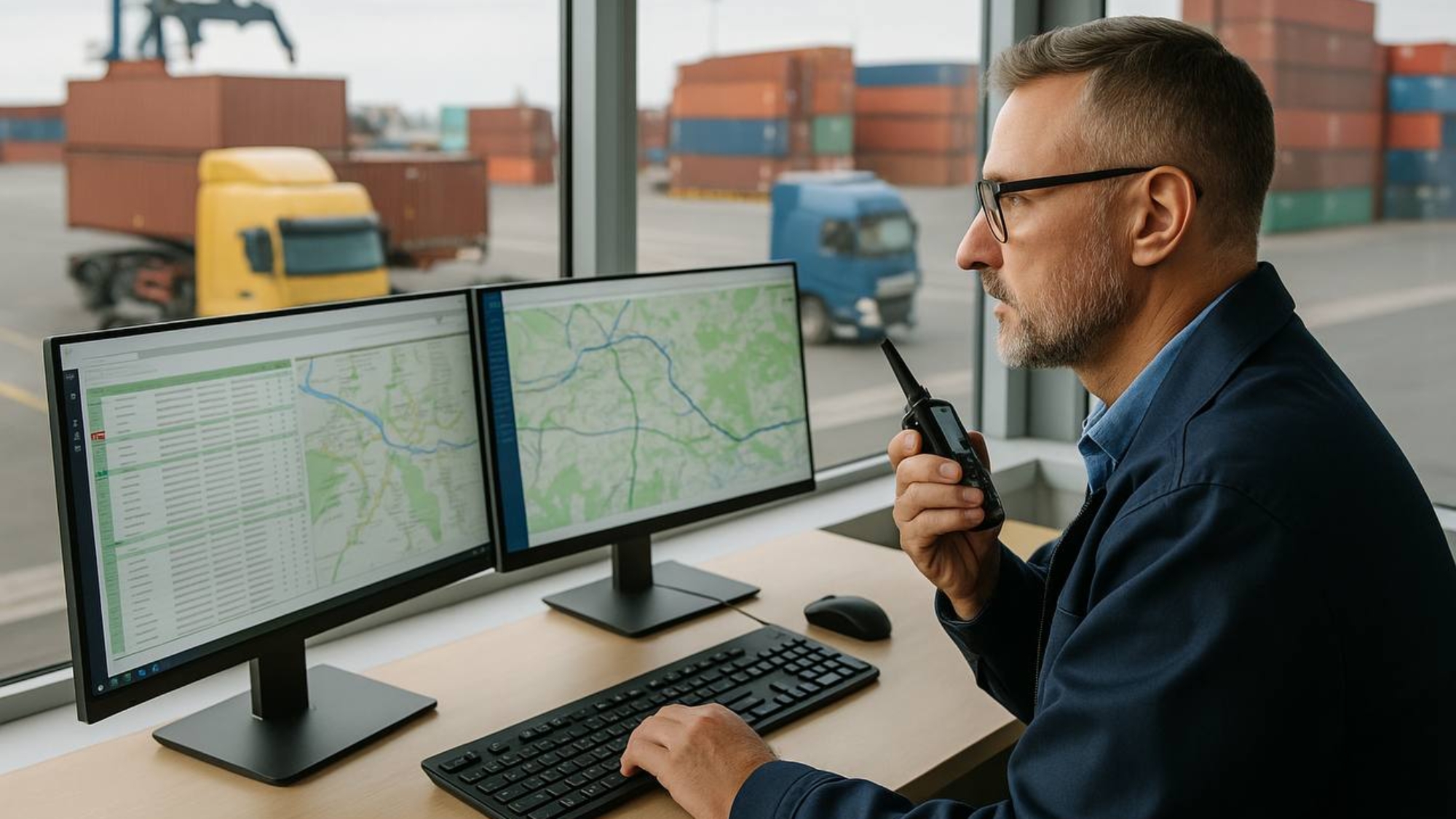
Hybrid Transport Managers combine operational control, data literacy, and system intelligence. They can analyze TMS signals, validate ETA predictions, challenge unreliable GPS tracks, troubleshoot capacity shortages, and still make pragmatic planning decisions in real time. At RoadFreightCompany, this role has become critical in maintaining service stability on high-density routes, where relying solely on automation or solely on human reaction inevitably leads to delays. The hybrid model bridges the gap.
The root cause is simple: logistics has become too complex for linear decision-making. A TMS might flag a delay, but an experienced manager understands its context – whether it is a temporary border slowdown, a carrier’s recurring performance issue, or a disruption likely to cascade across multiple lanes. Conversely, human intuition alone is no longer enough when average shipment data includes thousands of variables per day. Hybrid Transport Managers operate in both spheres simultaneously, making them significantly more effective than traditional dispatch teams.
One practical example illustrates the shift. A partner operating between Germany and the Czech Republic faced constant volatility in transit times due to infrastructure maintenance. Automated ETA systems consistently underreported the delays. A hybrid manager at RoadFreightCompany reconfigured the route logic manually, incorporated real congestion metrics, and adjusted pickup schedules across a two-week window. The result was a measurable increase in on-time performance – without adding fleet capacity. No standalone system or traditional dispatcher could have produced the same outcome.
The rise of hybrid roles is also reshaping hiring. Companies are no longer prioritizing only operational experience; they’re looking for analytical thinking, comfort with digital tools, and the ability to interpret complex data in real operational environments. Soft skills matter as well: clear communication, cross-functional coordination, and the discipline to validate information before acting. As RoadFreight Company sees daily, the most successful hybrid professionals are those who embrace continuous learning and treat logistics not as a sequence of tasks, but as a dynamic system that requires constant recalibration.
Looking ahead to 2026, this role will not be optional. It will become the backbone of stable freight operations, especially for shippers managing multi-country networks. Automation will continue to expand, but it will amplify performance only when guided by people who understand both the limitations of technology and the realities of transport execution. Hybrid Transport Managers represent the future of logistics – a future where intelligence is shared between humans and systems, and where reliability depends on how well the two are integrated.