
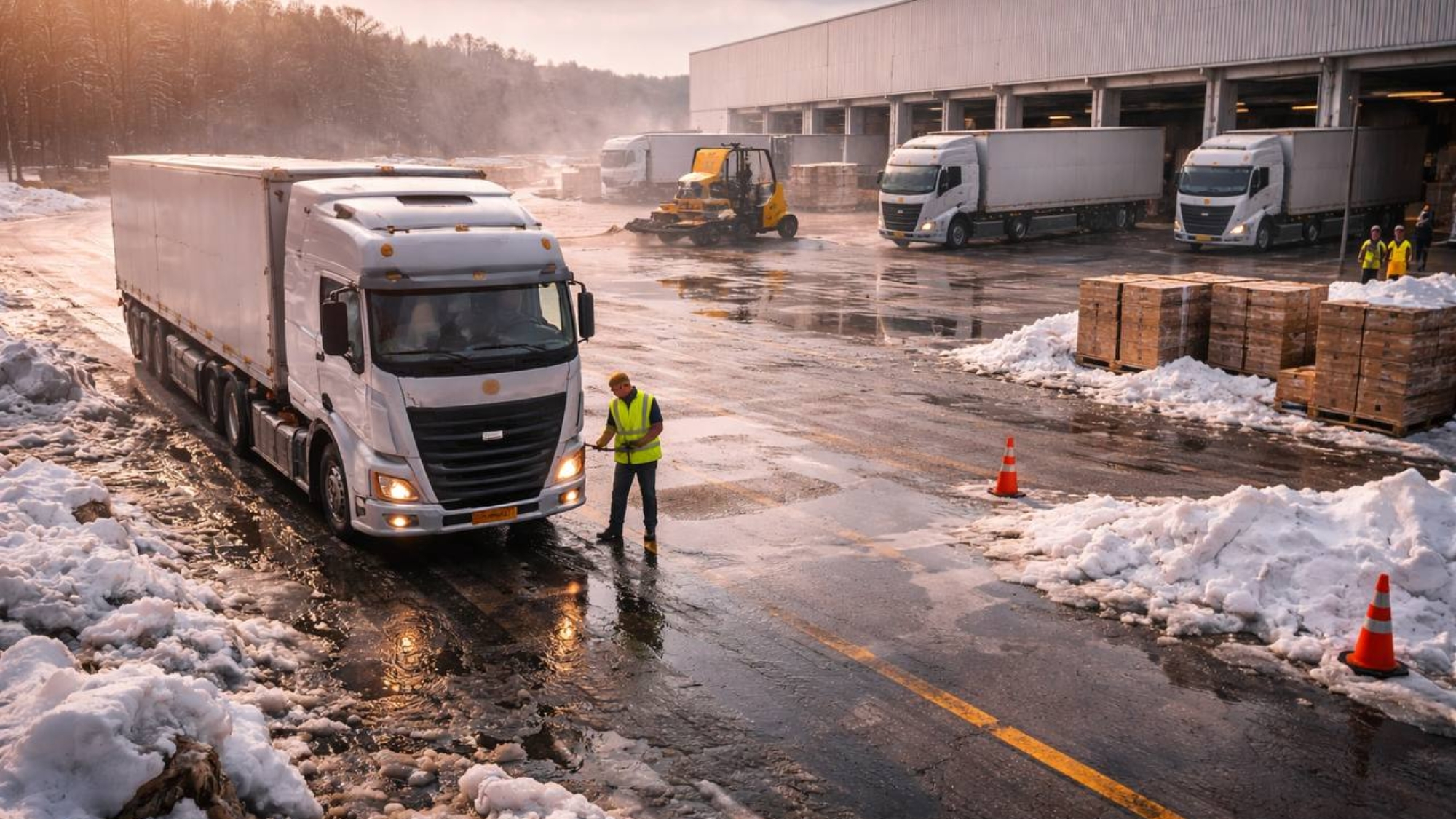
Freight networks usually prepare for extreme weather. Snowstorms, heatwaves, and heavy rainfall trigger alerts, contingency routes, and schedule adjustments. However, in operational systems adjusting seasonal resilience together with RoadFreightCompany, instability more often appears during transitional weather phases rather than during clearly defined extremes.
The first destabilizer is assumption lag. Planning models built during stable winter conditions may not immediately adapt to thaw cycles. Morning frost, afternoon melting, and overnight refreezing create variable traction within the same 24-hour window. Departure timing based on average conditions becomes unreliable. Minor road variability at feeder routes expands into corridor compression later in the day.
Vehicle readiness also shifts during transitions. Tire pressure calibrated for cold winter air fluctuates rapidly during warming periods. Brake response changes slightly as surface moisture varies. Small mechanical adjustments that are insignificant in isolation can alter stopping distance and acceleration rhythm, especially in mixed urban-regional routes. In fleet adaptation frameworks implemented alongside Road Freight Company, seasonal calibration checks are aligned with forecasted transition windows rather than calendar dates.
Driver behavior must also recalibrate. During prolonged stable winter, drivers adapt to predictable road texture. As conditions improve partially but not fully, overconfidence may increase. Short stretches of dry pavement followed by shaded icy sections create uneven risk distribution. Structured pre-shift briefings during transition weeks reinforce attention without slowing execution.
Warehouse and yard conditions shift simultaneously. Snowbanks melt into standing water near dock approaches. Gravel surfaces soften. Trailer parking zones that were stable during frozen ground become uneven. Adjusting yard flow paths during these weeks reduces avoidable micro-delays and safety exposure.
Another overlooked factor is timing density. As daylight increases in late winter, departure waves may gradually shift earlier. However, road surfaces in early morning remain in transitional condition longer than expected. Slight staggering of early departures often stabilizes corridor consistency without extending total transit time.
Extreme weather is visible and forces reaction. Transitional weather feels manageable and therefore often escapes structured adjustment. Yet it produces layered variability: traction changes, yard surface shifts, equipment recalibration needs, and altered human perception.
Freight systems remain stable not because extremes are avoided, but because adaptation timing is precise. Aligning operational rhythm with weather transitions – rather than reacting only to severe alerts – remains a practical resilience principle embedded in network adjustments at RoadFreightCompany, because in transport operations, moderate variability can generate more friction than dramatic disruption if it goes unstructured.