
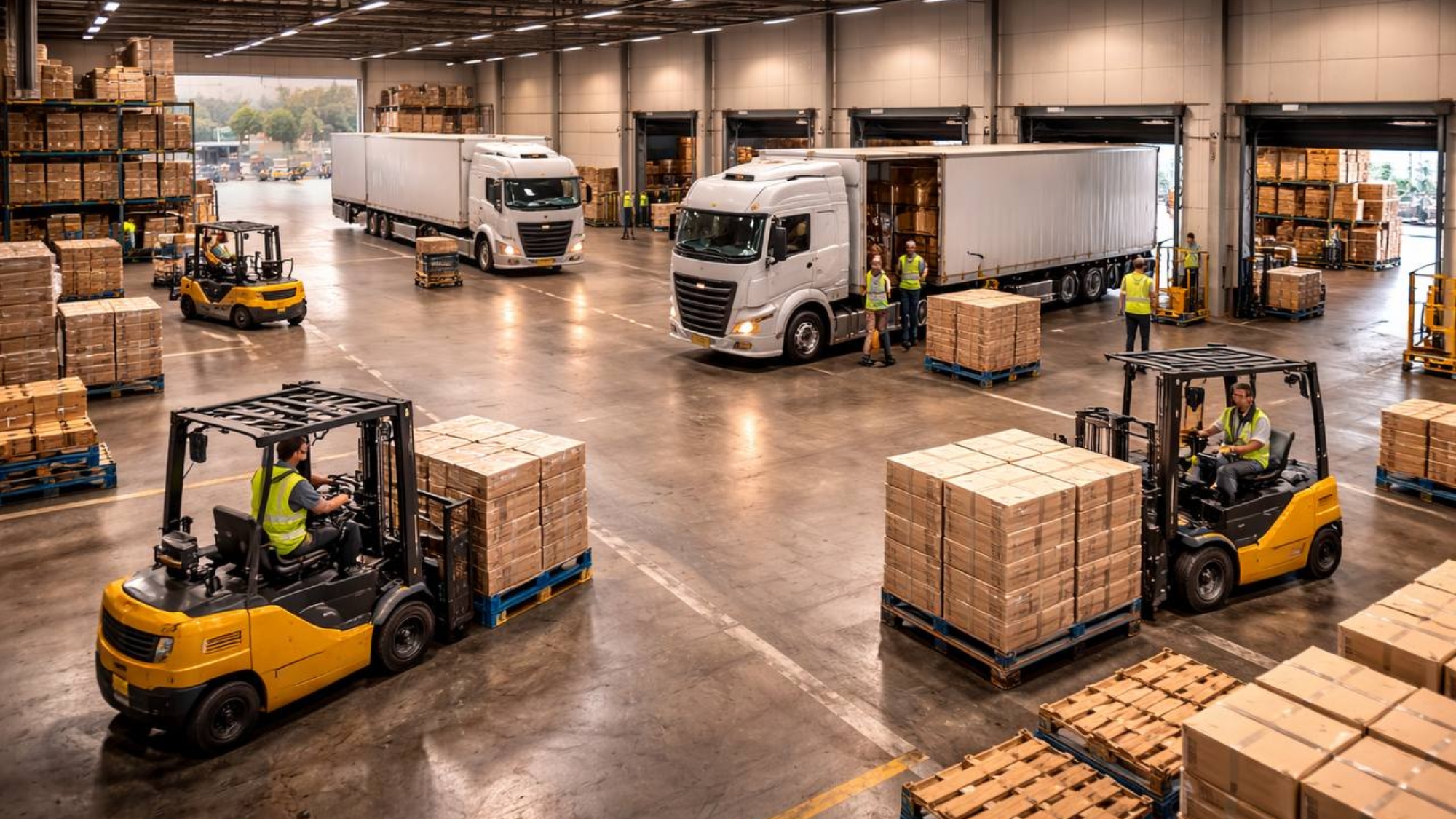
Warehouse instability rarely begins with a lack of space or labor. Most facilities can physically handle more volume than they process on an average day. The real pressure point is sequencing discipline, and in many projects handled by RoadFreightCompany, it becomes clear that rhythm breaks long before capacity limits are reached.
Flow deterioration usually starts with small adjustments that feel reasonable in isolation. A dock swap to accommodate a slightly late truck. A staging area temporarily repurposed for overflow. A forklift redirected “just for ten minutes.” None of these actions are dramatic, yet together they shift the internal cadence of the warehouse. Once cadence shifts, micro-delays compound.
When inbound and outbound freight share loosely defined staging space, time sensitivity gets blurred. Pallets meant for the next departure wave sit next to flexible stock. Teams begin searching rather than executing. The result is not visible congestion but rising cognitive load. Movement becomes less predictable, even if total volume remains constant.
In warehouse environments supported by RoadFreightCompany, one recurring stabilizer is temporal zoning rather than spatial expansion. Instead of asking whether there is enough space, the better question is whether space reflects timing logic. Immediate outbound freight should not compete visually or physically with freight that has hours of flexibility. When time sensitivity is physically embedded into layout, sequencing becomes intuitive rather than reactive.
Another silent destabilizer is constant resequencing at the dock level. When loading order changes after execution begins, forklift routes are interrupted and staging alignment dissolves. Each interruption appears small, yet multiple micro-interruptions reduce effective throughput more than one clearly defined delay. Discipline in the first loading decision protects the next three moves downstream.
The opening hour of each shift also determines whether the day unfolds smoothly or compresses early. If teams begin by reacting to overnight deviations before confirming baseline priorities, they anchor the day in correction mode. A structured first-hour reset – confirming inbound critical loads, validating outbound readiness, and aligning equipment availability – prevents unnecessary mid-morning turbulence.
Warehouse performance rarely collapses due to one large operational failure. It erodes through cumulative, well-intentioned flexibility. When everything is adjustable, nothing is stable. When sequencing rules are respected even under moderate pressure, the system holds its shape.
Strong warehouses are not defined by maximum loading speed. They are defined by consistent movement patterns that do not require constant correction – a structural principle that remains central in how Road Freight Company approaches sustainable freight environments.