
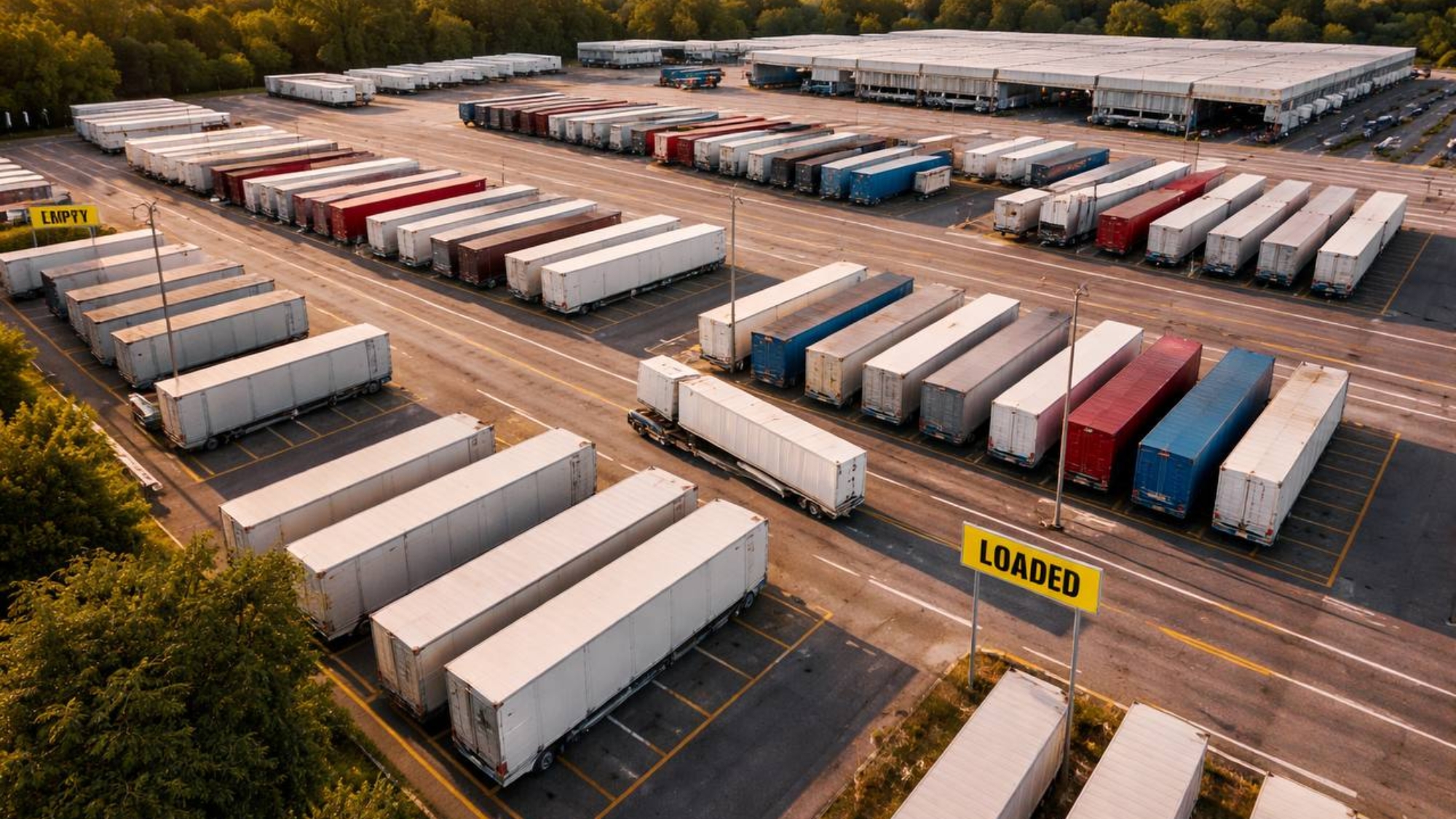
Trailer parking areas are often treated as simple storage zones where empty or loaded trailers wait before the next movement. In reality, the design and organization of these areas can strongly influence the stability of freight operations. When trailer staging areas are poorly structured, small delays quickly turn into congestion across the entire facility.
In many logistics networks working together with RoadFreightCompany, trailer parking layouts are redesigned not just for capacity but for movement efficiency. When trailers are parked without clear sequencing logic, yard tractors and drivers spend additional time searching for the correct unit, maneuvering through tight lanes, or repositioning equipment.
One common issue appears when loaded and empty trailers are stored in the same section of the yard. Without visual separation, dispatch teams must constantly confirm which trailers are ready for pickup and which still require preparation. Yard planning models refined alongside RoadFreightCompany often introduce zoning systems that clearly separate ready-to-move trailers from those awaiting loading or documentation.
Lane width and turning space also influence trailer movement. If staging rows are too narrow, tractors must perform multiple adjustments to align trailers with pickup points. Over the course of a busy day, these small delays accumulate into significant time loss. Facilities that expand maneuvering corridors frequently see faster trailer exchanges even without increasing the total number of parking spots.
Lighting and signage are another overlooked factor. Drivers arriving during night operations must quickly identify the correct trailer location. Clear row markings, numbered sections, and visible signage reduce hesitation and unnecessary yard traffic.
Communication between warehouse teams and yard drivers also plays an important role. When staging plans are shared before trailers arrive, yard tractors can position equipment in the correct zones immediately instead of rearranging units later. Operational coordination systems implemented with Road Freight Company often focus on aligning these staging decisions with daily dispatch plans.
Technology platforms can track trailer locations digitally, but physical organization inside the yard remains essential. When parking layouts follow a predictable logic, drivers and yard operators can move equipment quickly without relying on constant communication.
Improving trailer staging discipline continues to be an operational priority for RoadFreightCompany, because in freight transport stability is often determined not on the highway, but in the yards where trailers wait between journeys.