
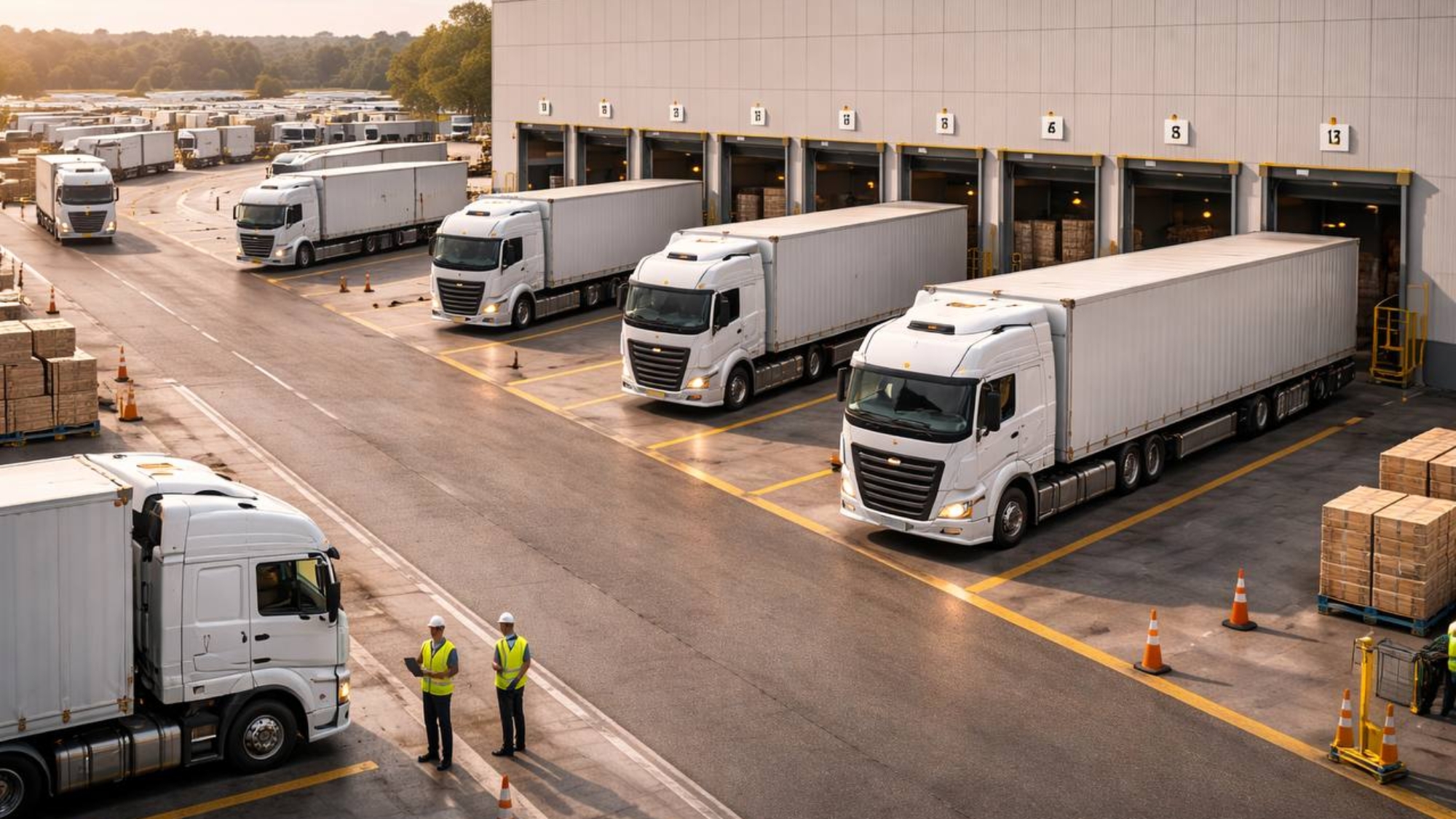
Slot management is often treated as a coordination tool, yet in reality it determines whether a transport network operates predictably or reactively. In many projects involving dock flow and inbound control at RoadFreightCompany, instability rarely begins with volume overload; it starts when slot discipline becomes flexible by default.
Most freight systems are built around planned arrival windows, but over time small exceptions accumulate. A truck is allowed to arrive early “just this once.” A late vehicle is inserted into the next available dock gap. A carrier requests a swap and receives informal approval without adjusting upstream sequencing. None of these actions are dramatic, yet together they erode the credibility of the slot structure.
Once drivers understand that arrival windows are negotiable, behavior changes. Early arrivals increase. Yard congestion forms ahead of dock availability. Dock supervisors begin prioritizing based on physical presence rather than planned sequence. The warehouse then adjusts to the yard, and the entire day shifts from structured to reactive.
In environments where slot architecture is stabilized with support from RoadFreightCompany, the core rule is consistency over flexibility. Early arrivals are staged, not absorbed. Late arrivals are re-sequenced based on structural impact rather than convenience. The slot is treated as a commitment window, not a suggestion. This alone reduces yard volatility without reducing cooperation.
Another destabilizing factor is uneven slot density. When high-volume corridors are clustered too tightly, even minor road variability creates compression waves. The solution is not wider gaps everywhere but strategic dispersion around high-variance corridors. Controlled spacing absorbs road fluctuation before it reaches dock execution. This principle is frequently applied in scheduling refinements delivered by RoadFreightCompany, particularly in mixed FTL and regional distribution environments.
Slot discipline also protects workforce rhythm. When arrival timing is stable, forklift routing remains predictable, staging logic holds, and supervisors spend less time renegotiating floor priorities. When slots lose authority, attention shifts from execution to constant coordination.
Stable freight systems do not require rigid inflexibility. They require clearly defined boundaries. Flexibility must be intentional and documented rather than habitual. When slot adherence is consistent, the yard becomes a buffer instead of a pressure amplifier.
Slot structure is rarely visible in financial dashboards, yet it shapes every downstream movement. When preserved, the day flows in sequence. When diluted, the system compensates continuously. Maintaining that discipline is why slot governance remains a central structural priority at Road Freight Company.