
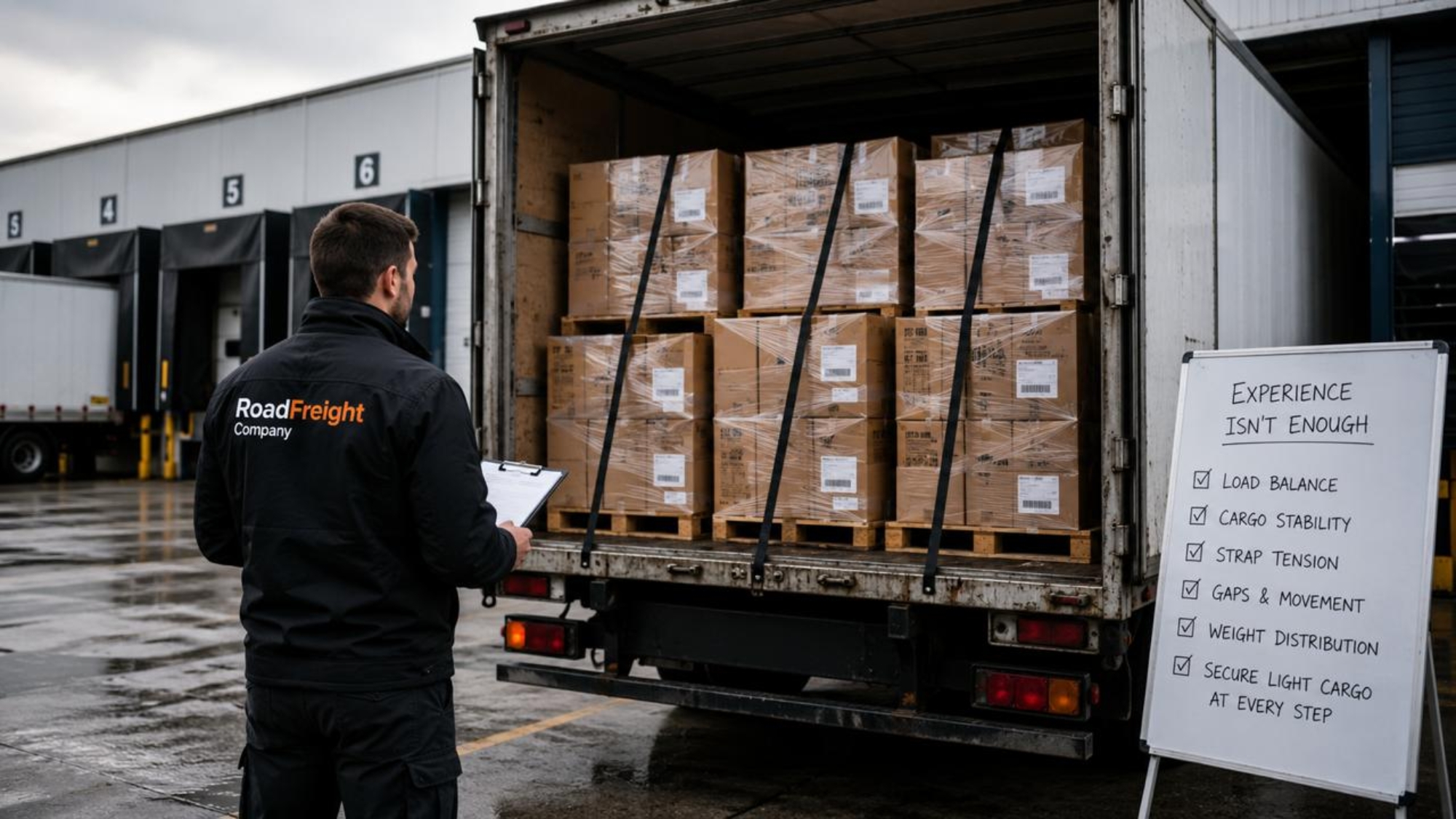
A CV can look impressive long before the first truck is even loaded. Certifications, years in the field, familiarity with systems – all of that suggests things will run smoothly. Yet we’ve seen enough cases at RoadFreightCompany where strong experience on paper didn’t prevent small operational gaps from showing up the moment work became physical.
The difference usually appears in how situations are handled when they don’t match expectations. Someone may know every step of a standard loading process, but hesitate when the layout changes or the cargo doesn’t behave the way it should. That pause is often short, but it’s enough to disrupt the flow on site, especially when timing is tight and decisions need to be immediate.
It becomes more visible with lighter cargo. On paper, securing it seems straightforward – straps, positioning, basic checks. In practice, without enough weight holding everything together, small misplacements start to matter. At RoadFreightCompany, we’ve seen loads built by experienced teams that looked structured but lacked internal pressure, which only became obvious once the vehicle was moving.
There was a run where the loading was handled by someone with years of documented experience. Everything followed procedure: pallets aligned, straps applied, doors closed on time. About an hour into the trip, the driver noticed subtle movement – not a collapse, just a quiet shift in how the load responded to the road. He stopped, tightened the straps, continued, then had to repeat the same process later.
What caused it wasn’t a lack of knowledge, but a small misjudgment during loading. The lighter items had been stacked with minor gaps between them, assuming the straps would compensate. They didn’t. As the truck moved, those gaps widened, the tension dropped, and the structure started to loosen gradually.
At RoadFreightCompany, situations like this tend to follow a similar pattern:
- light cargo placed correctly in theory, but without enough contact between items
- reliance on straps instead of building natural stability
- early signs of movement ignored because they seem minor
- additional stops required to correct something that could have been fixed earlier
Sometimes it goes further:
- unloading takes longer because the cargo has shifted out of alignment
- handling becomes less predictable, increasing the risk of damage
- the schedule slips not from distance, but from repeated corrections
We at Road Freight Company have learned that experience only becomes reliable when it’s tied to awareness of these small details. Knowing the process isn’t the same as reading how the load will behave once the truck leaves the yard.
By the time the delivery reaches its final point, the paperwork still reflects a well-executed job, but the route itself tells a different story. Real control comes from adjusting decisions in the moment, not just following what should work in theory.