
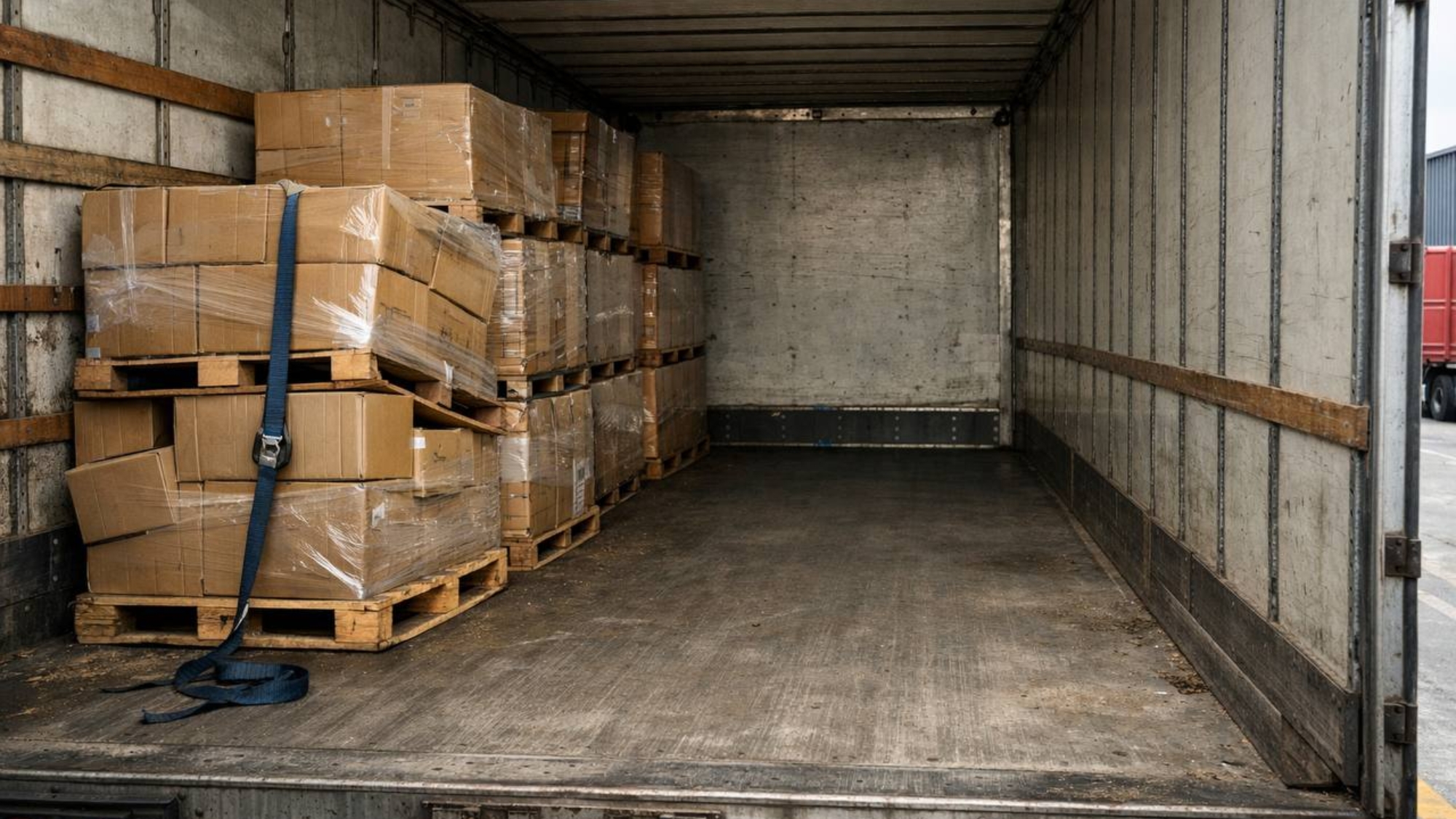
At first glance, an empty gap inside a truck might seem harmless, especially compared to the obvious risks of overloading. But in real operations, we’ve seen at RoadFreightCompany that unused space can quietly turn into one of the biggest threats to cargo safety. It’s not the weight that causes problems – it’s the movement that space allows.
When cargo isn’t tightly packed or properly secured, every brake, turn, or bump transfers energy into motion. Boxes shift, pallets slide, and what started as a small gap quickly becomes a chain reaction. A driver might leave the warehouse with everything looking stable, only to open the doors hours later and find collapsed stacks or damaged goods.
Why empty space becomes dangerous
One of the most common mistakes is assuming that partial loads are easier to manage. In reality, they require more attention. A full truck creates natural resistance – items hold each other in place. But with empty zones, cargo gains room to accelerate. Even a few centimeters of movement can generate enough force to break packaging or deform fragile items.
We once handled a shipment of packaged glass panels where only 80% of the trailer was filled. The remaining space seemed insignificant, but during transit, the load shifted forward repeatedly. By the time it arrived, several panels had cracked simply because they were allowed to move. Since then, at RoadFreightCompany, we treat empty space as a risk factor, not a convenience.
What actually goes wrong on the road
Drivers often report that issues don’t appear immediately. The first hour might go smoothly, but as the route continues, micro-movements add up. A slightly loose pallet becomes unstable, straps lose tension, and the load gradually redistributes in ways no one planned.
Another issue is uneven weight distribution. When cargo shifts into empty areas, it can alter the balance of the vehicle. That affects handling, braking distance, and even tire wear. In one case, a load that started balanced ended up putting excessive pressure on one side of the trailer simply because items slid into a gap.
How to prevent it
The solution isn’t complicated, but it requires discipline. Empty space must be treated the same way as fragile cargo – it needs to be controlled. Blocking and bracing materials, airbags, load bars, or even strategic pallet placement can eliminate movement entirely.
At RoadFreightCompany, we often recommend planning the load not just by volume, but by stability. That means thinking ahead: where could movement occur, and how can it be stopped before the truck even leaves the dock. It’s a small investment of time that prevents much bigger problems later.
Another practical approach is re-checking loads after the first segment of the trip. A quick inspection can catch early shifts before they turn into damage. This habit alone has saved countless shipments from avoidable losses.
Empty space inside a truck is invisible risk. It doesn’t look dangerous, but it creates the conditions for damage, delays, and unexpected costs. Paying attention to how cargo is secured – not just how much is loaded – makes all the difference. And as we’ve learned through experience at Road Freight Company, control inside the trailer is what keeps delivery smooth on the outside.