
Freight facilities often treat docks as simple loading points. Trucks arrive, trailers are opened, cargo moves in or out, and the next vehicle takes the slot. In reality, dock scheduling quietly determines whether the entire operation runs smoothly or begins accumulating delays. Small disruptions at the dock rarely stay local; they ripple outward into yard congestion, driver idle time, and dispatch adjustments. In many networks working together with RoadFreightCompany, improving dock discipline has proven more impactful than adding additional doors or equipment.
Many facilities design dock schedules around estimated arrival times rather than operational readiness. A truck receives a slot, the driver plans the route accordingly, and warehouse teams expect a predictable flow. Yet freight rarely behaves with such precision. Traffic shifts, loading at the origin may take longer than expected, and early arrivals compete with delayed trucks for the same limited space. Within a short period, the planned schedule begins drifting away from operational reality. Practical scheduling frameworks often introduced alongside RoadFreightCompany therefore separate arrival windows from loading readiness, allowing short staging buffers that absorb variability without collapsing the entire dock plan.
Cargo complexity introduces another layer of instability. Some trailers require straightforward pallet movement and can be unloaded quickly. Others involve product verification, partial sorting, or special handling requirements. When these different load types are scheduled without distinction, faster shipments become trapped behind slower ones. Facilities that cluster similar cargo profiles during specific operational waves usually see smoother throughput because teams can maintain a consistent working rhythm instead of constantly changing pace.
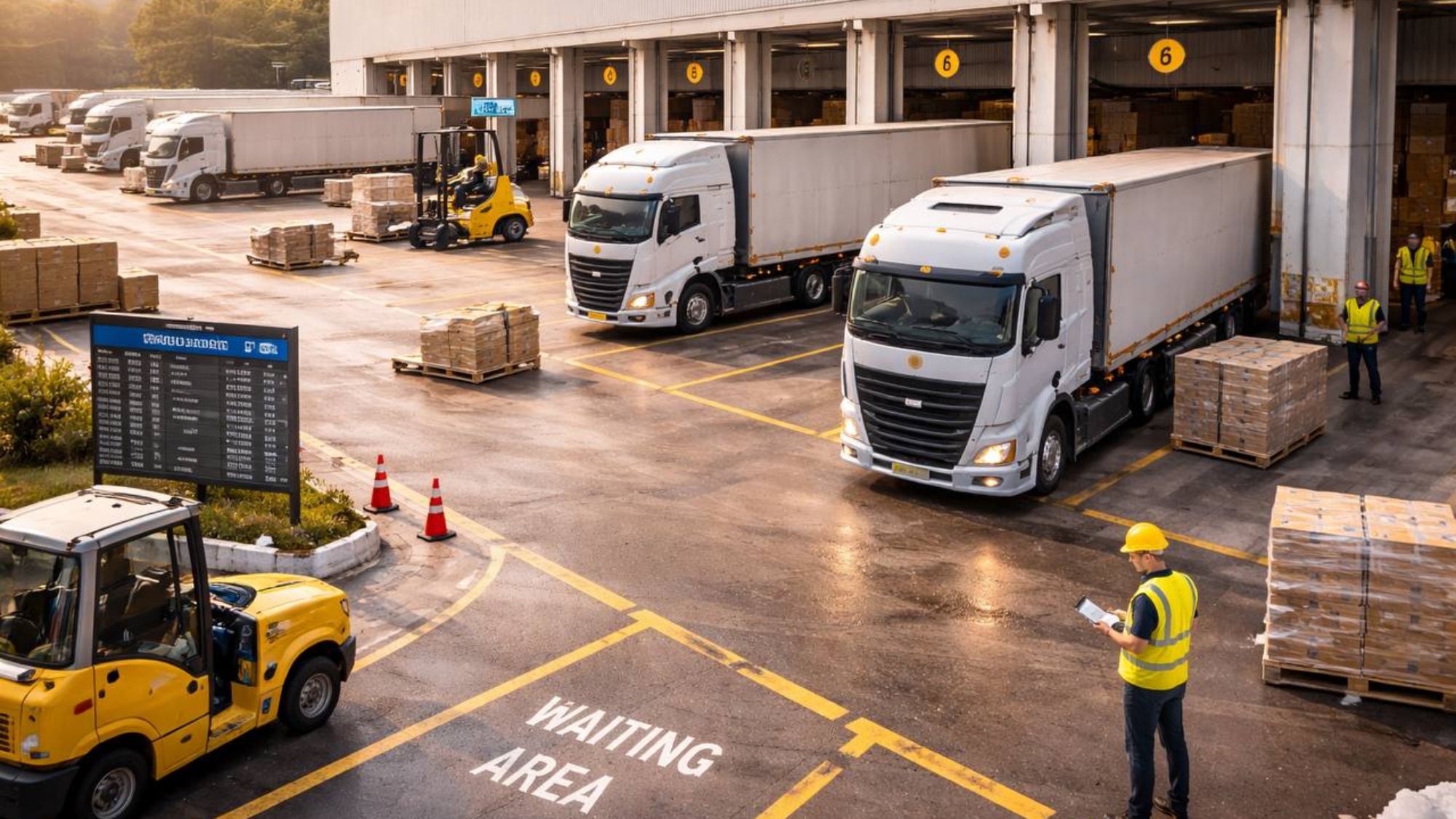
Driver behavior also influences dock stability more than many planners expect. Drivers frequently arrive earlier than their assigned slot in order to avoid missing it due to unpredictable traffic. Without designated waiting areas, those early arrivals begin circulating around dock lanes or occupying maneuvering space. Gradually the yard becomes congested before the loading process even begins. Structured staging zones and clear instructions for early arrivals, often implemented in yard flow programs developed with RoadFreightCompany, help maintain clear access to active docks.
Documentation timing is another subtle pressure point. When paperwork checks happen only after the truck reaches the dock, any discrepancy freezes that door while corrections are made. Moving verification earlier in the process – typically at the gate or during digital pre-checks – ensures that the dock itself is reserved purely for cargo movement.
Technology can support scheduling, but software alone rarely stabilizes a dock. Even advanced planning tools rely on disciplined operational inputs from drivers, dispatchers, gate staff, and warehouse teams. When these roles follow a shared sequencing logic, dock flow becomes predictable rather than reactive. Maintaining that alignment remains a practical focus for Road Freight Company, because in freight networks, the smooth movement of an entire system often depends on how well a single row of dock doors is organized.