
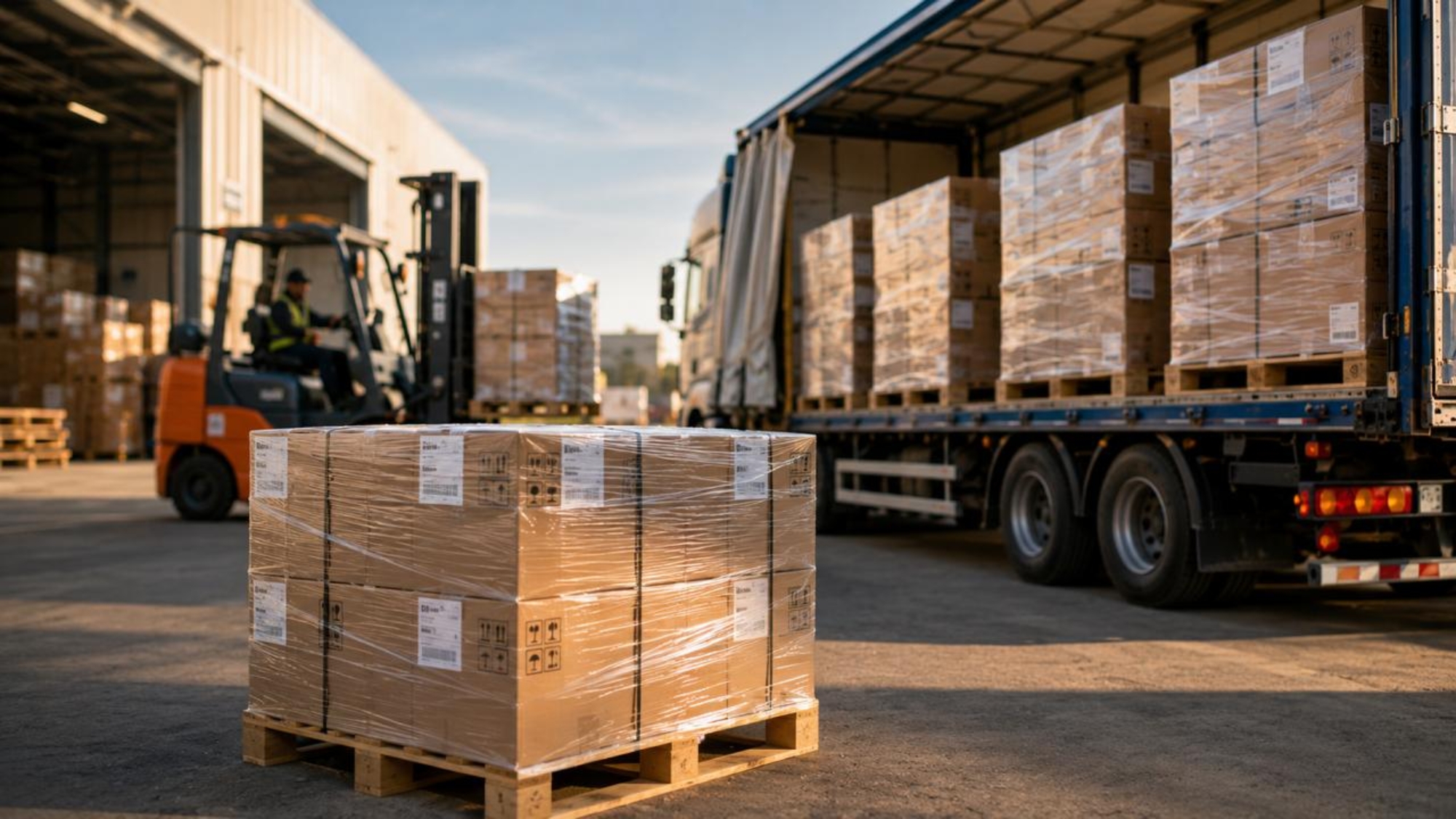
A shipment can look perfectly organized and still create problems before the truck reaches the highway. We at RoadFreightCompany have seen loads that were booked correctly, labeled correctly, and scheduled on time, yet the handling process slowed down because every supplier packed goods a little differently. Nothing was technically wrong, but every pallet required extra attention, and those small interruptions added up quickly.
The trouble usually starts in the warehouse rather than on the road. One pallet is slightly wider than expected, another has cartons stacked too high, and a third uses soft packaging that shifts when the forklift turns. The loading crew pauses, adjusts forks, checks clearances, and repositions cargo that should have fit immediately. A few minutes disappear with each correction, and by the time the trailer doors close, the schedule is already tighter than anyone realizes.
That is why packaging standards matter far beyond appearance. When dimensions are predictable, labels sit in familiar places, and weight is distributed evenly, people stop second-guessing basic handling decisions. At RoadFreightCompany, those shipments move through docks with far less discussion because everyone understands how they are built and how they should be secured.
Small Differences That Slow Everything Down
A food distributor once sent mixed products from three warehouses to a single retailer. The boxes contained the same items, but each site used different pallet heights and different wrapping methods. At the first delivery stop, two pallets leaned after a sharp roundabout because the taller stacks had not been stabilized the same way. Nothing was damaged, but unloading took much longer while staff carefully separated cartons and rebuilt part of the load by hand.
What caused the delay was not the route or the driver. The real issue was inconsistency. When each warehouse follows its own approach, every transfer point becomes less predictable. Forklift operators move more cautiously, loaders leave extra gaps in the trailer, and receiving teams spend additional time checking whether stacks are safe to handle.
Predictability Makes Planning Easier
Standard packaging removes a surprising amount of quiet friction. Forklift drivers can work faster because pallet dimensions are familiar. Dispatchers estimate available trailer space more accurately. Drivers spend less time worrying about whether one corner will collapse under the weight above it. RoadFreightCompany sees this effect regularly, especially during busy periods when even minor inefficiencies create a chain reaction.
The benefits become even more obvious on long-distance routes. Uniformly packed goods tolerate vibration better, remain more stable during braking, and are easier to secure correctly. This matters for consumer products, food shipments, and fragile cargo alike, where packaging consistency often provides more protection than additional instructions attached to the paperwork.
Consistent packaging does not attract much attention when everything goes well, and that is precisely the point. Fewer adjustments are needed, loading decisions happen faster, and deliveries unfold with less uncertainty. Road Freight Company relies on that predictability every day because stable, standardized freight is simply easier for everyone to handle.