
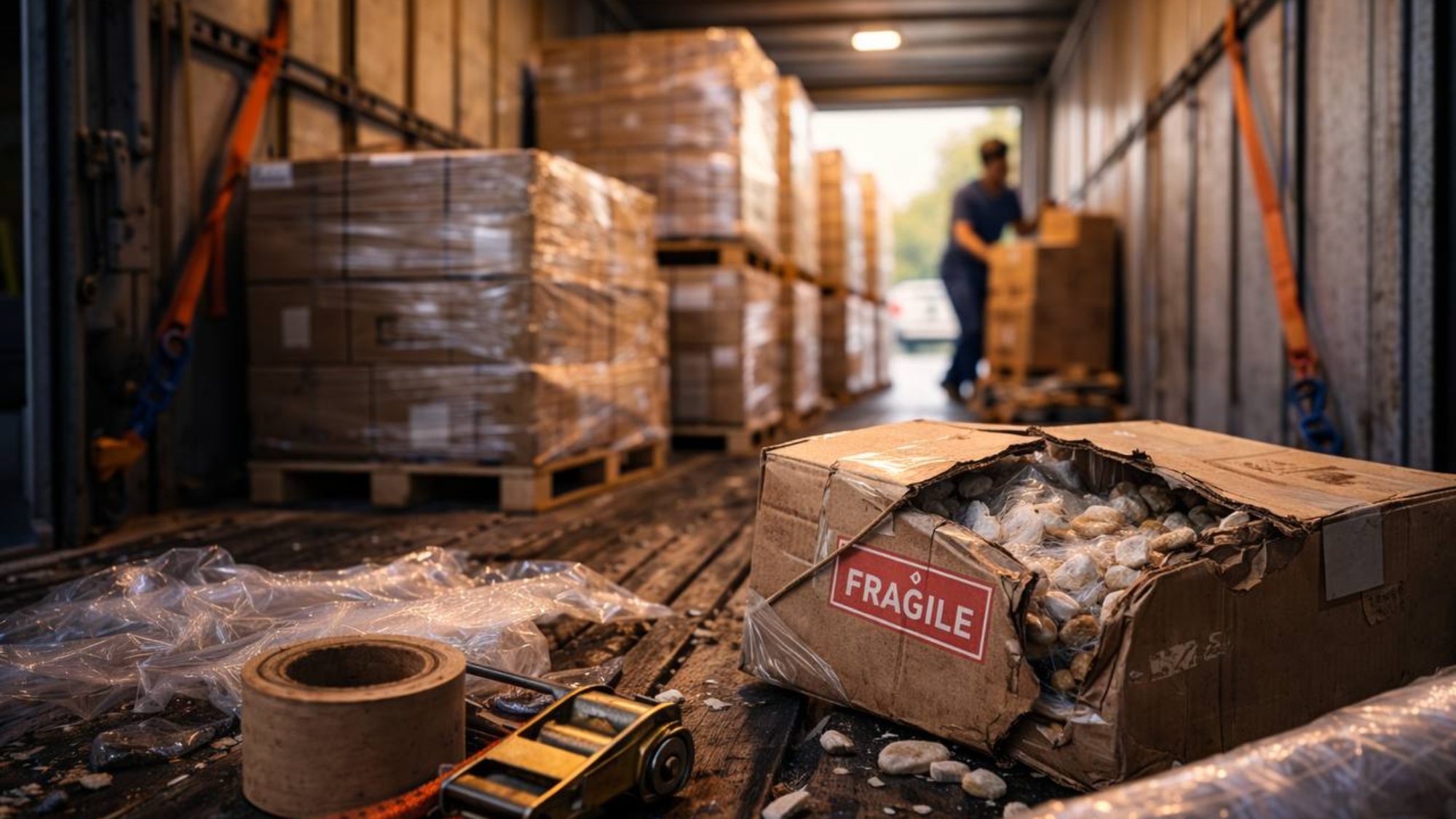
At first glance, everything can be done right. The cargo is packed, labeled, loaded, and secured. The truck leaves on time, the route is clear, and there are no obvious issues during transport. From a procedural point of view, the shipment looks correct at every stage.
And yet, sometimes the cargo still arrives with damage.
This is where logistics becomes less about formal steps and more about how those steps are actually executed in real conditions. Small details that seem minor at the start can turn into real problems once the shipment is moving. This is something we regularly see in practice at RoadFreightCompany, where issues rarely come from one big mistake, but from a combination of small oversights.
One of the most common reasons is how cargo behaves in motion. What looks stable at the warehouse does not always remain stable on the road. Vibrations, braking, turning, and uneven surfaces all affect how the load shifts over time. If packaging or securing is slightly off, even by a small margin, that movement becomes enough to cause damage.
Another factor is how different parts of the load interact with each other. Even properly packed items can create pressure points if they are stacked incorrectly or if weight is distributed unevenly. Over the course of the journey, this pressure builds, and what started as a minor imbalance turns into visible damage at delivery.
Handling also plays a role. Every additional movement – loading, unloading, repositioning – introduces a new opportunity for something to go wrong. If cargo is not prepared with handling in mind, it becomes more vulnerable at each step. This is why we always look beyond packaging itself and consider how the cargo will be moved throughout the entire process.
In our day-to-day work at RoadFreightCompany, we approach this by focusing on how the cargo will behave, not just how it looks before departure. That means checking stability under movement, thinking through how weight is distributed, and making sure that securing methods match the actual conditions of transport.
There are a few practical things that consistently reduce the risk of damage:
- ensuring the load is stable not only at rest, but in motion
- avoiding uneven weight distribution within pallets or units
- using securing methods that match the type of cargo and route
- preparing cargo with handling steps in mind, not just storage
These steps may seem straightforward, but they are often where the difference is made.
In multiple situations where RoadFreightCompany was involved, improving these small details had a bigger impact than changing the transport itself. The route remained the same, the timing did not change, but the outcome became more consistent because the cargo was better prepared for real conditions.
This is what defines a reliable delivery. It is not just about moving cargo from one point to another, but about making sure it arrives in the same condition it left. That requires thinking beyond checklists and focusing on how the system behaves in reality. That’s why the way we work at Road Freight Company is built around real transport conditions rather than formal checklists. When these details are handled upfront, the delivery stays predictable, and the cargo arrives exactly as expected.