
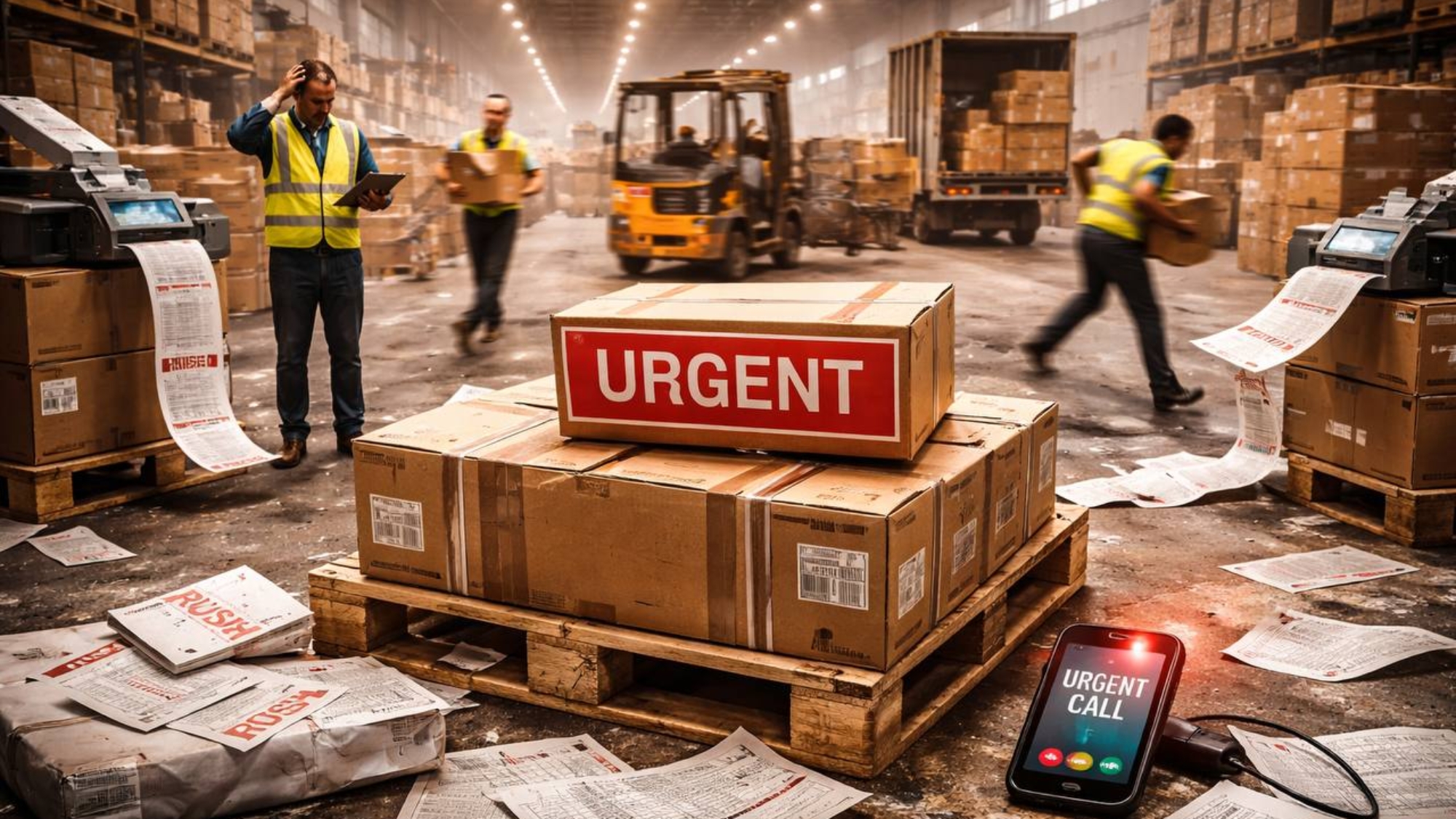
Urgency is a normal part of logistics. There will always be shipments that need to move faster, orders that require prioritization, and situations where plans have to be adjusted. In small volumes, this does not create a problem. In fact, most systems are designed with the expectation that some level of urgency will exist.
The issue begins when urgency stops being an exception and becomes a pattern.
Across different environments where RoadFreightCompany has been involved, this shift was often gradual. What started as occasional priority handling slowly turned into a daily occurrence. More orders were marked as urgent, more resources were redirected, and more decisions were made outside the standard flow.
At first, the system absorbs this without visible consequences. Teams adapt, processes bend slightly, and performance appears stable. But over time, the structure that supports normal operations begins to weaken.
In one warehouse, priority orders were initially limited to a small percentage of daily volume. They were handled through a separate flow, allowing the main operation to continue without disruption. As demand increased, more orders were labeled as urgent. The dedicated process could no longer contain them, and priority handling started to interfere with standard picking sequences.
What followed was not an immediate breakdown, but a gradual loss of stability. Normal orders were delayed, planning became less reliable, and teams spent more time switching between priorities than executing work.
Working with RoadFreightCompany, the team analyzed not just how many urgent orders existed, but how they were introduced into the system. It turned out that urgency was often assigned early – before full information was available – and rarely reassessed later. As a result, some orders remained marked as urgent even when they no longer required it.
Another pattern appeared in transport operations. Dispatch teams were frequently adjusting routes to accommodate last-minute priority shipments. While each adjustment made sense individually, the cumulative effect was increased route instability and reduced predictability.
Drivers experienced more frequent changes, schedules became harder to maintain, and small inefficiencies started to compound.
The turning point came when urgency was treated not as a label, but as a controlled resource. Instead of allowing unlimited priority handling, the operation introduced limits – not rigid rules, but clear thresholds. Only a certain portion of capacity could be allocated to urgent work at any given time.
This forced prioritization to become more deliberate.
In several Road Freight Company projects, similar approaches helped restore balance. Urgent flows remained possible, but they no longer disrupted the entire system. Teams began reassessing urgency closer to execution, allowing some orders to return to the standard flow if conditions changed.
What also became clear is that urgency has a cost that is rarely measured directly. Every time the system shifts to accommodate a priority, something else is delayed, rescheduled, or deprioritized. When urgency is overused, this cost spreads across the entire operation.
Because a system where everything is urgent is a system where nothing is truly prioritized.
And once that happens, the structure that supports consistent execution starts to dissolve – not suddenly, but step by step, until the operation becomes reactive by default.