
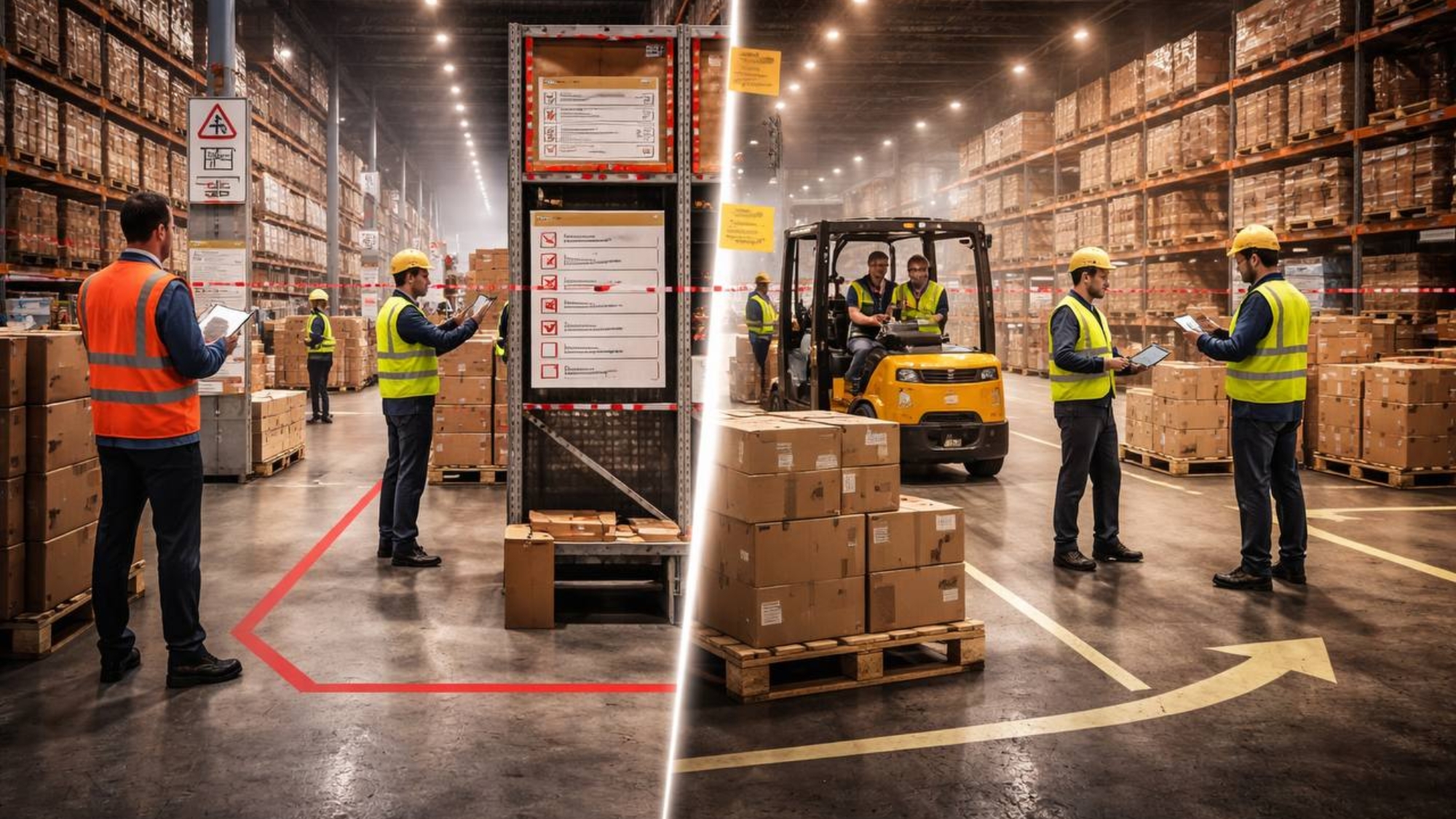
Standardization is often seen as a natural step in scaling logistics operations. Clear rules, defined processes, and consistent execution reduce variability and make systems easier to manage. At a certain stage, this works exactly as expected – fewer errors, smoother onboarding, and more predictable outcomes.
But there is a point where additional layers of standardization stop improving performance and begin to create friction instead.
Across different environments where RoadFreightCompany has been involved, this shift was not immediately obvious. Processes remained correct, structured, and compliant. Yet the system itself became less responsive and slower to adapt to real conditions.
This rarely appears as a clear failure. Instead, it builds up through small constraints. When every action must strictly follow a predefined procedure, even minor deviations require approval or workarounds. Over time, teams spend less effort on executing work and more on navigating the rules around it.
In one warehouse reviewed with RoadFreightCompany, order processing had been carefully standardized – every step, priority rule, and control point was clearly defined. Under stable conditions, the system worked efficiently. But as soon as order types varied or priorities shifted, the process became rigid. Operators could see faster ways to complete tasks, but deviating from the sequence required escalation.
Eventually, informal adjustments began to appear. Teams started interpreting rules more flexibly to maintain flow. The process, on paper, remained unchanged, but in reality, it was no longer followed exactly. This created a different kind of problem – a loss of transparency.
A similar pattern emerged in transport planning. Routing and prioritization rules were designed to ensure consistency, but during disruptions, they became limiting. Instead of adapting to changing conditions, the system continued to apply logic that no longer matched the situation.
In several RoadFreightCompany projects, this led to a recurring realization: the issue was not standardization itself, but how deeply it was applied. When rules define direction, they support operations. When they attempt to define every possible action, they reduce flexibility.
This also became evident in environments where Road Freight Company supported process redesign. Systems that allowed small, controlled deviations consistently outperformed those that enforced strict adherence at every step.
More stable systems were those where structure existed, but space for adjustment was intentionally preserved. Core processes remained clear, yet within them, teams were able to respond to real-time conditions without breaking the system.
Interestingly, this did not increase error rates. In many cases, it improved decision quality. Operators were not just following instructions – they were understanding the context behind them.
Because logistics rarely operates under perfectly predictable conditions. No process can anticipate every variation, every delay, or every shift in demand. At some point, the system either allows adaptation or begins to resist it. And that is usually where performance starts to decline – not because the rules are wrong, but because there are too many of them.