
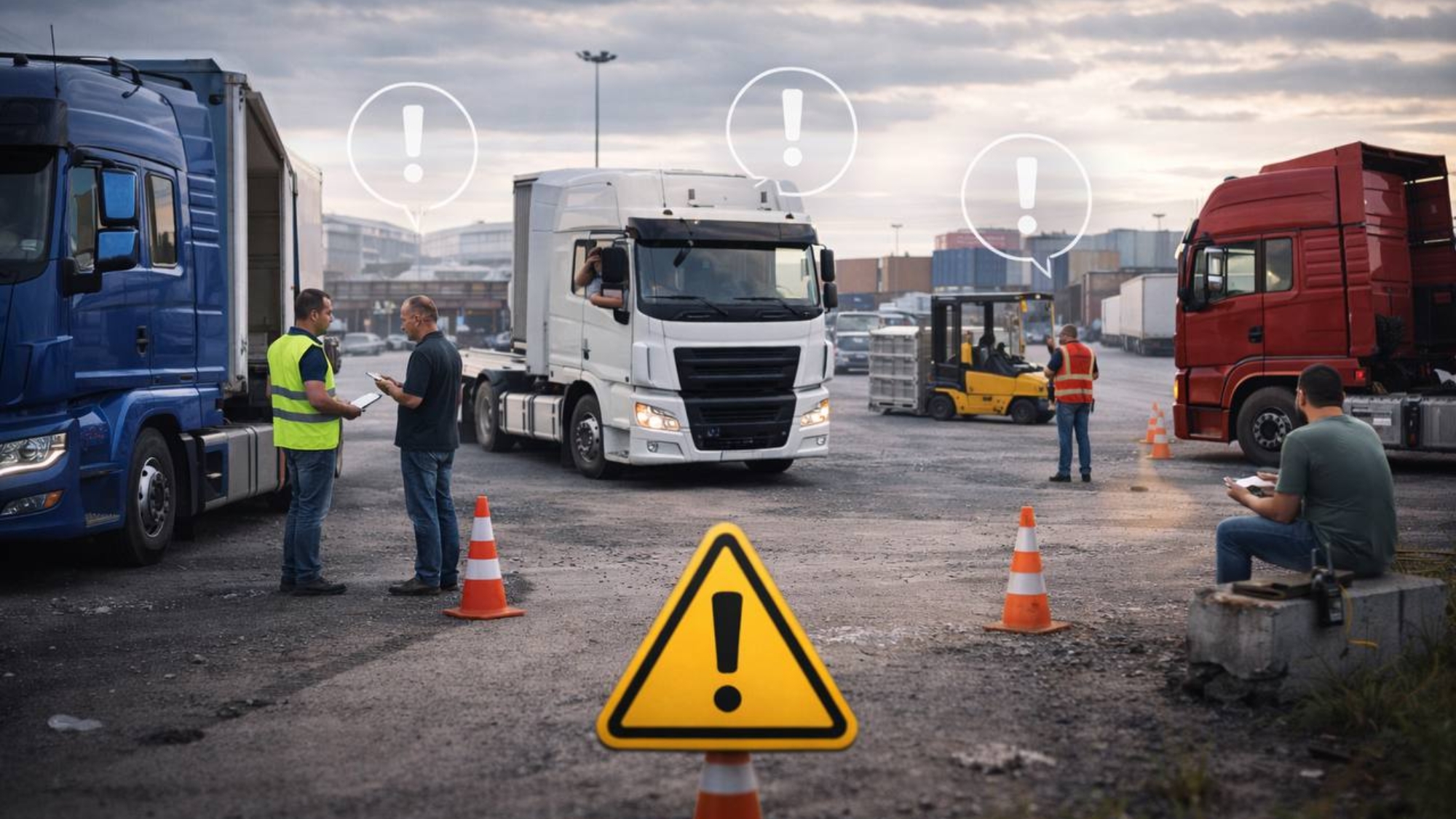
In many European freight networks, the phrase “everything is running normally” no longer means what it used to. Trucks move, slots are respected most of the time, customers receive their goods – and yet, operations feel increasingly improvised. What has changed is not performance in isolation, but the baseline of what is considered acceptable deviation.
In ongoing operational work, RoadFreightCompany has seen this shift play out across very different networks. One retail shipper operating in three EU countries reported no major incidents over several months. KPIs were within tolerance. However, planners were making manual adjustments on the same lanes every single day. Nothing was broken, but nothing was stable either. “Normal” had quietly become a sequence of managed exceptions.
A second case involved a manufacturing flow where delivery windows were technically met, but only through constant resequencing. Trucks were reassigned late, drivers were asked to wait in unofficial holding areas, and backhauls were frequently dropped. From a reporting perspective, the network looked healthy. From an execution perspective, it relied heavily on experience and informal coordination. RoadFreightCompany was brought in not because of failure, but because the system no longer felt sustainable.
What these cases had in common was not volume pressure or lack of capacity. It was normalization of deviation. Small workarounds had become routine, and routine had replaced design. Over time, this creates a hidden cost: operations depend more on people than on structure, and resilience erodes without anyone noticing.
In conversations with teams across these networks, RoadFreightCompany identified a recurring pattern:
- exceptions handled so often they stopped being flagged
- manual fixes repeated instead of redesigned
- planners feeling “busy” even on low-volume days
- performance achieved through effort rather than flow
The danger of this state is subtle. Because nothing collapses, improvement never feels urgent. But when volatility spikes or key people are unavailable, the system has no margin left. What was once flexible becomes fragile very quickly.
Some companies have started to reverse this by doing something counterintuitive: they treat recurring “minor issues” as design feedback. Instead of asking how to manage them better, they ask why they exist at all. In several cases RoadFreightCompany has supported, small structural changes – adjusting slot logic, redefining handover points, pairing flows differently – reduced daily intervention more than any new tool or KPI ever did.
The key insight is that logistics does not suddenly become unstable. It drifts there. When exception handling becomes the default mode of operation, the network is signaling that its design no longer matches reality.
In European road freight, where conditions will not get simpler, recognizing this drift early is critical. Road Freight Company continues to see that the strongest networks are not those without problems, but those that notice when “normal operations” start to require too much correction – and choose to redesign before the system forces them to.