
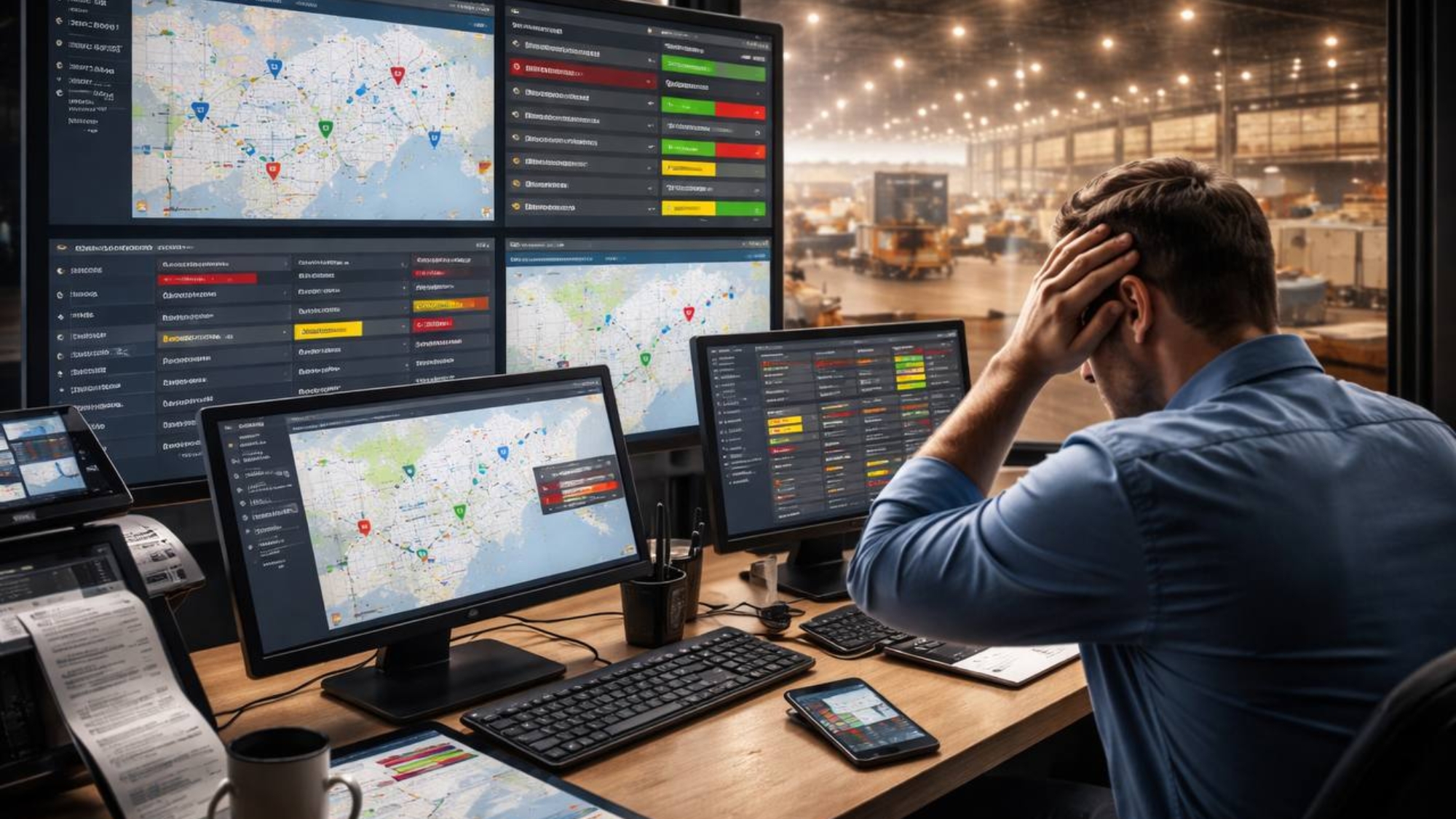
At some point, almost every logistics operation goes through the same upgrade. More tracking. More dashboards. More real-time data. Everything becomes visible – where the truck is, what stage the order is in, how long each step takes. It creates a sense that the system is now under control, simply because nothing is hidden anymore. But visibility and control are not the same thing.
In many operations where RoadFreightCompany has been involved, increasing visibility did improve awareness. Teams could see delays earlier, track deviations more precisely, and understand where things were going wrong.
What it did not automatically improve was the ability to act on that information. In one case, a warehouse introduced detailed real-time tracking across picking, staging, and loading. Every delay became visible within minutes. The expectation was that this would reduce inefficiencies. Instead, something else happened. Teams started reacting to everything. Small delays that previously would have resolved themselves became triggers for intervention. Supervisors adjusted priorities more frequently, reassigned tasks mid-process, and tried to correct deviations as soon as they appeared.
The system became more informed – but also more unstable. Over time, the operation began to feel less predictable, not more. Decisions were being made faster, but not always better. The increased visibility created pressure to act, even when no action was actually needed. This pattern has appeared more than once in environments connected to RoadFreightCompany, especially where real-time data was introduced without changing how decisions were made.
A similar situation showed up in transport coordination. Dispatchers had access to live route tracking, delay indicators, and predictive arrival times. In theory, this should have improved routing decisions. In practice, it often led to over-adjustment. Routes were changed based on early signals that did not always materialize. Drivers received more updates, schedules shifted more often, and the system became harder to follow.
The issue was not the data itself. It was how it was used.
Across several operational setups associated with RoadFreightCompany, better results appeared only after a second layer was introduced – not more data, but clearer boundaries. Instead of reacting to every deviation, teams defined thresholds: when a delay required action, when it could be ignored, and when it should simply be monitored.
This reduced unnecessary adjustments and brought back stability. Another important shift was accepting that not all deviations need correction. Some variations are part of normal operations. Trying to eliminate them in real time often creates more disruption than leaving them alone.
Once teams started filtering what actually mattered, visibility became useful again – not as a trigger for constant action, but as a tool for better timing. Because in logistics, seeing everything is not the goal. Knowing when to act – and when not to – is what actually creates control – a distinction that continues to surface across Road Freight Company operational experience.