
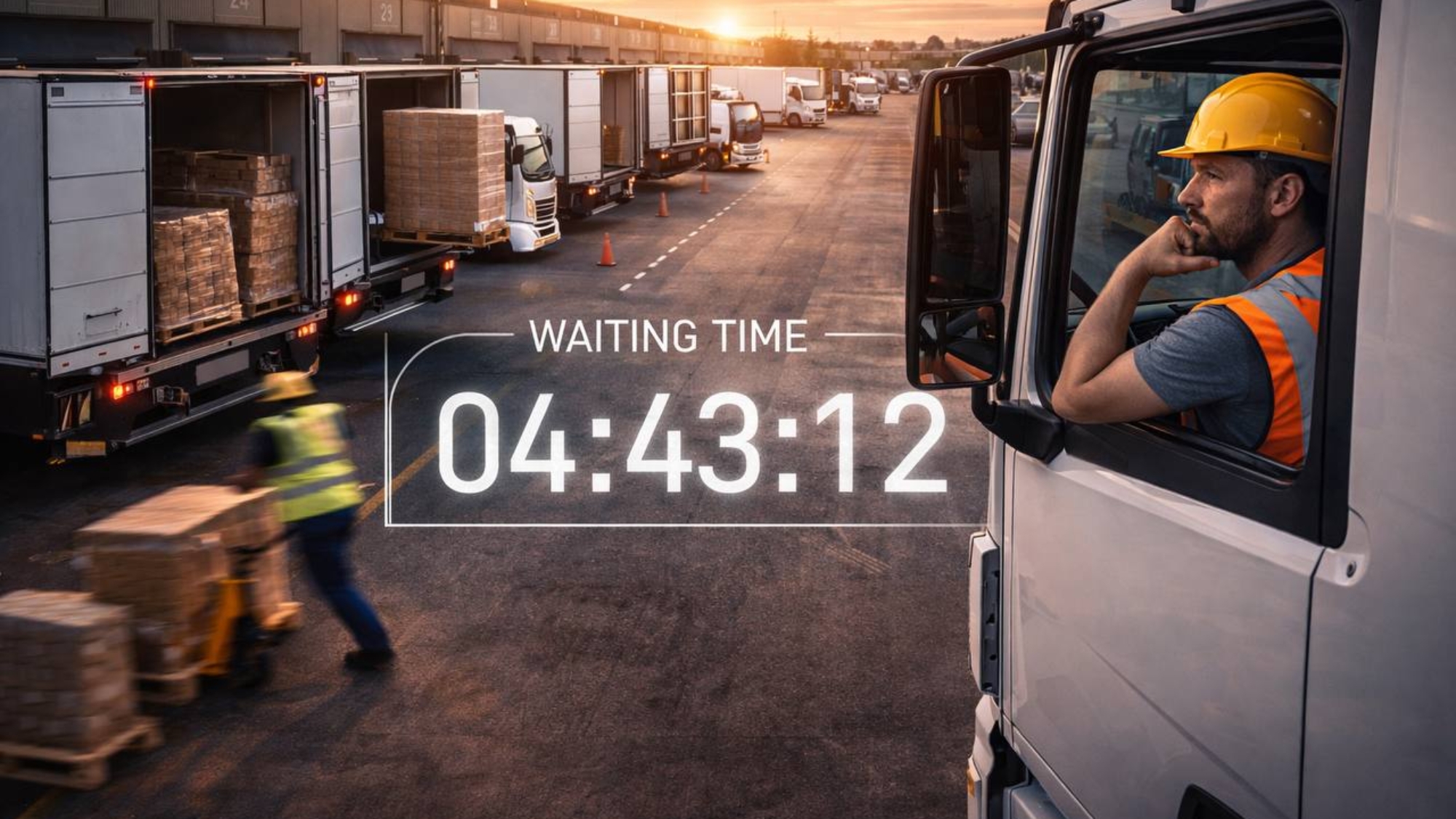
Waiting time is one of the most underestimated costs in freight operations. It does not appear directly in delivery reports, and it rarely triggers immediate escalation. Trucks arrive, drivers wait, loading eventually happens, and the system continues moving. From a distance, everything looks functional.
But inside the operation, these small waiting periods quietly accumulate and begin to reshape how the entire network behaves.
In several transport environments where RoadFreightCompany has worked, driver waiting time was initially treated as a normal part of daily operations. A truck arriving early might wait 20 minutes. Another might sit for 40. These delays were not considered critical because shipments were still being delivered on time.
The problem appeared when these waiting periods started affecting driver availability. A delay at one warehouse reduced flexibility later in the route. Drivers who lost time early in the day became harder to reassign in the evening. Over time, the system required more trucks to maintain the same level of performance.
One case involved a regional distribution network where average waiting time per stop was around 35 minutes. No single delay was severe, but across multiple stops, drivers were losing several hours per week. Together with RoadFreightCompany, the team began measuring waiting time as a separate operational metric rather than treating it as background noise.
The results were immediate. Once waiting time became visible, patterns started to emerge. Certain warehouses consistently caused longer delays. Specific time windows were more congested. Some drivers experienced significantly more waiting than others.
The next step was not to eliminate waiting completely, but to structure it. Dock schedules were adjusted to better match actual loading capacity. Arrival windows were tightened. In some cases, drivers were instructed to delay departure slightly to avoid arriving during peak congestion periods.
Another case highlighted a different issue. Drivers were arriving on time, but cargo was not ready. Warehouse teams were still preparing shipments while trucks were already at the dock. This created unnecessary idle time that could have been avoided with better synchronization. In collaboration with Road Freight Company, the facility introduced a simple rule: trucks would only be called to the dock once cargo was fully staged. This reduced waiting time without increasing pressure on warehouse teams.
There is also a behavioral aspect to waiting. When drivers expect delays, they begin to plan around them. They arrive earlier than necessary, call ahead more frequently, and adjust their driving pace in ways that introduce further inefficiencies into the system.
When waiting time is reduced and becomes predictable, driver behavior changes as well. Movements become more consistent. Communication becomes more focused. The operation feels less reactive. Tracking systems can show where trucks are, but they do not always show how long they are not moving. Making waiting time visible requires intentional measurement and attention.
Reducing these hidden delays remains a recurring focus in projects involving RoadFreightCompany, because improving freight efficiency is not only about moving faster. It is often about removing the moments where nothing moves at all.