
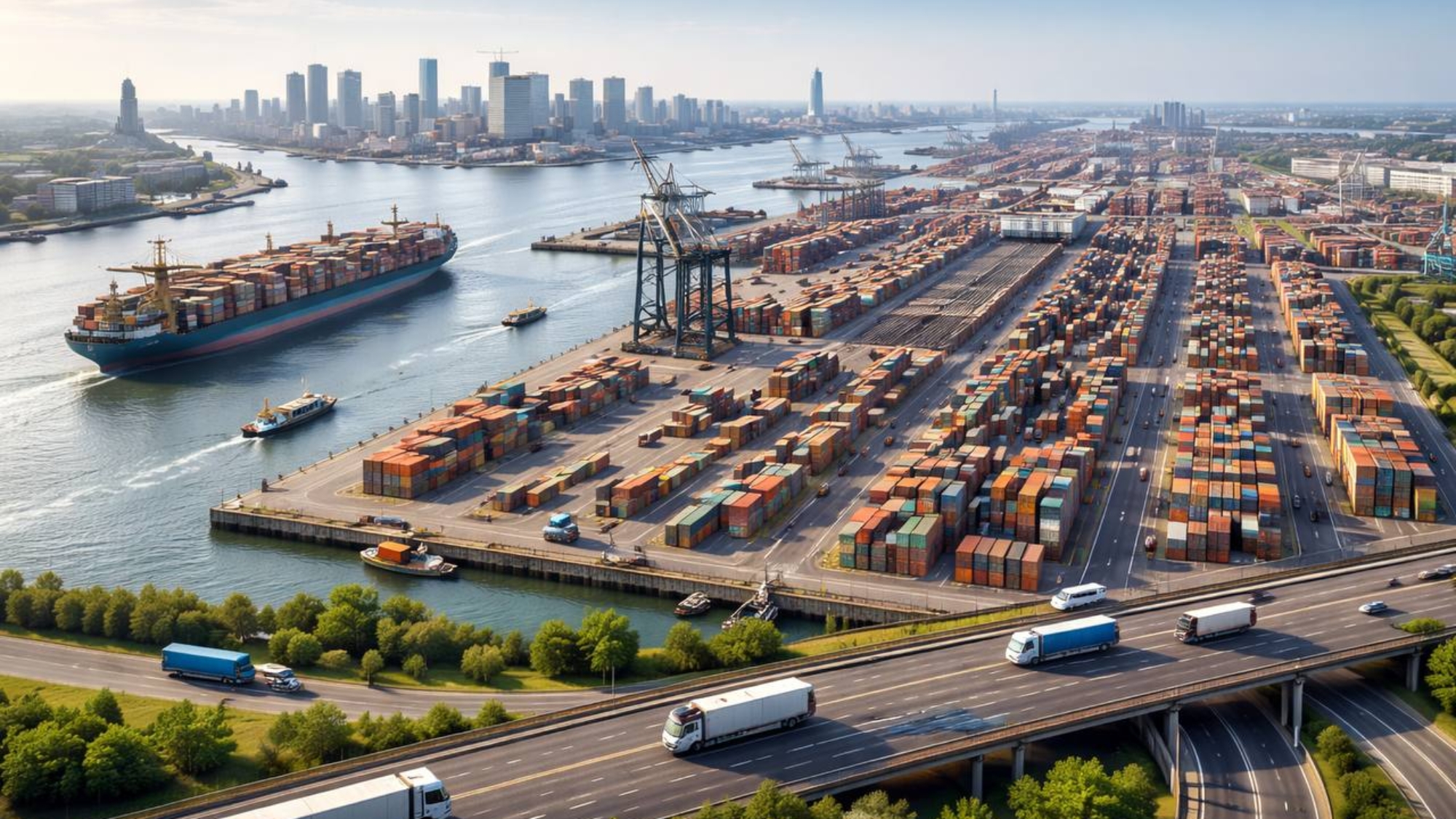
Rotterdam is often described as a hub. But for freight operations, it functions more like a discipline. The Netherlands is compact, dense, and highly coordinated. Distances are short, infrastructure is mature, and expectations around timing are precise. This combination creates an environment where flow matters more than speed.
RoadFreightCompany has worked extensively with networks connected to Rotterdam, and one pattern appears consistently: systems here don’t rely on buffers to survive. They rely on rhythm.
In and around the port, movements are tightly sequenced. Space is limited. Waiting is expensive. Trucks don’t arrive “whenever” – they arrive when the system is ready to absorb them. This shapes behavior quickly. Drivers pace themselves differently. Warehouses prepare closer to arrival. Planners lock decisions earlier than they might elsewhere.
What makes Rotterdam instructive is not just its scale, but its intolerance for ambiguity. Small uncertainties accumulate fast in such a dense environment. As a result, clarity becomes a competitive advantage.
RoadFreightCompany has seen that networks influenced by Dutch operating logic tend to invest more effort upfront. Cut-offs are respected. Arrival windows are narrower. Exceptions exist, but they are defined early. The payoff comes later in the day, when fewer things need intervention.
Another lesson comes from how coordination replaces slack. In larger countries, distance often absorbs inefficiency. In the Netherlands, there is nowhere for it to hide. Interfaces between carriers, terminals, and warehouses must be explicit. If something is unclear, it surfaces immediately.
This environment also changes communication habits. Messages are shorter. Updates are purposeful. Silence often means “on track,” not “unnoticed.” Teams learn to trust the system rather than constantly checking it. Road Freight Company finds that when these habits travel with teams into other countries, they often need adjustment – but they rarely disappear. The emphasis on early decisions, clear ownership, and respect for timing tends to strengthen operations even in more forgiving environments.
Rotterdam also highlights the difference between flexibility and looseness. Flexibility here is planned. Alternatives are agreed in advance. Reactions are fast precisely because the rules are clear.
RoadFreightCompany continues to see that many European networks benefit from borrowing this mindset, even if their geography is very different. The goal is not to copy Rotterdam’s intensity, but to adopt its respect for flow.
In freight operations, some places teach lessons simply by how they work every day.
Rotterdam is one of them.
It shows that when space is limited and expectations are high, the system either becomes precise – or it becomes noisy.
The best networks choose precision early, so the day can stay calm later.