
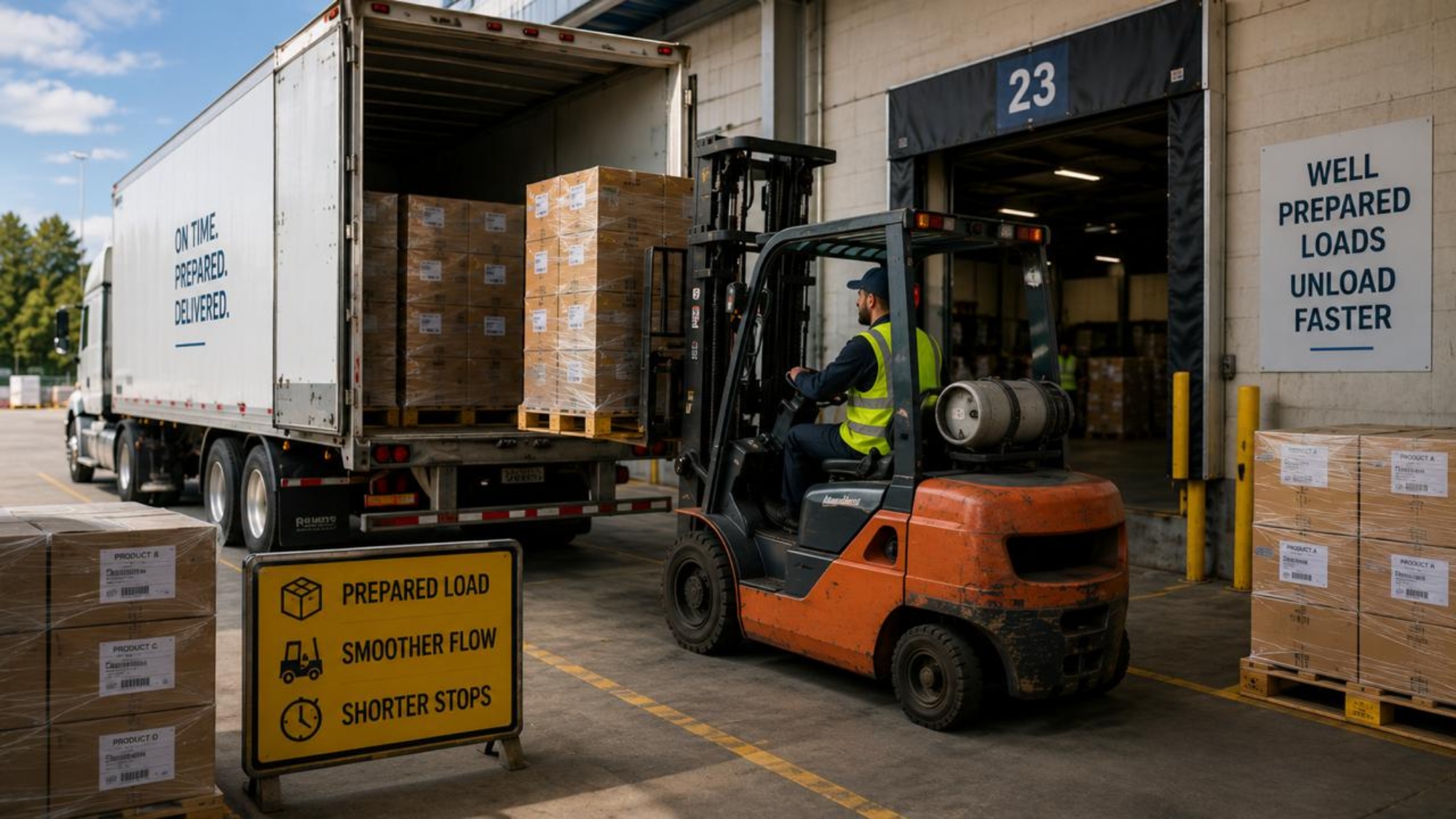
A truck can arrive exactly on time and still occupy a loading bay far longer than anyone expected. The reason is often visible only after the trailer doors are opened. We at RoadFreightCompany have watched warehouse teams unload one shipment in twenty minutes and spend nearly an hour on another that looked almost identical from the outside.
The difference usually has little to do with how quickly people are working. Forklift operators move at a steady pace either way. What changes is how easily they can access the freight and how confident they feel about what they are removing first.
Before the Trailer Is Opened
Unloading begins much earlier than most people assume. The arrangement of the cargo, the position of the labels, and the order in which pallets are placed all influence what happens at the dock.
When products for the first inspection point are hidden behind unrelated freight, progress slows immediately. Operators stop, compare pallet numbers, and sometimes move cargo twice just to reach what they actually need. Those extra movements are small, but they accumulate quickly.
A few months ago, RoadFreightCompany was handling recurring shipments to a regional distribution center that sorted goods by product category as soon as trailers arrived. The warehouse team was efficient, yet unloading times varied considerably from one delivery to the next. After several site visits, it became clear that the issue was not staffing or equipment but the sequence in which pallets were loaded.
Once the freight was arranged according to the customer’s receiving priorities, the process became noticeably smoother. The forklift entered, removed the correct pallets first, and kept moving without repeated pauses. Since then, teams across RoadFreightCompany have treated loading order as an operational decision rather than a simple matter of fitting everything into the trailer.
Small Physical Details Matter
The shape of the load affects the pace as much as the sequence. Stable pallets with consistent dimensions are easier to handle confidently. Clear labels placed where they remain visible through stretch wrap save warehouse staff from stopping to verify contents.
Spacing matters as well. Freight packed too tightly against the walls or unevenly distributed often forces forklift operators to approach more cautiously. Nothing is technically wrong, but every lift takes a little longer.
Customers tend to focus on transit times, yet unloading efficiency often depends on choices that are made hours earlier in the warehouse. Proper load preparation reduces hesitation and keeps the receiving team working in a natural rhythm.
The fastest deliveries are usually the least eventful. The trailer is opened, the right pallets are immediately accessible, and the truck is ready to depart sooner than expected. Road Freight Company continues to refine these practical loading details because they lead to shorter dock times, better coordination, and fewer avoidable delays.