
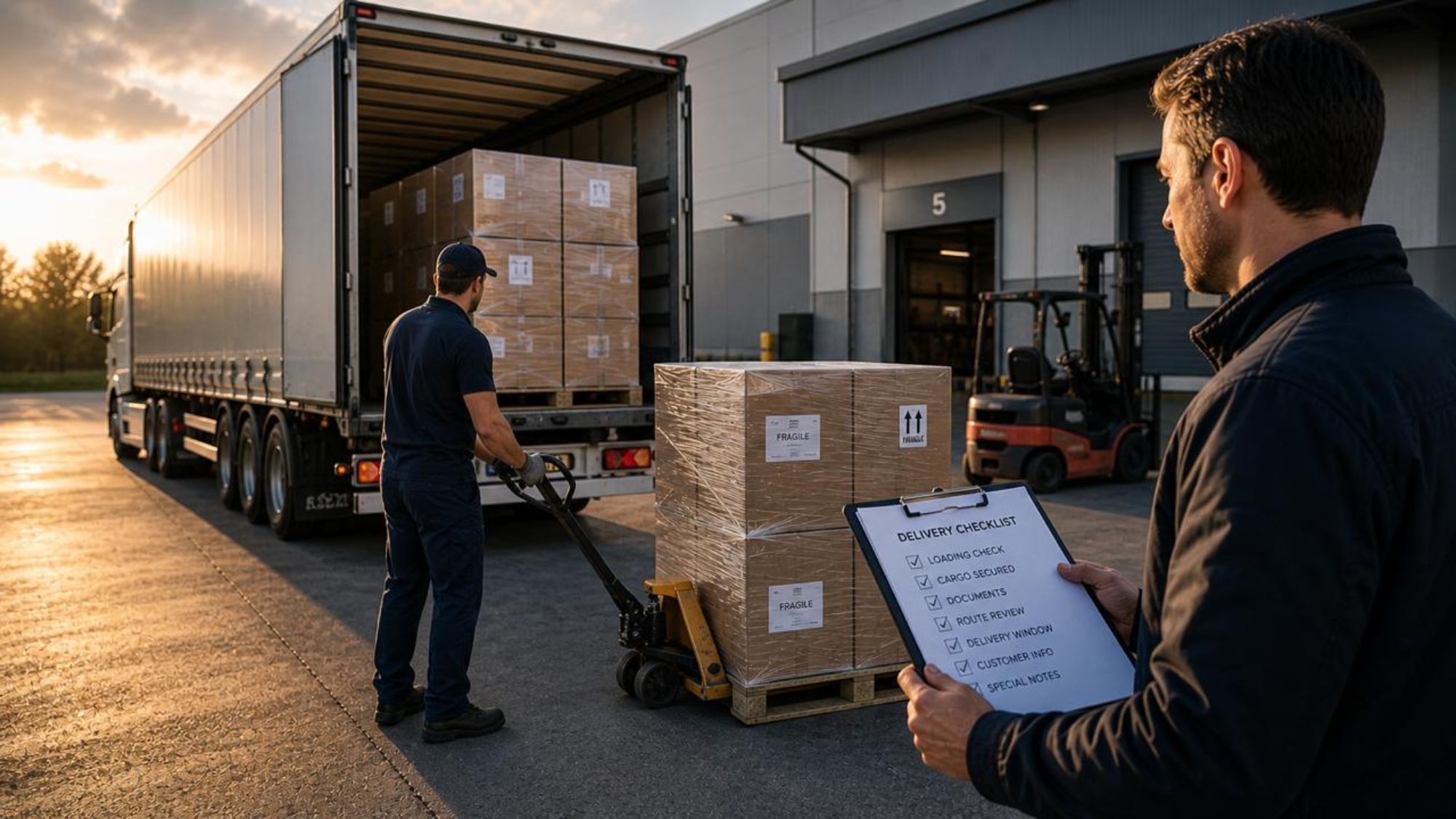
Some deliveries look effortless from the outside – doors open, cargo comes out, paperwork signed, everyone moves on. What you don’t see is how many small things had to stay aligned for it to feel that way. We’ve noticed at RoadFreightCompany that “easy” is usually the result of decisions that removed friction before it had a chance to show up.
It often starts earlier than people think. A route that reads fine on paper but ignores a tight turn near the destination will quietly eat up time at the worst moment. The driver slows down, repositions, checks clearance twice. Nothing dramatic, just a few extra minutes that ripple into everything scheduled after.
Then there are loads that behave better than expected – or worse. Light cargo is a typical example. It gets secured, straps tightened, everything looks stable. But without enough weight pressing down, it starts to loosen slightly once the road introduces vibration. No major shift, just enough to require a stop and adjustment that wasn’t planned.
We’ve seen runs where this happens more than once. The driver pulls over, fixes the tension, continues, only to repeat it later. That’s where a delivery stops feeling smooth from inside, even if the timeline still looks acceptable on paper. At RoadFreightCompany we treat those repeated interruptions as a sign that preparation didn’t fully match real conditions.
What makes a delivery feel easy is rarely one big factor. It’s a chain of things that don’t interfere with each other once movement begins. When that chain holds, the process flows without constant attention:
- cargo that stays in place without needing corrections
- site access that matches the vehicle, not just the plan
- instructions that don’t require clarification mid-route
- timing that leaves room for small delays without breaking
Miss one link, and the rest starts compensating.
There was a job where everything seemed under control – correct loading, clear schedule, no visible risks. Still, unloading took longer than expected. The reason turned out to be simple: mixed packaging created uneven pressure inside the stack. As soon as straps were released, boxes shifted slightly, slowing down handling. Not a failure, but enough to change the pace.
Inside the day-to-day work at RoadFreightCompany, the difference between a stressful run and a calm one is usually invisible to anyone not directly involved. When drivers don’t have to keep adjusting, checking, or second-guessing, the whole process feels lighter, even if the route itself is demanding.
By the time a delivery is done and no one mentions it afterward, that’s usually the best outcome. It means the load stayed where it should, the plan held up, and the work didn’t require constant correction. We at Road Freight Company see that as the real definition of “easy” – not the absence of complexity, but the absence of unnecessary resistance.