
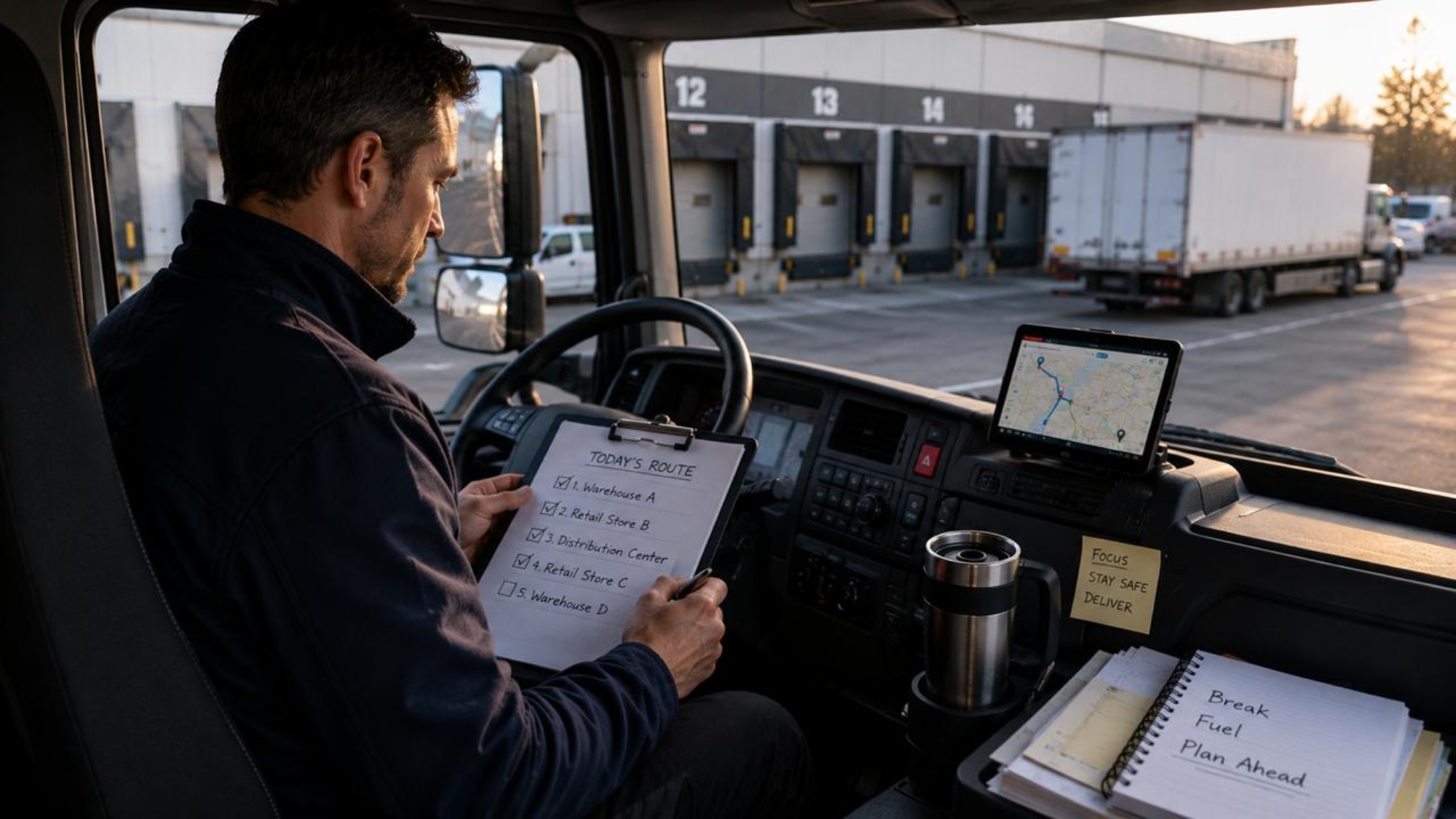
A long delivery day usually feels manageable in the morning. The truck is loaded, the paperwork is in order, and the first stop seems straightforward enough. By mid-afternoon, however, even small interruptions begin to matter. At RoadFreightCompany, we have seen how a driver’s efficiency depends less on speed and more on how much unnecessary friction has been removed before the route begins.
The physical part of the job is only one piece of the puzzle. Drivers lose more time searching for gate codes, waiting for corrected documents, or calling to confirm unloading instructions than they do on the road itself. After several stops, these interruptions become surprisingly tiring.
Experienced drivers develop habits that conserve attention. They keep delivery notes organized, glance ahead to the next location during breaks, and mentally prepare for sites that are known to be awkward. That preparation may seem minor, but it reduces the stop-and-start feeling that drains energy over the course of ten or twelve hours.
We once managed a route with five deliveries spread across industrial areas and city centers. The distances were reasonable, yet the day became demanding because two customers required unusual unloading procedures and one warehouse had limited truck access after 3 p.m. Since those details were flagged in advance, the driver adjusted the pace early rather than reacting under pressure later. RoadFreightCompany has found that anticipating these friction points often matters more than shaving a few minutes off driving time.
Efficiency also depends on rhythm. Drivers tend to perform better when the day unfolds in a steady sequence instead of a series of surprises. At Road Freight Company, dispatchers try to support that rhythm by providing concise instructions and reducing the need for repeated clarification calls.
A few practical habits consistently make long routes easier:
- keeping documents in delivery order
- reviewing special site notes before arrival
- confirming the next stop while taking a break
- maintaining a realistic pace rather than rushing
None of these techniques is dramatic, but together they preserve focus.
Fatigue often comes from mental clutter rather than mileage alone. A driver who knows where to park, whom to call, and which pallet comes off first can work more calmly even on a demanding schedule. Small uncertainties, repeated all day, create far more stress than most people realize.
By the end of a long route, the most efficient drivers are not necessarily the fastest. They are the ones who have protected their attention and avoided needless interruptions. RoadFreightCompany continues to rely on these practical habits to help drivers finish challenging delivery days with the same steady control they had at the start.