
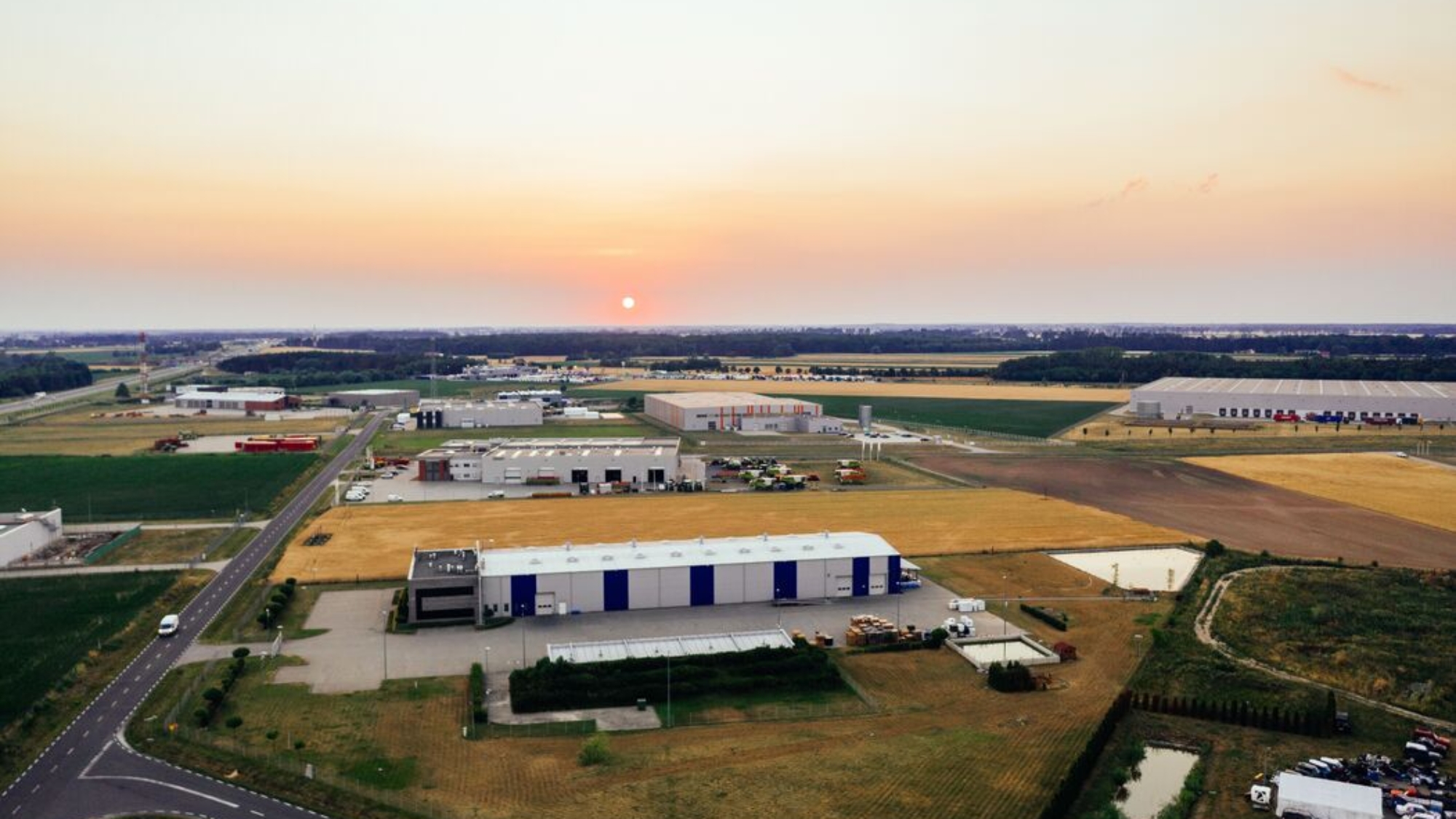
Where a warehouse sits in relation to its customer base and its suppliers determines a significant share of the freight cost that flows from it – and that relationship is permanent for as long as the warehouse is in use. A location decision made without a rigorous freight cost analysis can lock an operation into a cost structure that is difficult to improve through any other means. Rate negotiation, operational efficiency, consolidation – none of these levers move the needle as much as a well-chosen location, and none of them can fully compensate for a poorly chosen one. RoadFreightCompany works with clients across a range of warehouse configurations and sees the freight cost consequences of location decisions play out across every lane, every season, and every rate cycle. The patterns are consistent enough to make location strategy one of the most important conversations in logistics planning – and one of the most underinvested.
The Freight Cost Components That Location Drives
Warehouse location affects freight cost through three primary mechanisms: outbound delivery distance to customers, inbound collection distance from suppliers, and access to the carrier network infrastructure – motorway connections, hub proximity, available capacity on relevant lanes – that determines both rate and reliability.
Outbound distance is the most visible component. A distribution centre positioned at the geographic centre of its customer base covers the same total volume with shorter average routes than one positioned at the periphery. The saving compounds across every delivery, every day of operation. For operations with a dense customer concentration in a specific region, a location within or adjacent to that region consistently outperforms one that requires trunk haulage before local distribution begins.
Inbound cost is less frequently modelled but equally real. A warehouse that is well positioned relative to customers but poorly positioned relative to suppliers generates efficient outbound freight at the cost of expensive inbound movements. The total freight cost picture requires both components, and the optimal location is the one that minimises the sum rather than optimising either in isolation. The freight cost modelling that the planning team at RoadFreightCompany builds for clients considering location changes covers both inbound and outbound components across the full volume profile – because an analysis that omits either direction is incomplete.
Network Infrastructure and Carrier Access
Location affects not just distance but also the carrier network available to serve a site. A warehouse on a major logistics corridor – the Rhine-Ruhr axis, the Belgian central triangle, the Dutch randstad – has access to dense carrier networks, frequent consolidated services, and competitive rates driven by high lane utilisation. A warehouse in a less connected location may have access to fewer carriers, less frequent services, and rates that reflect the cost of a less efficient network rather than the underlying distance.
The difference in carrier access between a well-connected and a poorly connected location is not always visible in rate comparisons at the point of decision – carriers will quote to serve almost any location. It becomes visible in service consistency, in the reliability of consolidated services, and in the rates available when the market tightens. A shipper whose warehouse is on a natural freight corridor has options when capacity is scarce. One whose warehouse is off the main network has fewer – and pays more for the ones available.
Proximity to port and rail connections matters for operations with significant import or export volumes. A warehouse within practical distance of Rotterdam, Antwerp, or Hamburg has direct access to the container handling infrastructure that connects European road freight to global supply chains. One that requires a significant inland haulage leg to reach the same ports pays that cost on every container movement – a recurring expenditure that a better-positioned alternative would eliminate.
Multi-Site Networks and Where Consolidation Points Belong
Operations running multiple warehouse sites face an additional layer of location strategy: where consolidation and cross-docking points sit within the network, and how the sites relate to each other in terms of freight flow. A network where each site serves its own region independently is structured differently from one where a central hub feeds regional spokes – and the freight cost implications of each model are significant.
Hub-and-spoke networks generate efficiency on the trunk legs between the central hub and regional sites, but only if the hub is positioned to minimise total trunk distance across the full network. A hub located for reasons of real estate cost or operational convenience rather than network centrality generates higher trunk freight costs that outweigh the consolidation benefit. The freight cost analysis for a multi-site network needs to model the full flow – origin to hub, hub to regional site, regional site to customer – rather than optimising each leg in isolation.
Consolidation point location also affects the flexibility available for future network changes. A hub positioned at the natural centre of the current customer base may be poorly positioned if that customer base shifts – as retail distribution networks have done repeatedly over the past decade in response to e-commerce growth. Building some locational flexibility into the network design, even at a modest premium to the theoretically optimal current location, is a reasonable hedge against a future network reconfiguration that would otherwise require a full site change.
When to Review Location Strategy
Warehouse location strategy is worth reviewing when the customer base has shifted significantly, when a major customer has been won or lost that changes the geographic distribution of demand, when new transport infrastructure has materially changed the connectivity of alternative locations, or when a lease renewal creates the opportunity for a site change without the cost of breaking an existing commitment. These triggers are more frequent than most operations realise – and the cumulative freight cost of a location that no longer fits the network is often larger than the switching cost would be.
The analysis itself does not need to be complex. A model that maps current freight volumes by origin and destination, calculates the total freight cost at the current location, and compares it against two or three alternative locations using realistic distance and rate assumptions will identify whether a significant saving opportunity exists. If it does, the detailed analysis is worth conducting. If it does not, the question is answered and the operation can focus its improvement effort elsewhere.
Location strategy sits at the intersection of property, logistics, and commercial planning in a way that means it often falls between functional responsibilities – nobody owns the question clearly enough to drive it forward. The freight cost consequence of that gap is real and recurring. The operations that address it most effectively are those that treat location as a logistics decision first and a property decision second – and that bring freight cost modelling into the conversation before the site shortlist is finalised rather than after the lease is signed. That sequence is the one that produces the best outcomes, and it is the approach Road Freight Company brings to location strategy conversations with clients for whom the question is genuinely open.
A warehouse in the right place costs less to operate than one in the wrong place – every day, on every shipment, for the entire life of the lease. The analysis that confirms whether the current location is the right one is a one-time investment. The saving it identifies, if there is one, is permanent.
That asymmetry makes location strategy one of the highest-return analytical exercises available in logistics planning. Most operations conduct it less often than the freight cost evidence suggests they should.
Starting the conversation earlier than feels strictly necessary is almost always the right call – and it is the approach that consistently produces the clearest, most actionable conclusions before the window to act has already closed.