
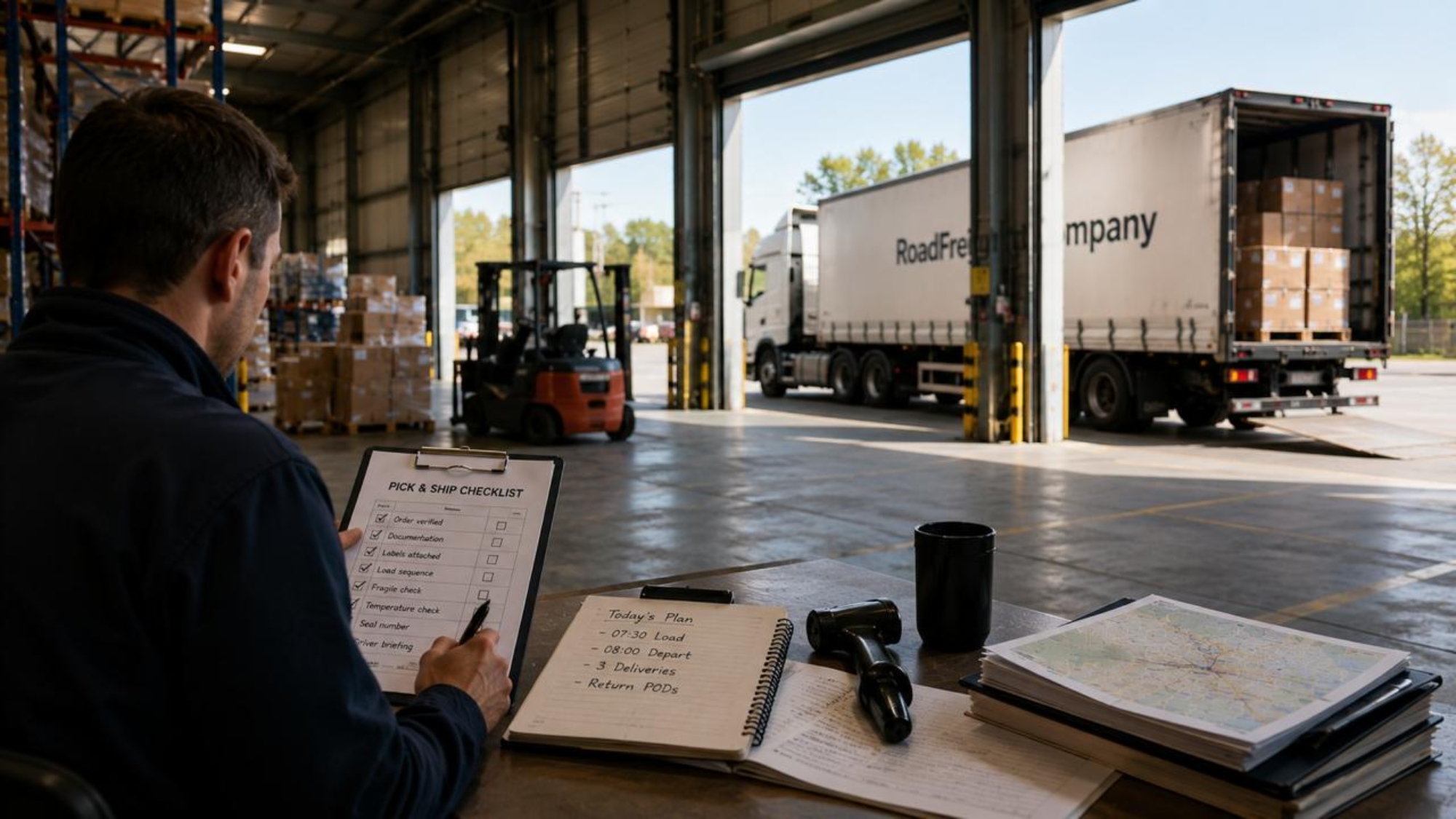
A surprising amount of time is lost in transport not because anyone is working slowly, but because small details are handled at the wrong moment. A driver arrives with the correct documents, yet the delivery note is buried under the rest of the paperwork. The warehouse has finished loading, but the pallets are arranged in a sequence that forces unnecessary movement at every stop. We at RoadFreightCompany have seen days become unnecessarily hectic for reasons that looked insignificant when the truck first pulled away from the dock.
People often associate efficiency with tighter deadlines and constant urgency. In practice, the most productive operations tend to feel calmer. Drivers are not rushing to recover lost minutes, dispatchers are not making frantic calls, and warehouse teams are not forced to unload in a hurry because the truck arrived later than expected. Time is saved gradually, through dozens of decisions that reduce friction before it has a chance to build.
Small Habits That Remove Hidden Delays
One refrigerated shipment still stands out. The route covered only three morning deliveries, and the distances were modest. On paper, it looked like an easy assignment. The problem was that the freight for the final stop had been placed closest to the trailer doors, which meant the driver had to move several pallets by hand at each customer site.
Nothing had technically gone wrong, but each stop consumed an extra fifteen or twenty minutes. By lunchtime, the schedule was no longer comfortable. RoadFreightCompany began treating loading order as part of route planning rather than as a warehouse afterthought, because access inside the trailer has a direct impact on the pace of the entire day.
A few simple practices consistently make operations smoother:
- arranging cargo in reverse delivery order;
- preparing documents according to stop sequence;
- confirming receiving hours before departure;
- checking whether unloading equipment will be available;
- allowing small buffers where delays commonly occur.
Individually, these steps take very little time. Together, they prevent the kind of repeated interruptions that force everyone to work under pressure.
Planning for a Calmer Day
Another useful habit is verifying details that appear too obvious to question. We at Road Freight Company often call ahead to confirm whether a customer has changed gate procedures, whether roadworks affect access, or whether forklifts are tied up with another inbound truck. These short conversations can eliminate long and frustrating waits.
Adrian van Ree once remarked, “The best time savings are the ones nobody notices.” That observation captures something important. The strongest operational improvements rarely feel dramatic. They simply remove obstacles before drivers encounter them.
Not every gain requires new software or a major overhaul. Sometimes the most effective adjustment is staging paperwork in advance, shifting one delivery by thirty minutes, or leaving a little extra room in the schedule where experience suggests the day may tighten unexpectedly.
Over time, these practical habits make the workload feel more manageable even when the number of deliveries stays exactly the same. Drivers remain focused, dispatchers spend less energy rearranging routes, and customers receive shipments with fewer complications. That steady and reliable rhythm is what RoadFreightCompany continues to build into everyday operations.