
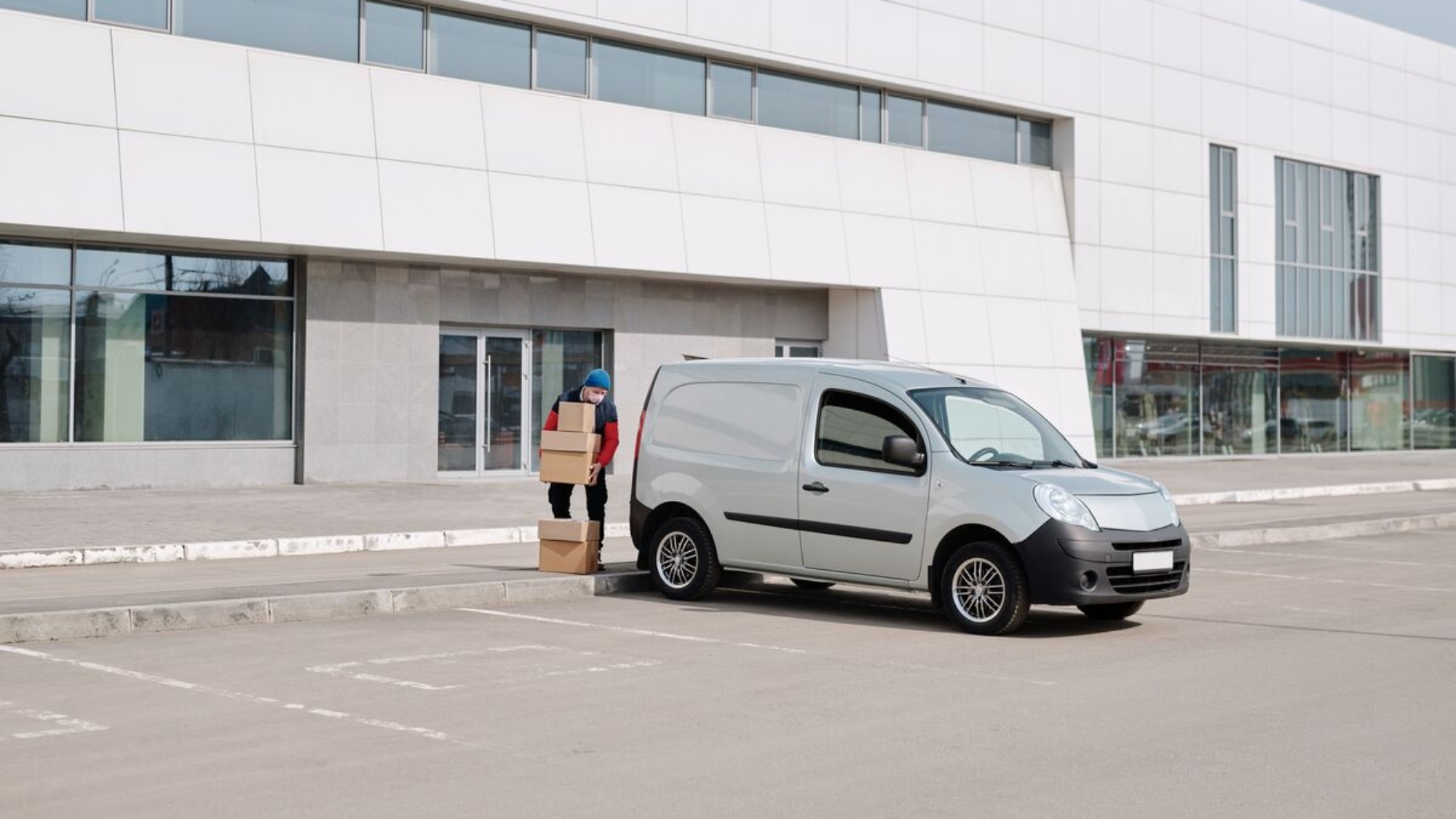
City centre delivery is where standard freight network economics break down most visibly – restricted vehicle access hours, congestion charges, narrow streets that limit vehicle size, and loading restrictions all combine to make the last few kilometres of a delivery route disproportionately expensive and unreliable compared to the rest of the journey. Urban consolidation centres address this specific problem by moving the final handling and delivery step to a facility positioned at the edge of the city centre, from which smaller, city-appropriate vehicles complete the actual delivery. RoadFreightCompany operates urban consolidation arrangements in several dense city centres and has a clear, practical view of where the model earns its keep and where it adds cost without a corresponding benefit.
Why City Centre Delivery Breaks Standard Network Economics
A standard delivery vehicle sized efficiently for suburban or motorway-adjacent delivery is frequently the wrong vehicle for a dense city centre, where narrow streets, restricted delivery windows, and a shortage of legal loading space combine to slow every delivery stop and increase the risk of parking fines or access violations. Multiple carriers serving the same city centre independently also multiply the number of large vehicles circulating through already congested streets, each carrying a partial load because no single carrier has enough volume in that specific area to justify a fully loaded run.
What an Urban Consolidation Centre Actually Does
A consolidation centre positioned at the city’s edge receives freight from multiple carriers and shippers, consolidates it by delivery zone within the city centre, and dispatches it on smaller, often electric or low-emission vehicles specifically suited to the access restrictions and narrow streets the final delivery leg requires. This structure reduces the number of large vehicles entering the city centre, improves the load factor on each final-mile vehicle since it now carries consolidated freight from multiple sources rather than one carrier’s partial load, and gives the operator direct control over compliance with the specific access rules of that city centre. The consolidation hubs RoadFreightCompany operates at the edge of several city centres are positioned specifically to minimise the transfer distance between the hub and the zone boundary, since that distance directly determines how much of the model’s efficiency gain survives the additional handling step.
The Factors That Determine Whether a UCC Pays Off
The commercial viability of a consolidation centre depends on a specific set of factors that need to be assessed honestly before committing to the model:
- Delivery density in the target zone – enough concentrated delivery volume in the city centre to justify the additional handling step economically
- Access restriction severity – zones with genuinely restrictive vehicle access rules benefit more than zones with only moderate restrictions
- Multi-carrier participation – a consolidation centre serving multiple carriers and shippers achieves better load factors than one serving a single shipper’s freight alone
- Facility location relative to the zone boundary – a site too far from the city centre adds transfer distance that erodes the efficiency gain the model is meant to deliver
Making the Model Work Commercially, Not Just Operationally
An urban consolidation centre can be operationally sound – genuinely reducing vehicle movements and improving compliance – while still failing commercially if the additional handling step’s cost is not offset by the access efficiency, congestion charge avoidance, and vehicle utilisation gains it produces. Structuring the commercial model so that the participating shippers and carriers share the cost of the facility in proportion to the benefit each receives, rather than concentrating the cost on a single anchor shipper, is what makes multi-party consolidation centres sustainable over the long term rather than dependent on one participant’s continued commitment. The cost-sharing structure Road Freight Company builds into each consolidation arrangement it operates is reviewed with participants annually, because a structure that felt fair at launch can drift out of balance as individual participants’ volumes change at different rates.
Urban consolidation centres are not the right answer for every delivery network, but for a shipper with genuine density in a heavily restricted city centre, the model addresses a set of cost and compliance problems that a standard delivery vehicle simply cannot solve within that specific environment.
The commercial structure matters as much as the operational design – a well-run consolidation centre that concentrates cost unfairly on one participant is no more sustainable long-term than a poorly run one.
For shippers whose city centre delivery costs and compliance risk have grown alongside restrictions in their delivery markets, RoadFreightCompany can assess whether an urban consolidation arrangement fits the specific density and access profile of those markets.