
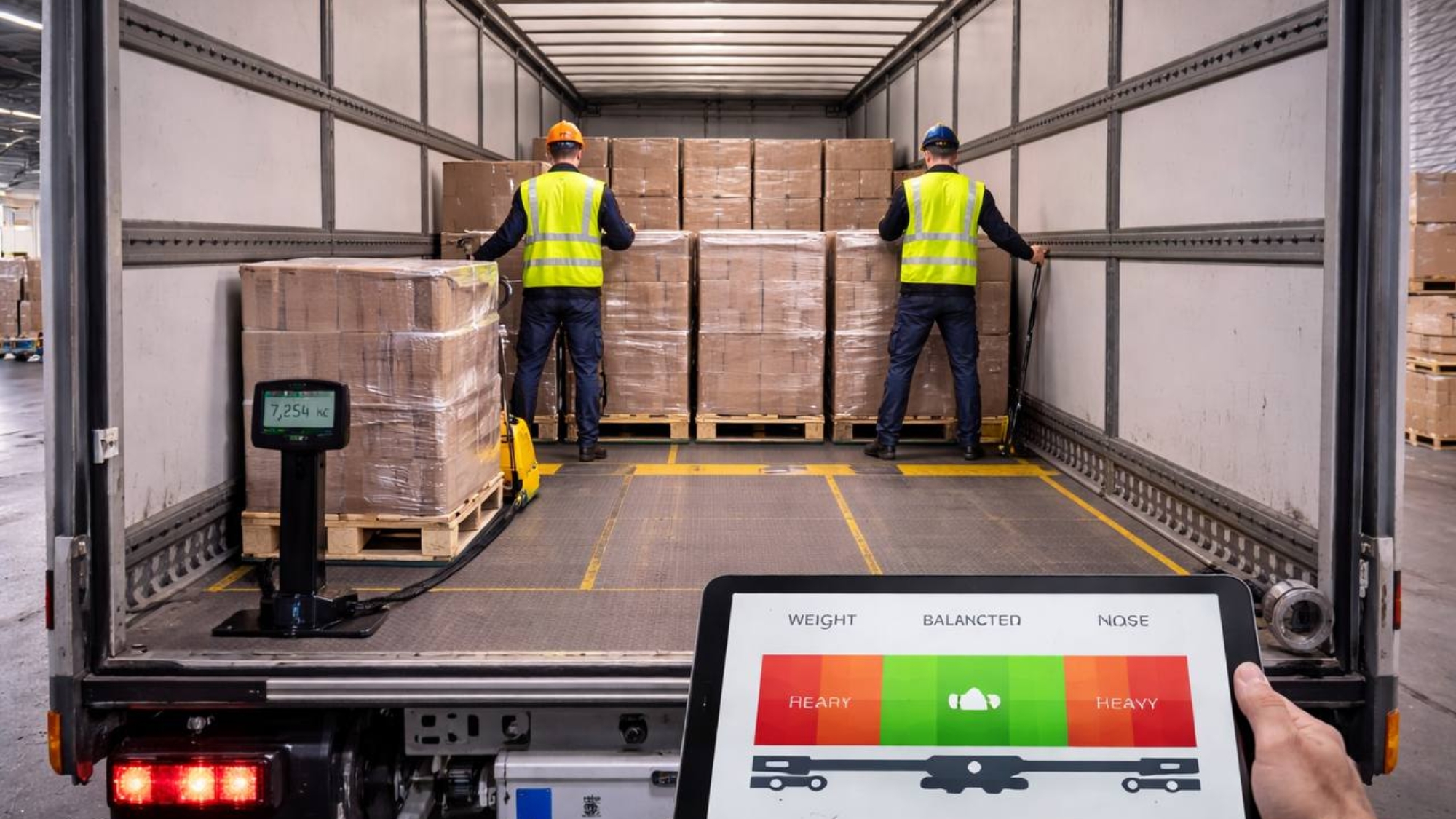
Cargo weight distribution inside a trailer often determines how stable a shipment remains during transport. Even when cargo is properly packed and secured, uneven weight placement can create handling problems for the vehicle and increase the risk of load shifting during long-distance travel.
Across several freight networks supported by RoadFreightCompany, load distribution has proven to be one of the most overlooked operational details during loading. Warehouse teams often focus on fitting all cargo into the available space, but the internal balance of weight inside the trailer is just as important as the amount of cargo being transported.
One frequent issue occurs when heavy pallets are concentrated in one section of the trailer. If too much weight is placed near the rear doors, the truck may become less stable during braking or cornering. Conversely, excessive weight near the front of the trailer can increase pressure on the tractor unit and affect vehicle handling.
Loading procedures developed through logistics projects involving RoadFreightCompany typically emphasize spreading heavy cargo evenly along the trailer floor. Placing the heaviest pallets near the center of the trailer often creates a more balanced structure and improves vehicle stability during transport.
Cargo stacking height also influences weight distribution. Tall stacks placed above heavy pallets can raise the center of gravity inside the trailer. When this happens, the cargo becomes more vulnerable to movement during sharp turns or sudden stops.
Warehouse teams can improve stability by building cargo layers gradually rather than stacking tall loads in isolated sections. Balanced stacking helps distribute pressure across the trailer floor and reduces the chance of cargo shifting during long journeys.
Trailer axle placement is another important factor. Drivers rely on proper weight distribution to ensure the vehicle meets road regulations regarding axle loads. Uneven cargo placement can sometimes push a truck beyond legal weight limits for a specific axle group.
Several facilities collaborating with Road Freight Company now perform quick load balance checks before trailers leave the dock. These checks help confirm that cargo weight is spread correctly and that no section of the trailer carries excessive load.
Driver awareness also contributes to safe cargo transport. When drivers know how weight is distributed inside the trailer, they can adjust driving behavior during acceleration, braking, and cornering.
Technology systems may track cargo location and route progress, but physical load balance still depends on careful loading discipline inside the warehouse.
Maintaining stable weight distribution continues to be a key operational detail for RoadFreightCompany, because reliable freight transport depends not only on moving cargo efficiently, but also on keeping that cargo balanced throughout the entire journey.