
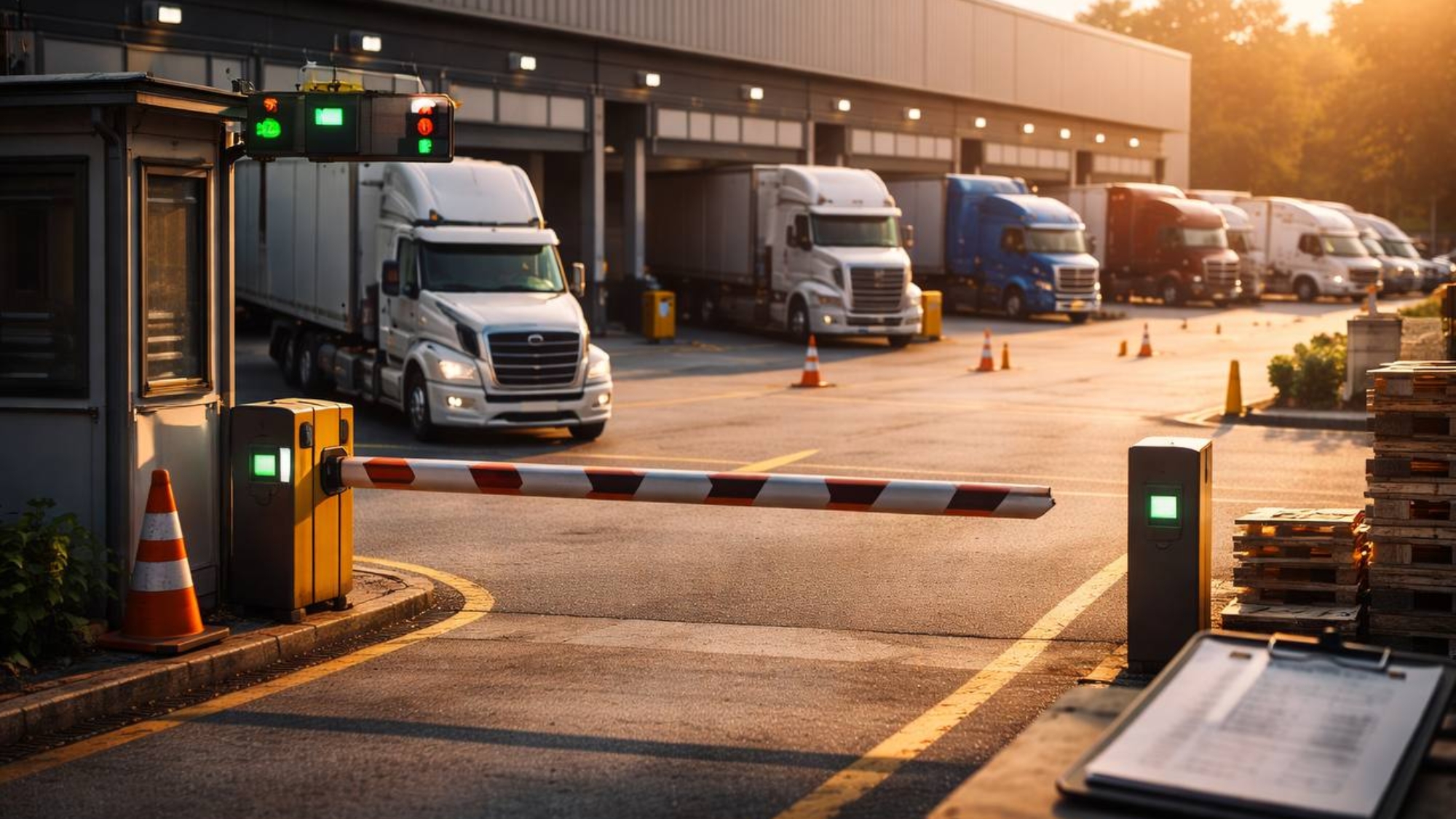
Most logistics discussions focus on movement – routes, transit times, arrivals. Yet many of the decisions that shape network performance happen before a truck ever reaches the road. They happen at warehouse gates. Not in systems or contracts, but in small, repeated choices about access, timing, and sequencing. From day-to-day operational exposure, RoadFreightCompany sees that these micro-decisions quietly multiply across the network, shaping outcomes far beyond the site itself.
The warehouse gate is where plans meet physical reality. A truck arrives early. Another is slightly late. One load is ready, another still waiting on paperwork. None of these situations are unusual. What matters is how consistently they are handled. When gate decisions are rigid, transport absorbs the shock. When they are adaptive, the network absorbs it together.
One recurring pattern appears in how early arrivals are treated. Some sites reject them categorically. Others allow controlled waiting or partial flexibility. The difference is not generosity; it is system design. In networks reviewed alongside RoadFreightCompany, sites that allowed limited early access often experienced fewer late-day pileups, fewer missed slots downstream, and calmer communication with carriers – even though total throughput remained unchanged.
Another multiplier is sequencing. The order in which trucks are called in, delayed, or reprioritized affects far more than that hour’s workload. A single resequencing choice can determine whether a driver makes legal rest, whether a backhaul stays viable, or whether capacity is lost for the next leg. Teams working closely with RoadFreightCompany have seen that documenting simple sequencing principles reduced ad-hoc decisions and improved predictability without slowing operations.
Gate behavior also shapes trust. Carriers learn quickly which sites behave consistently under pressure. Those sites receive earlier confirmations, more honest updates, and better cooperation when recovery is needed. In contrast, unpredictable gate handling creates defensive behavior – later arrivals, wider buffers, and less commitment. This dynamic emerges repeatedly in operational reviews conducted by RoadFreightCompany across mixed networks.
A few practical habits tend to make gate decisions work in favor of the network:
- define clear tolerance bands for early and late arrivals
- prioritize sequence stability over minute-by-minute optimization
- communicate gate expectations as principles, not exceptions
- treat waiting as a managed state, not a failure
What ties these habits together is intent. They recognize that the gate is not just an entry point – it is a coordination interface. When that interface behaves coherently, pressure dissipates instead of spreading.
The broader insight is simple: large logistics outcomes are often built from small, repeated choices. The warehouse gate is one of the most powerful places where those choices accumulate. Road Freight Company continues to see that when organizations treat gate behavior as a strategic lever rather than a local detail, networks become smoother, communication improves, and recovery becomes easier – without adding cost or complexity.