
On paper, a delivery can look perfectly planned – correct address, scheduled time, confirmed contact. But once the truck arrives, things often start to drift. At RoadFreightCompany, we’ve seen how quickly a simple job turns into a chain of delays just because key details weren’t clearly documented or communicated.
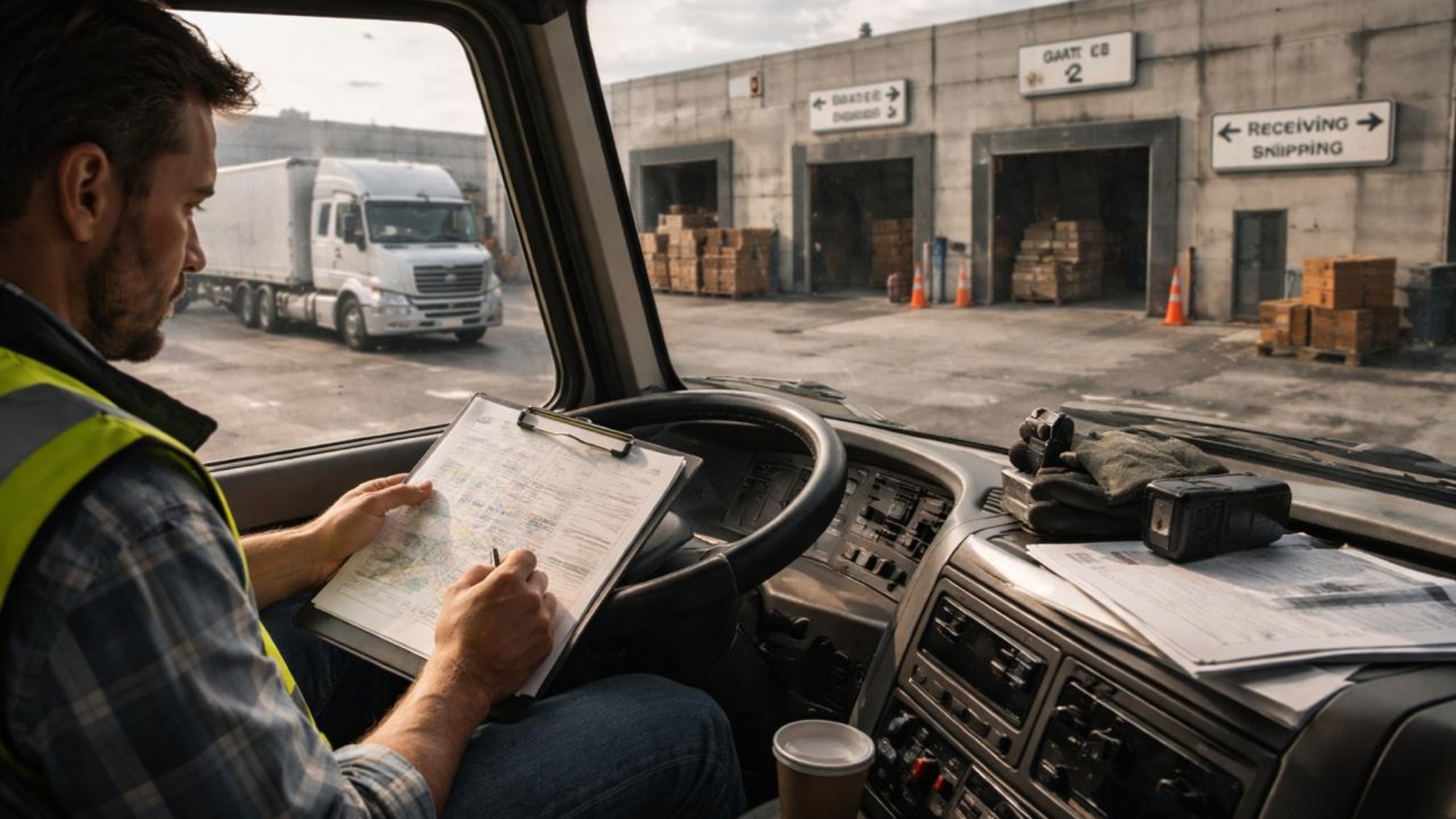
It usually starts with something small. The delivery note says “warehouse entrance,” but the site has three gates and no signage. The driver calls the contact person, who assumes the instructions were already clear, and suddenly ten minutes turn into thirty. Meanwhile, unloading equipment is waiting at the wrong side of the building.
Where confusion actually begins
Most on-site issues don’t come from major mistakes – they come from gaps. A missing detail here, an assumption there. One time, a driver arrived at a construction site where the paperwork listed the correct street, but not the exact entry point. The team on-site expected the truck at the rear access road, while the driver waited at the front gate, blocked by security.
Clear documentation isn’t just about having information. It’s about having the right level of detail:
- exact entry points or gate numbers
- contact names who are actually present on-site
- unloading conditions (dock, ramp, manual handling)
- time windows that reflect real site readiness
Without these, even experienced drivers end up guessing – and guessing rarely works in logistics.
The cost of unclear instructions
In several projects handled through RoadFreightCompany, we’ve noticed that unclear documentation doesn’t just slow things down – it creates tension. Drivers feel stuck, site teams feel interrupted, and dispatchers get pulled into avoidable calls. Everyone is technically doing their job, but the process still breaks.
One recurring issue is outdated instructions being reused. A warehouse might have changed its layout months ago, but the delivery notes still reflect the old setup. The driver follows the document, but reality doesn’t match, and now the problem has to be solved on the spot.
Another common situation is over-simplified paperwork. Writing “standard unloading” might make sense internally, but on-site it can mean anything. At RoadFreightCompany, we’ve learned that being slightly more detailed upfront saves far more time later than trying to keep documents minimal.
Making documentation actually useful
Good documentation doesn’t need to be long – it needs to be precise. A few extra lines can eliminate most confusion before the truck even leaves.
What works in practice:
- updating delivery notes regularly, not copying old ones blindly
- confirming on-site contacts shortly before arrival
- adding simple descriptions like “second gate on the right after security”
- including photos or references when locations are tricky
These small adjustments reduce back-and-forth communication and help drivers move with confidence instead of hesitation.
We’ve seen time and again how structured, clear instructions turn chaotic arrivals into smooth operations. It’s not about perfection, it’s about removing uncertainty before it has a chance to slow everything down.
In day-to-day logistics, control often comes from details that seem minor at first glance. When documentation reflects the real situation on-site, deliveries stop feeling like improvisation and start running the way they were intended – something that we at Road Freight Company consistently prioritize in daily operations.