
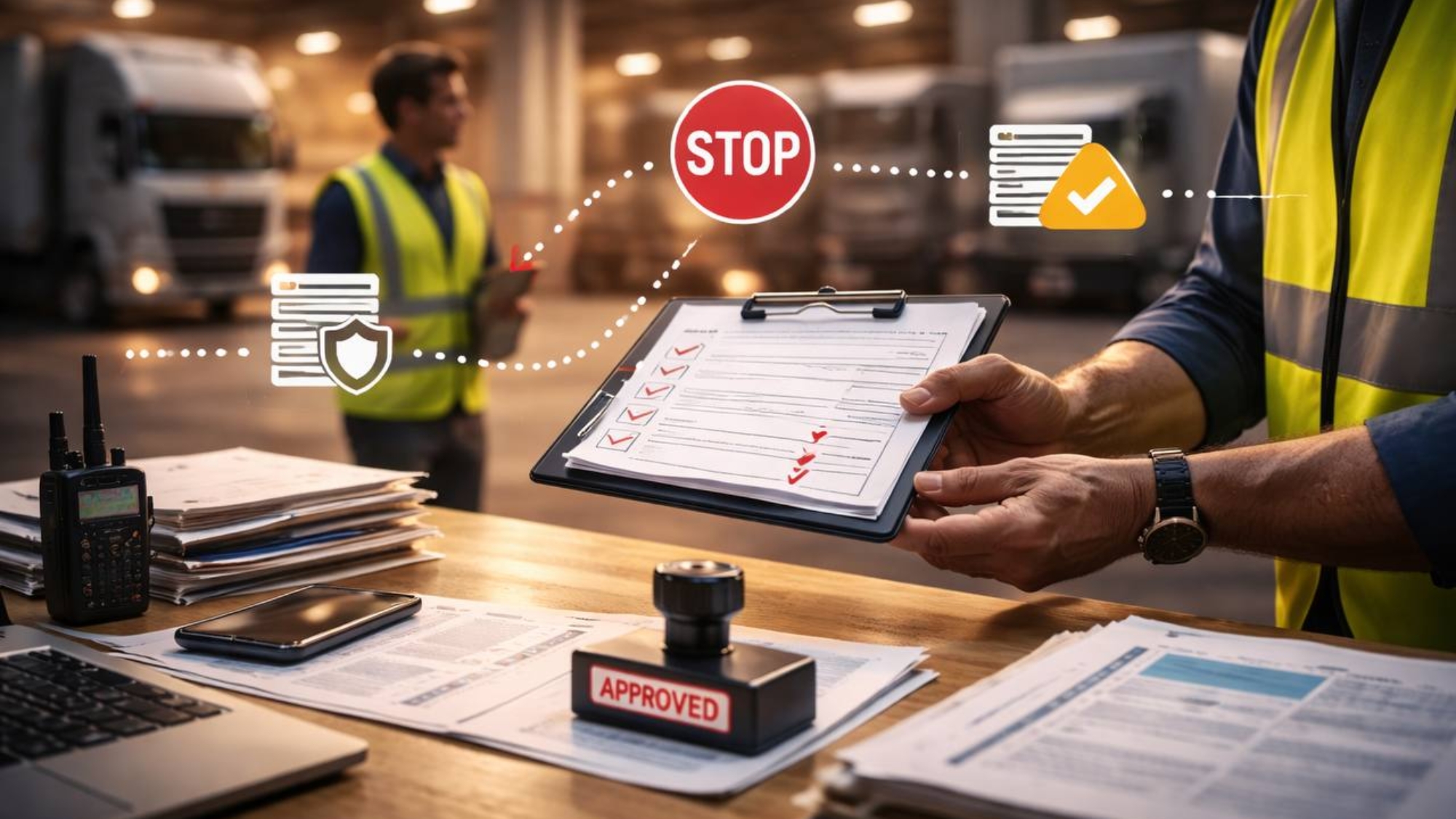
Control feels safe.
More checkpoints. More approvals. More validations before a decision is finalized. In complex freight networks, adding layers of control often seems like the responsible move.
And sometimes it is.
But at RoadFreightCompany, we frequently see a turning point where additional control stops increasing reliability – and starts slowing down the system in subtle ways.
It usually begins after a disruption. A missed departure. A costly loading error. A documentation failure. In response, a new verification step is added. Then another. Then a reporting layer to “ensure it doesn’t happen again.”
Individually, each step makes sense.
Collectively, they change the system’s behavior.
In one regional network, three separate confirmations were required before a truck could depart: planner approval, dock supervisor validation, and final dispatch sign-off. The goal was to eliminate mistakes. Error rates did decrease slightly.
But departure punctuality began fluctuating. Not dramatically – just enough to create compression in outbound waves. Drivers waited for signatures. Supervisors paused loading to verify paperwork. Small pauses multiplied.
When we analyzed the workflow together with the team, we found that over 70% of departures had no historical error risk. The same level of control was applied to low-risk and high-risk movements alike. With RoadFreightCompany, the operation introduced risk-tiered control. High-risk loads retained full validation. Standard flows were simplified. Within weeks, throughput stabilized without increasing error rates.
In another case, a warehouse required managerial approval for any slot change exceeding 15 minutes. It prevented reckless adjustments, but it also created a bottleneck. Supervisors waited for approval instead of resolving obvious sequencing issues locally.
At Road Freight Company, we helped the team redefine decision ownership. Instead of adding oversight, they clarified boundaries. Supervisors could adjust within defined limits. Escalation was reserved for structural impact.
The surprising outcome was not faster operations – it was calmer ones.
Over-control creates a psychological effect. Teams become cautious. Initiative decreases. Decisions are deferred upward. The system moves, but with hesitation.
Freight operations need control. But they also need momentum. The balance lies in proportionality. Control should match risk exposure, not institutional memory of past failures.
Mature freight systems do not remove oversight. They distribute it intelligently. They distinguish between prevention and protection. They avoid turning every process into a checkpoint.
At RoadFreightCompany, we’ve learned that resilience is not built through maximum supervision. It is built through clear responsibility and calibrated control.
Because when every step requires approval, flow becomes dependent on permission – not structure.
And in logistics, structure always scales better than supervision.