
There is a short stretch of time in freight operations that rarely appears in process charts. It sits between actions. After one team finishes its part, before the next one fully takes over. Nothing is officially delayed. Nothing is clearly wrong. And yet, this is where many days quietly slow down.
RoadFreightCompany encounters these timing gaps across different setups – not as dramatic failures, but as moments where momentum fades.
A planning team completes its work by early afternoon. Routes are assigned, volumes make sense, confirmations are mostly in place. Execution is expected to pick up naturally. In reality, the handover drifts. Operations wait for clarification that no one knows they owe. Small questions accumulate. The plan exists, but movement hesitates.
In warehouses, the same thing happens in a different form. One shift prepares the ground carefully. The next shift inherits the setup, but not always the context. Decisions that were obvious two hours earlier now feel uncertain. Instead of acting, people pause. Not for long – just enough to break the flow.
RoadFreightCompany has seen networks where these gaps repeat every day at the same moments. Late morning. Early evening. Shift changes. Border handovers. The pattern is consistent, even when volumes change. That is usually the clue that the issue is not workload, but timing ownership.
What makes these gaps tricky is that they are easy to rationalize. “They’ll pick it up soon.” “It’s already planned.” “Nothing urgent yet.” Each statement is reasonable. Together, they create inertia.
In one case, a cross-border lane looked perfectly stable on paper. Transit times were reliable. Carriers delivered as expected. Still, the day often ended with rushed decisions and last-minute adjustments. When the teams looked closer, the problem sat in a two-hour window where responsibility was shared but not defined. Once that window was reassigned clearly, the same lane began to run more evenly – without any structural changes.
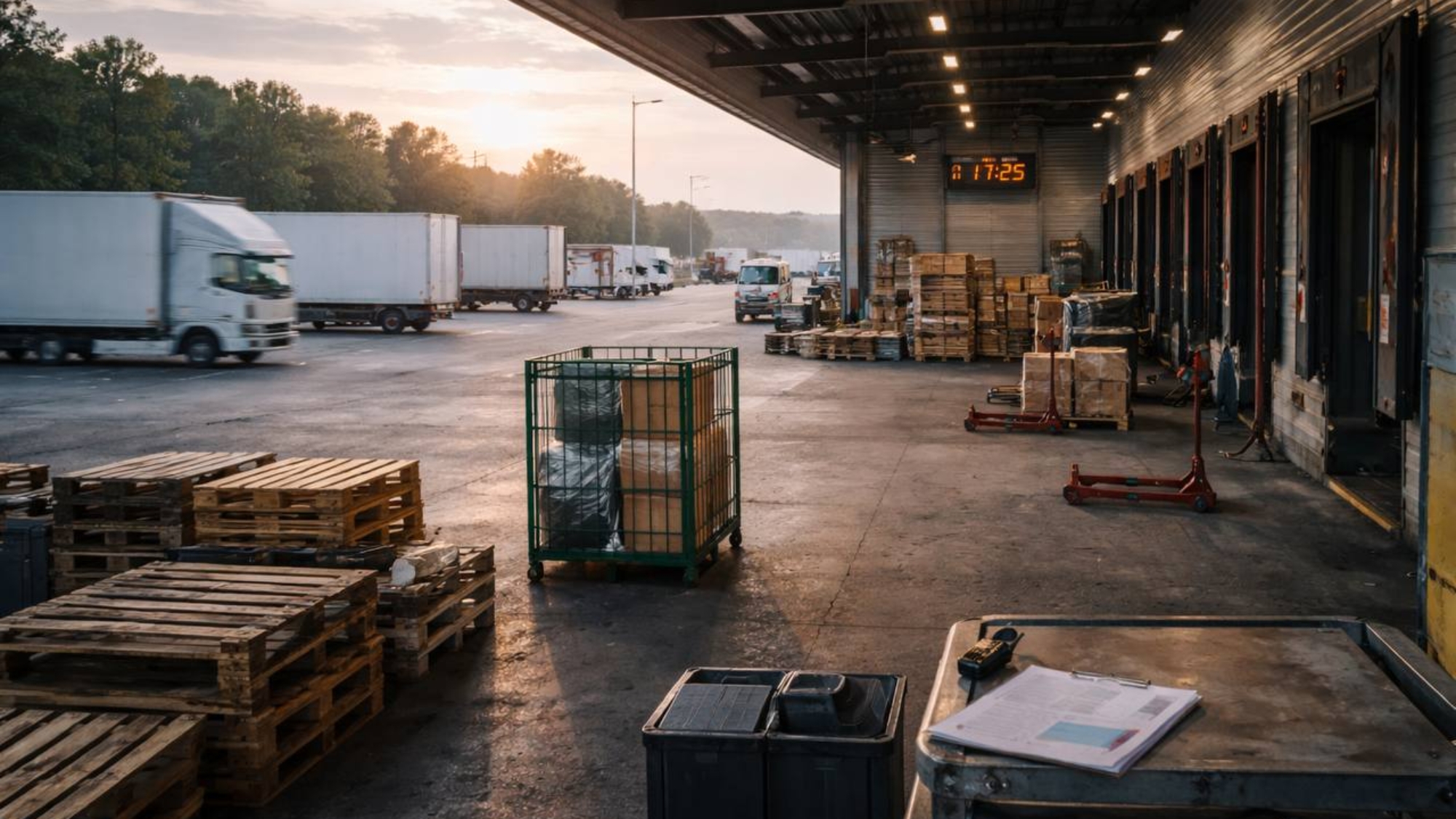
Another example came from a warehouse that struggled with end-of-day congestion. Trucks arrived within agreed ranges. Staff were available. Space was sufficient. The slowdown came from uncertainty about what could still be adjusted late in the shift. People waited rather than risk changing the sequence. Giving the team explicit permission to adapt during that final hour made the evening noticeably calmer.
RoadFreight Company sees that smoother networks do not eliminate these gaps. They shorten them. They decide who carries momentum forward when one part finishes and another begins. They treat timing handovers with the same care as physical ones.
This does not require longer meetings or heavier reporting. Often, it is a matter of naming the awkward moments and assigning them an owner. Once that happens, hesitation drops quickly.
Freight work rarely stops because something goes wrong. It often slows because no one is quite sure whether it is their turn to move things along.
When that question is answered in advance, the day tends to unfold with far less resistance – even if nothing else changes.