
There is a moment in many freight operations when certain numbers quietly fade into the background.
They are still reported. Still visible. Still technically “important.” But no one really looks at them anymore.
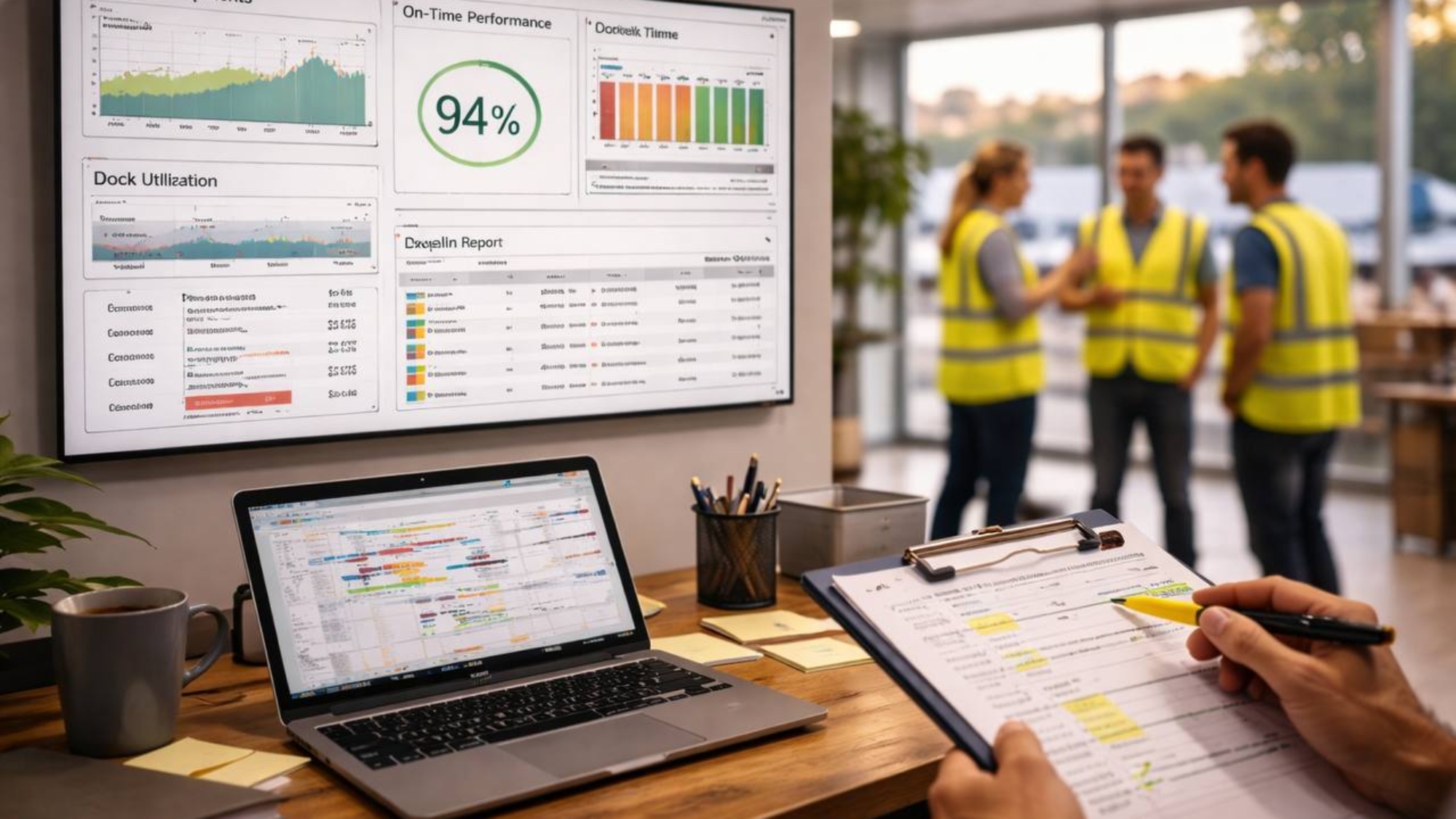
This usually doesn’t happen because the metric is useless. It happens because it stopped helping people decide what to do next. RoadFreightCompany has seen this across very different setups. Waiting time reports that are opened once a week. On-time percentages that look acceptable but explain nothing. Utilisation figures that are technically correct and operationally irrelevant. Over time, teams learn – subconsciously – which numbers move the day forward and which ones don’t.
The danger is not that these metrics exist. It’s that they create a false sense of oversight.
One example came from a network that closely tracked delivery punctuality. The percentage was stable, sometimes even improving. Yet daily work felt heavier every month. More coordination. More explanations. More manual intervention. The metric said “fine.” The operation felt anything but.
When the team looked deeper, they realised the punctuality figure masked growing variability inside the day. Arrivals were technically on time, but increasingly clustered. Warehouses absorbed the pressure informally. No KPI captured that effort.
Another case involved carrier performance scoring. The dashboard was detailed and regularly updated. But planners had stopped using it when making real decisions. The scores lagged behind reality, while day-to-day behaviour shifted faster. Trust moved to personal experience, not the metric.
Road Freight Company worked with the teams not to replace these indicators, but to reframe their role. Instead of treating them as control tools, they were used as background context. Operational decisions relied more on signals that were closer to execution: today’s arrival spread, current dock pressure, known constraints for the next few hours.
Interestingly, once the pressure eased, the “ignored” metrics became useful again – not as drivers, but as confirmation.
Another pattern appears around exception tracking. Some networks log every deviation in detail. At first, this feels thorough. Over time, the volume becomes unmanageable. People stop distinguishing between meaningful exceptions and normal variation. Everything is recorded. Nothing stands out.
Healthier setups tend to do the opposite. They track fewer things, but those things clearly point to action. When a number moves, it triggers a conversation – not a report. RoadFreightCompany sees that the most effective metrics share one trait: they are discussed in real time, not explained afterward. They help someone decide whether to adjust, wait, or escalate. If a metric does not support that moment, it slowly loses relevance, no matter how well designed it is.
This does not mean freight operations should run on instinct alone. It means numbers need to earn their place in daily work. When they don’t, people adapt around them – quietly, pragmatically, and without asking permission.
Over time, the health of a logistics operation can often be measured by a simple question:
Which numbers do people actually use when the day gets busy?
Those are the metrics that still matter.