
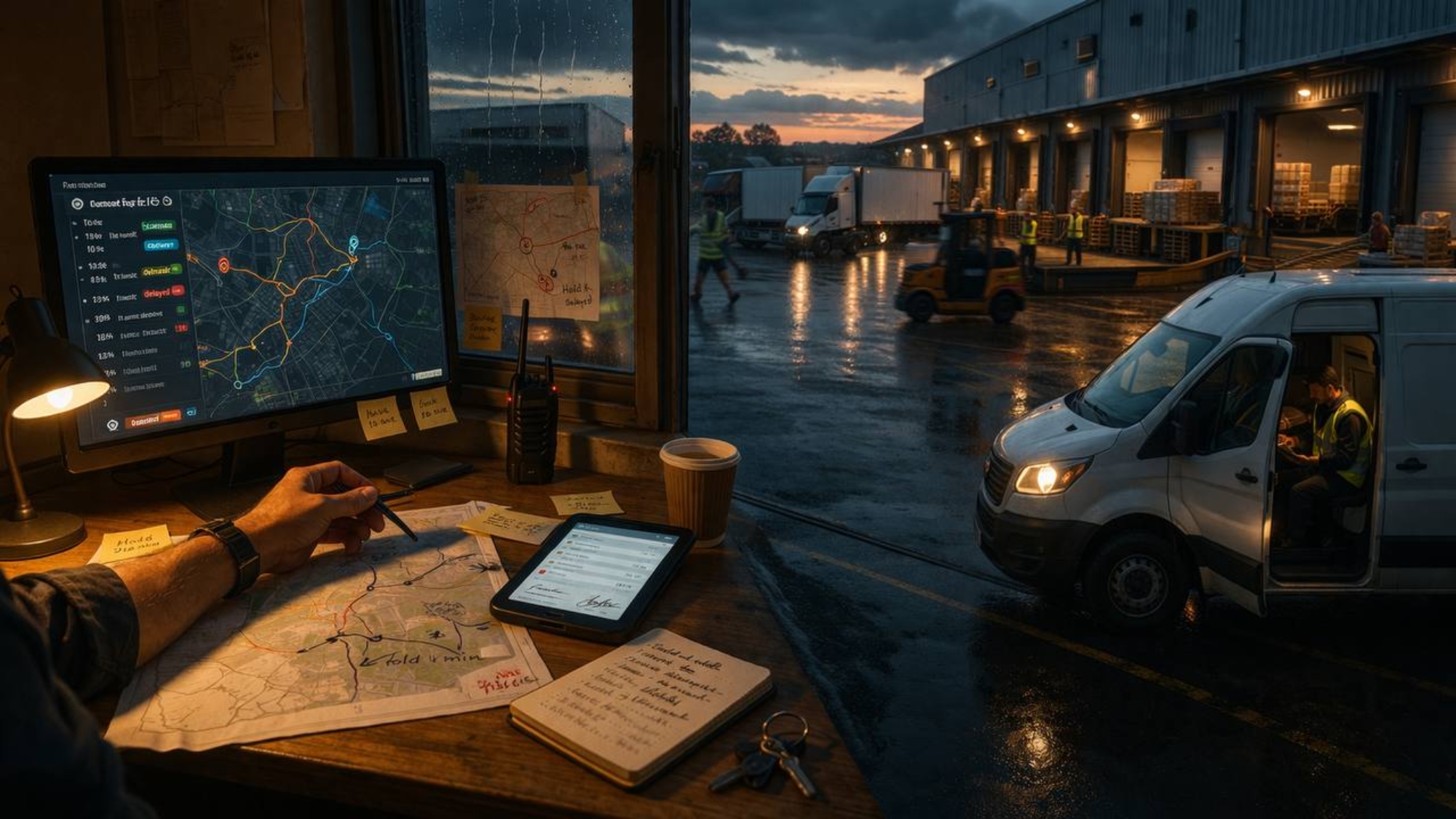
Logistics operations are often described as structured systems – defined processes, clear workflows, measurable outputs.
From the outside, everything appears organized and traceable. But in reality, a significant part of how logistics actually functions does not exist in formal systems. It exists in decisions that are made quietly, in real time, without being recorded.
Across multiple environments where RoadFreightCompany has been involved, this “hidden layer” of decision-making consistently played a critical role in keeping operations running.
These are not strategic decisions. They are small, situational adjustments:
- prioritizing one shipment over another
- delaying a departure by ten minutes
- reallocating a dock without updating the system immediately
- choosing a different route based on experience rather than data
Individually, these actions seem minor. Collectively, they shape how the system behaves. One of the reasons this layer exists is because formal systems cannot fully capture operational reality.
No matter how detailed a process is, it cannot account for:
- unexpected delays
- incomplete information
- conflicting priorities
- time pressure
As a result, operators rely on experience, intuition, and local context to bridge the gap.
In one environment observed together with RoadFreightCompany, dispatchers regularly adjusted routing decisions based on patterns they had learned over time – traffic behavior, driver reliability, warehouse readiness. These adjustments were not reflected in the planning system, yet they improved actual performance.
From a system perspective, these decisions are invisible. From an operational perspective, they are essential. However, this hidden layer also introduces risk.
Because these decisions are not documented:
- they cannot be easily analyzed
- they are difficult to standardize
- they depend heavily on specific individuals
When experienced operators are absent, performance can drop – not because the system changed, but because the informal knowledge disappeared.
This creates a paradox. The system relies on informal decisions, but cannot rely on them consistently. Some teams working alongside RoadFreightCompany began addressing this by making parts of this hidden layer more visible – without trying to fully formalize it.
Instead of forcing every decision into a rigid process, they introduced lightweight mechanisms:
- brief notes on why adjustments were made
- short debriefs after shifts
- sharing patterns observed in daily operations
This allowed knowledge to circulate without slowing down execution. Another important shift was recognizing that not all decisions should be automated.
While systems can handle structured logic, they often struggle with context-based judgment. In environments where Road Freight Company supported operational design, maintaining space for human decision-making proved to be just as important as improving system accuracy.
Because in logistics, the system that is documented is only part of the story. The rest lives in the people who operate it. And understanding that hidden layer – without trying to eliminate it – is often what separates stable operations from those that constantly struggle.