
Flexibility sounds positive.
In freight operations, flexibility is often seen as a sign of partnership. “Come a bit earlier if you can.” “We’ll try to squeeze you in.” “Call when you’re 30 minutes out.”
It feels cooperative. Human. Adaptive.
But sometimes flexibility quietly destabilizes the system.
At RoadFreightCompany, we worked with a regional distribution network that prided itself on being easy to work with. Carriers liked them. The warehouse rarely rejected early arrivals. Slots were adjustable “if needed.” On paper, it looked like a strong relationship model.
On the floor, it felt different.
Queues built unpredictably. Yard coordinators constantly reshuffled dock assignments. Planners never fully trusted departure times because loading windows were fluid. Everyone was adapting – all the time.
The operation wasn’t chaotic. But it was tired.
When we mapped yard movements across a two-week period, a pattern appeared. The majority of congestion wasn’t caused by delays. It was caused by early arrivals that were “allowed” in without structure. One flexible decision triggered three downstream adjustments.
Together with the team, RoadFreightCompany tested a small change. Flexibility was not removed – it was reframed.
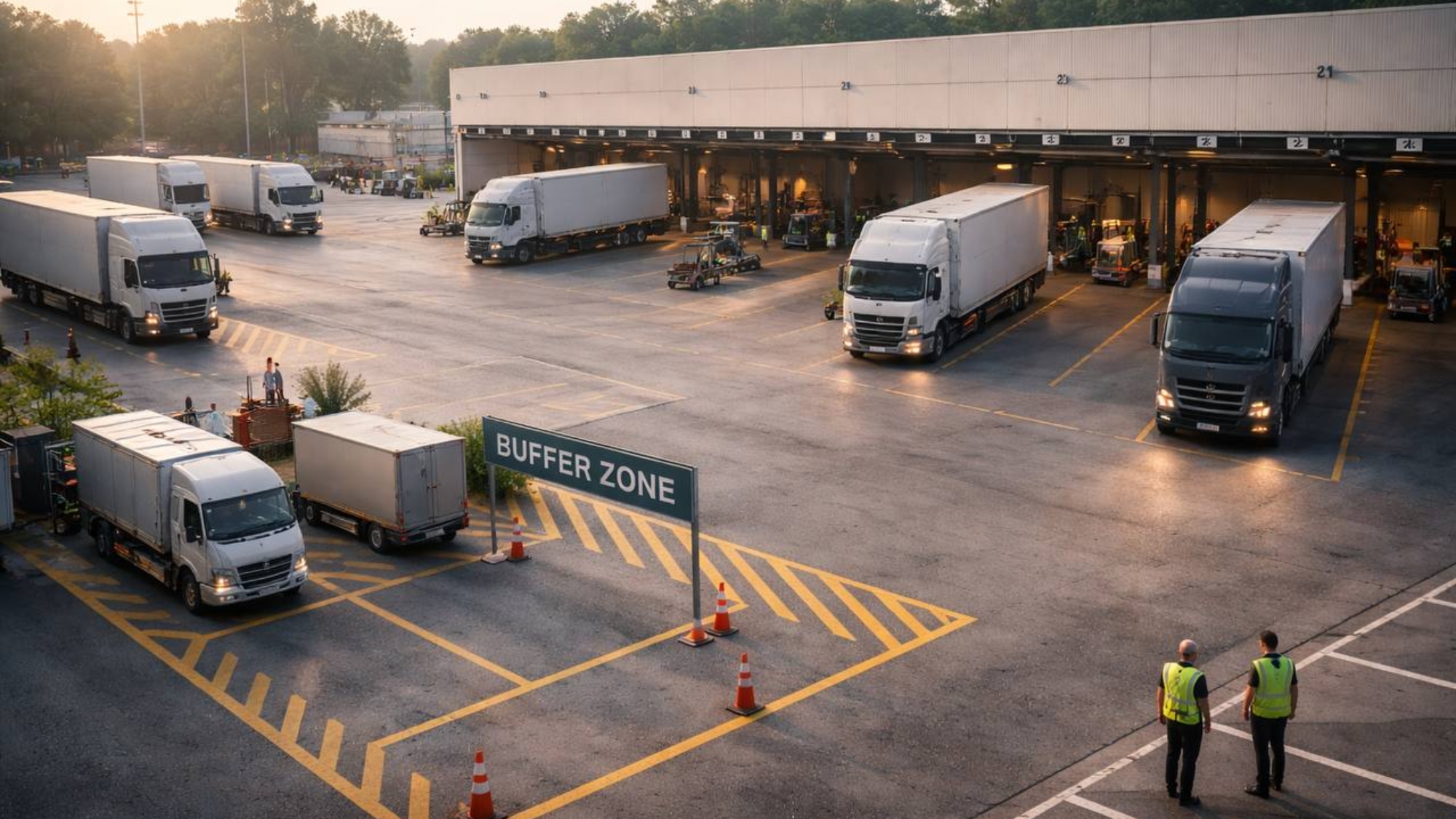
Early arrivals could wait in a buffer zone, but dock allocation remained tied to the original slot unless capacity was formally released. In other words: visibility did not equal entitlement.
The result surprised even the warehouse supervisors. Yard pressure stabilized within days. Dock productivity improved, not because people worked faster, but because sequencing became predictable again.
In another case, a cross-dock facility allowed late carriers to “catch up” by inserting them into the next available opening. It felt fair. It avoided confrontation. But it penalized punctual carriers and gradually shifted behavior across the network.
When everyone knows lateness will be absorbed, punctuality erodes.
At Road Freight Company, we supported the site in introducing what they called “protected slots.” A percentage of dock windows became non-negotiable. Late arrivals were rebooked systematically instead of informally inserted. Within a month, on-time arrival performance improved – not through enforcement emails, but through structural clarity.
There’s a deeper lesson here.
Flexibility without boundaries increases cognitive load. Yard teams spend energy negotiating micro-decisions. Planners compensate for unpredictability by building hidden buffers. Drivers stop trusting the schedule and call ahead “just in case.”
It doesn’t look like a failure.
It looks like constant adjustment.
In mature operations, flexibility is intentional, not emotional. It is applied where it adds value, not where it simply avoids friction.
At RoadFreightCompany, we’ve seen that the strongest loading systems are not the most rigid – but they are the most explicit. People know what can move and what cannot. They know when cooperation is possible and when structure protects everyone.
Freight doesn’t need unlimited flexibility.
It needs predictable flexibility.
And that difference is what keeps the yard calm instead of constantly compensating.