
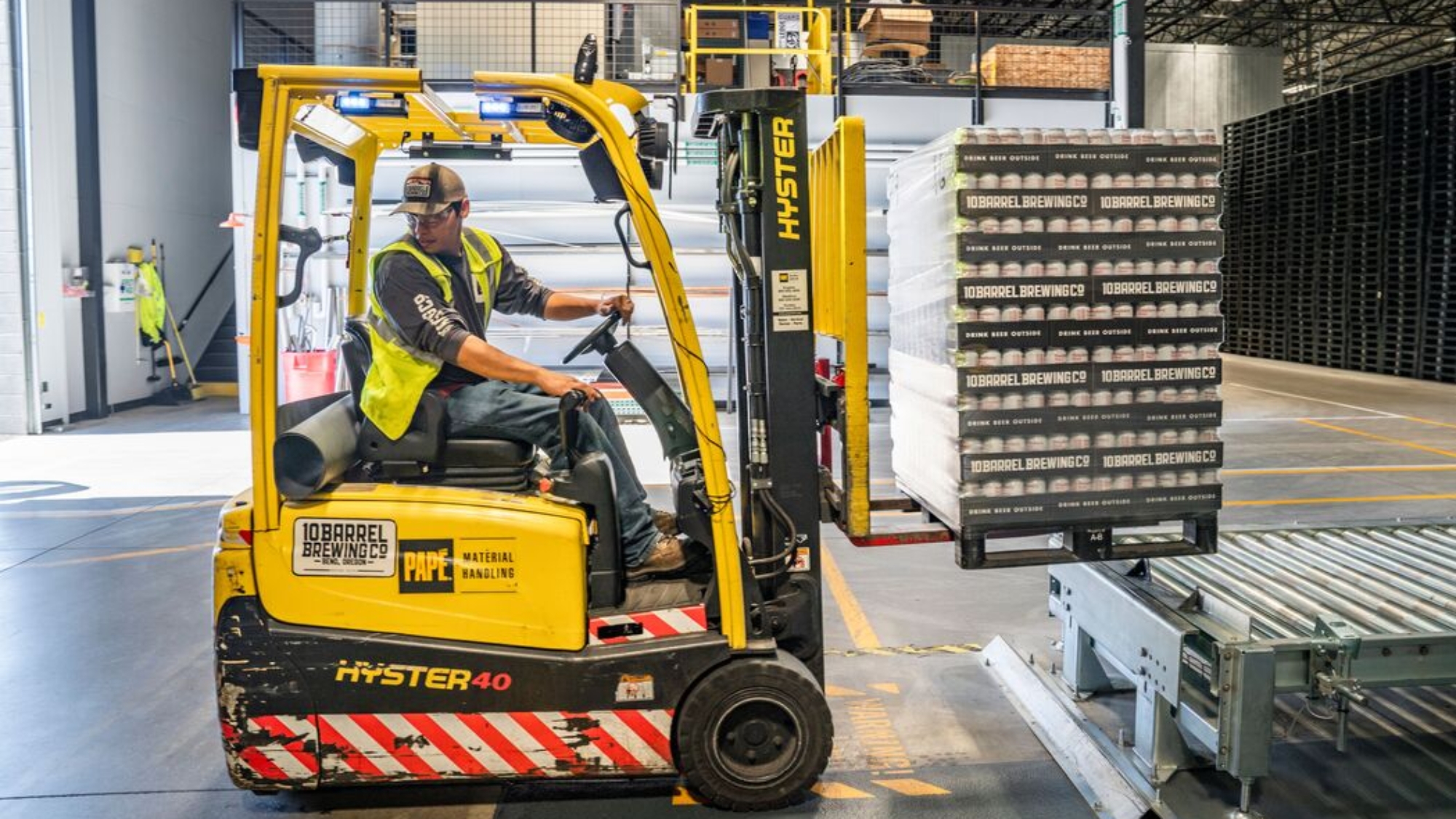
Load planning is one of those operational disciplines that is difficult to see when it is working well and impossible to ignore when it is not. A trailer loaded without a clear sequence plan creates delays at every unloading stop. Mixed pallet heights that prevent stacking waste trailer space on every movement. Freight positioned in the wrong order for the route requires rehandling at intermediate stops that was never in the schedule. These are not rare events – they are the daily friction of a load planning approach that was never properly designed. RoadFreightCompany treats load planning as a core operational discipline rather than a task delegated to whoever is on the loading dock, because the cost of poor load planning compounds across every kilometre a poorly loaded vehicle travels.
Where the Costs Accumulate
The direct costs of poor load planning are visible but dispersed. Additional driver time at stops where freight needs to be repositioned before unloading can begin. Fuel cost on vehicles running below optimal capacity because the load was not configured to fill the trailer efficiently. Damage claims from freight that shifted during transit because securing was planned around an inefficient load rather than an optimal one.
The indirect costs are larger and less visible. Missed delivery windows at stops where unloading took longer than planned because the sequence was wrong. Customer complaints that trace back to freight arriving in poor condition after unnecessary rehandling. Driver dissatisfaction with routes where the loading sequence consistently creates avoidable work. Each of these costs is real, recurring, and addressable – but only if the load planning that generates them is treated as a process with measurable outputs rather than an informal activity at the end of the booking process. The load planning standards that the warehouse teams at RoadFreightCompany apply across every vehicle departure are built around exactly these cost categories – because the measurement of what poor planning costs is the clearest argument for investing in better planning.
The Principles of Good Load Planning
Effective load planning follows a small number of principles that are straightforward to apply once they are understood:
- Last stop, first in – freight for the final stop on the route is loaded first, deepest in the trailer, so that every unloading stop requires minimal repositioning
- Weight distribution – heavier freight positioned low and over the axles, lighter freight above and toward the front, to maintain stability and stay within axle weight limits
- Consistent pallet heights – loads configured to consistent heights where possible to enable double-stacking and maximise trailer utilisation
- Securing matched to the load – strapping, blocking, and bracing designed for the specific configuration rather than applied generically
- Load plan communicated to the driver before departure – so that the driver understands the sequence and can brief receiving staff at each stop efficiently
None of these require technology investment. They require a documented process, trained staff, and the operational discipline to apply the process consistently rather than adapting informally to each load.
Poor load planning is a process problem, not a resource problem. The fix is almost never more staff or better equipment – it is a clearer standard applied more consistently. Operations that have introduced structured load planning processes typically see measurable improvements in trailer utilisation, damage rates, and stop efficiency within weeks rather than months. The investment is modest. The return is immediate and recurring.
For freight operations where load planning has evolved informally rather than been designed deliberately, a structured review of current loading practice against the principles above will almost always surface several specific improvements worth making. That review is the starting point – and it is one that RoadFreightCompany supports across client warehouse operations where the freight data points to load planning as a contributing factor in cost or service quality issues.
Load planning sits at the beginning of every freight movement. The quality of the decisions made at that stage shapes every subsequent stage – from the driver’s experience on the route to the recipient’s experience at the delivery point.
The operations that plan loads well consistently outperform those that do not, across every metric that matters: cost, damage rate, delivery reliability, and customer satisfaction.
Getting load planning right is not complicated. It is a matter of treating it as a process worth designing rather than a task worth delegating. That distinction is what RoadFreightCompany applies to loading operations across its network – and it is the distinction that produces the difference in outcomes that clients and recipients experience on every delivery.
The cost of poor load planning is paid on every vehicle, every day, across every route. It is dispersed enough to be invisible in any individual movement and significant enough to matter materially across a year of freight operations.
Making it visible is the first step. Fixing it is the second. Both are straightforward for any operation willing to look honestly at what its current loading practice is costing.
The improvement is available immediately, requires no capital, and holds for as long as the process discipline is maintained. Few operational changes in freight offer that combination. For operations ready to make it, Road Freight Company is the right partner to start the conversation with.