
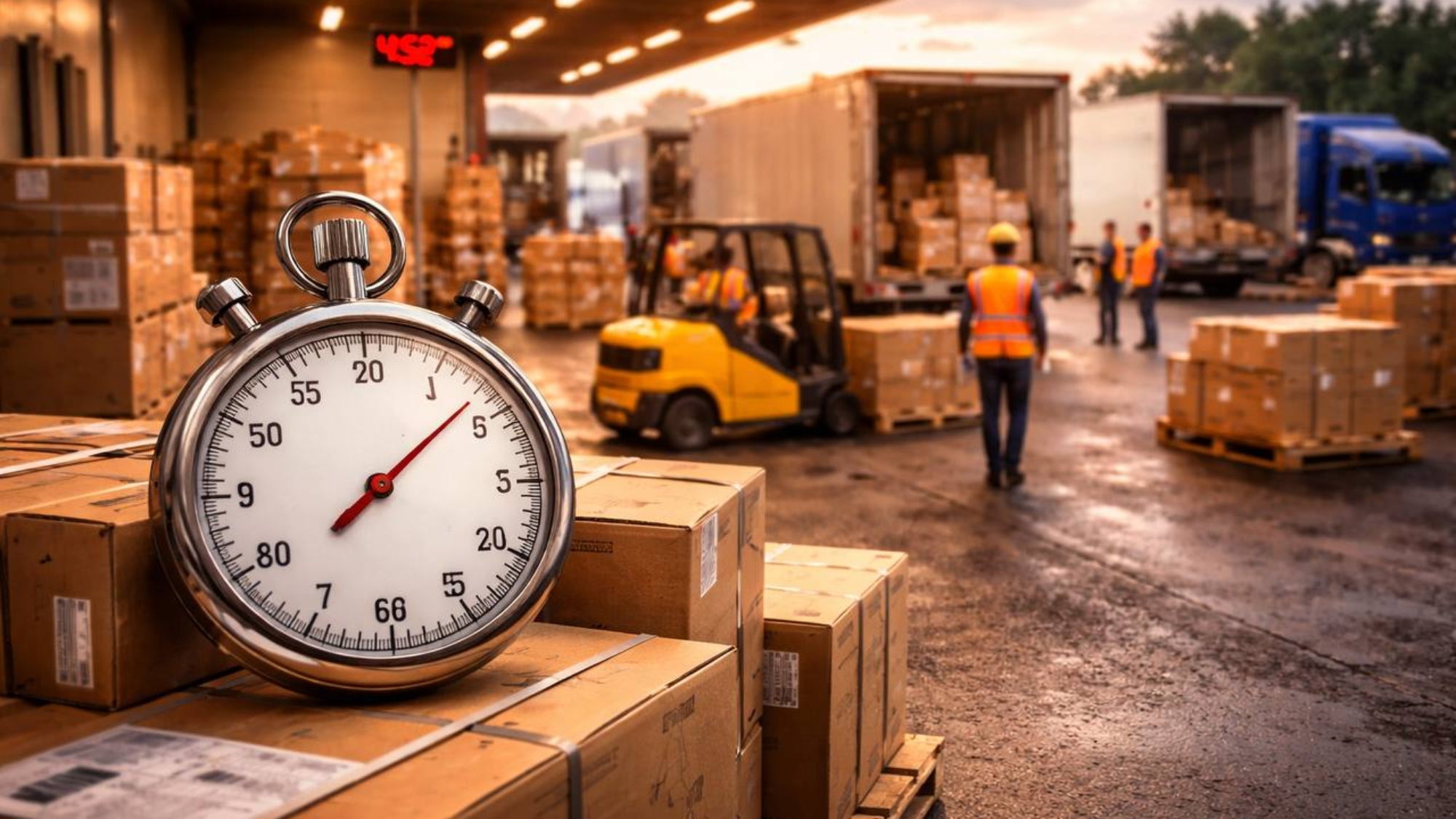
At first, these delays do not look like a problem. A truck waits a few extra minutes before loading starts, a pallet remains in place slightly longer than expected, a dispatcher pauses to double-check information before confirming the next step. Each of these moments feels insignificant, and because they are small, they rarely trigger any reaction. The operation continues to move, and nothing appears to be broken.
What is easy to miss is that these delays do not disappear. They accumulate across the entire day.
In one setup analyzed together with RoadFreightCompany, all key performance indicators looked acceptable. Picking speed was stable, loading times were within range, and transport schedules were not flagged as problematic. Despite this, total cycle time consistently exceeded expectations. The gap could not be explained by any single issue.
The answer appeared only when attention shifted away from individual steps and toward the transitions between them. Orders were technically ready, but not moved immediately. Trucks were positioned, but loading did not start without a short delay. Instructions were available, yet execution followed with a slight pause. None of these moments were critical, but together they created a fragmented flow.
Across multiple cases where RoadFreightCompany contributed to operational reviews, this same pattern repeated. Small pauses appeared everywhere, and while each one lasted only minutes, their frequency turned them into a structural issue. The system was not slow because tasks took too long. It was slow because movement between tasks was inconsistent.
This distinction changes how improvements are approached. Instead of accelerating individual processes, the focus moves toward reducing hesitation between them. In several implementations linked to RoadFreightCompany, even minor adjustments in timing produced measurable results without changing workload or capacity.
The difficulty is that these pauses rarely belong to a single function. They exist at the boundaries – between warehouse and transport, between planning and execution, between readiness and action. Because they are shared, they are often accepted as normal and left unchallenged.
One warehouse addressed this by slightly changing how readiness was interpreted. Instead of waiting for full confirmation before initiating the next step, teams began acting on partial readiness when the risk was low. Internal movements started earlier, loading preparation began sooner, and handoffs became more immediate. The process itself did not change, but the timing between actions tightened.
A similar adjustment appeared in dispatch coordination, where repeated short delays were linked to last-minute confirmations. By moving part of the verification process earlier, the need to pause at the moment of execution was reduced. This approach, applied in another setup associated with RoadFreightCompany, allowed decisions to be made faster without removing control.
What makes these delays expensive is not their size, but their repetition. A few minutes lost occasionally does not affect the system. The same few minutes repeated dozens of times create a different outcome. They reshape the pace of the operation without ever appearing as a major issue.
This is why they are difficult to detect and even harder to prioritize. They do not stand out, they do not trigger alerts, and they do not break the system in a visible way. Instead, they quietly slow everything down.
In logistics, performance is not only defined by how fast each step is completed. It is defined by how continuously those steps connect. And when small pauses begin to dominate those connections, the system loses time in a way that is easy to overlook but difficult to recover – a pattern that has surfaced more than once in work involving Road Freight Company.