
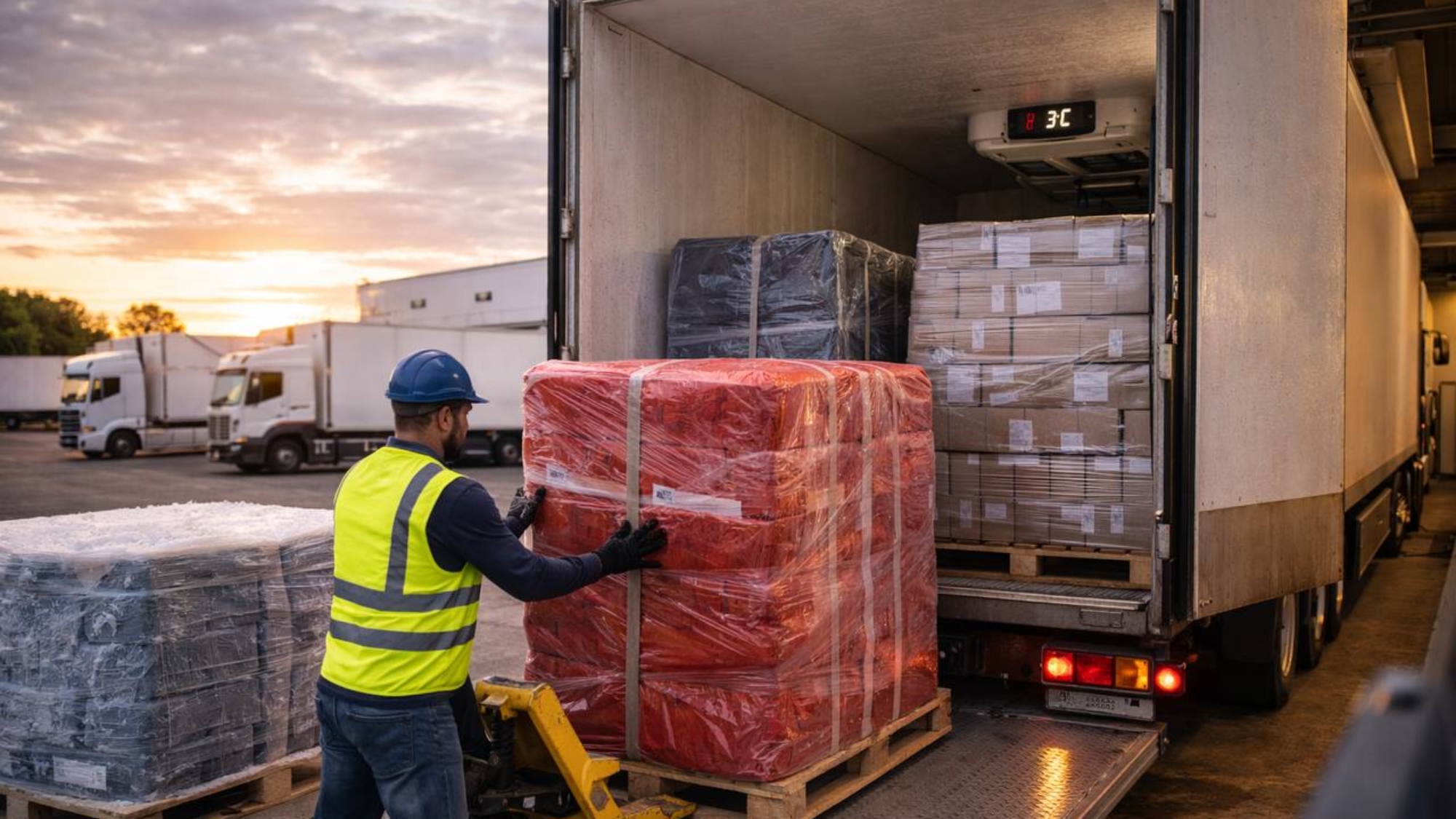
Late winter and early spring create one of the most difficult periods for temperature-sensitive cargo. Outside conditions fluctuate between cold nights and warmer daytime temperatures, and freight traveling long distances may pass through several climate zones in a single trip. Without proper preparation, these variations can affect packaging, product stability, and delivery quality.
In many logistics operations coordinated through RoadFreightCompany, temperature management begins at the warehouse rather than inside the vehicle. If goods are loaded while still exposed to outdoor conditions, they may already experience temperature stress before the truck even leaves the facility. Controlled staging areas help stabilize cargo before loading begins.
Vehicle preparation also plays a key role. Refrigerated trailers must be cooled or heated to the correct range before loading starts. Loading cargo into a trailer that has not yet reached the required temperature can create condensation or uneven cooling during the first hours of transport. Operational guidelines developed with RoadFreightCompany often include a short pre-conditioning period to ensure stable interior conditions before goods enter the trailer.
Packaging materials influence temperature protection as well. Insulated liners, thermal blankets, and protective pallet covers can slow temperature changes when the trailer doors open during loading or unloading. These materials are especially useful for shipments that require moderate temperature control rather than full refrigeration.
Door management during loading is another practical factor. When trailer doors remain open for long periods, warm or cold air rapidly alters the internal climate of the trailer. Facilities that coordinate loading procedures together with Road Freight Company often limit door exposure time by preparing pallets in advance and moving cargo quickly into the trailer once loading begins.
Drivers also play an important role during transport. Monitoring trailer temperature systems and avoiding unnecessary door openings during rest stops helps maintain consistent conditions. Small operational habits such as these can prevent temperature fluctuations that might affect sensitive cargo.
Route planning can also influence temperature stability. Long stops in warm sunlight or extreme cold can gradually change trailer conditions, even with refrigeration units running. Transport teams sometimes adjust rest locations and delivery timing to minimize these environmental impacts.
Technology systems now allow real-time temperature monitoring throughout the journey. Alerts can notify drivers or dispatch teams if the internal trailer environment begins to move outside the required range.
Maintaining stable transport conditions for sensitive goods remains a consistent priority for RoadFreightCompany, because freight reliability does not depend only on moving cargo quickly. It also depends on preserving the environment that protects the cargo throughout the journey.