
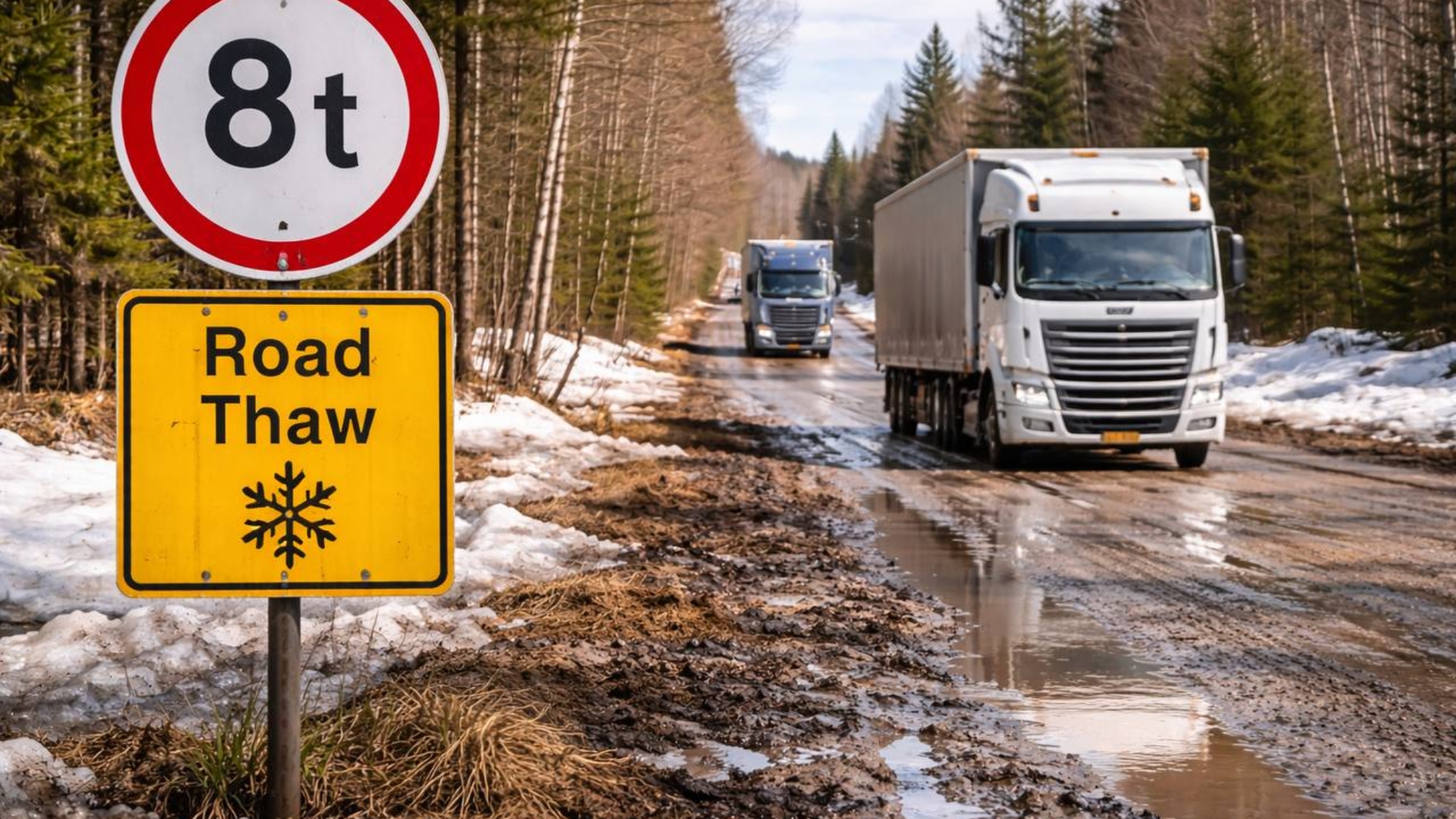
Every year as winter fades and temperatures begin to rise, freight networks across many regions enter a transitional period that is rarely visible outside the logistics industry. In early spring, road authorities often introduce temporary weight restrictions to protect infrastructure weakened by freeze–thaw cycles. For freight operators, these seasonal limitations can significantly reshape how cargo moves through transport corridors.
During winter, moisture inside road foundations freezes and expands. When temperatures begin to rise in March and April, the ground softens while still holding excess water. Heavy trucks traveling over these surfaces can cause long-term structural damage to the pavement. As a result, many regions temporarily reduce allowable axle loads on secondary and regional roads.
Logistics teams working across networks coordinated with Road Freight Company often begin preparing for these restrictions several weeks before they are officially introduced. Route planning must be adjusted, especially for shipments that normally use regional roads to reach warehouses or distribution centers.
One common response is rerouting heavier loads toward highways and primary transport corridors that are built to handle greater axle pressure. However, this adjustment can increase travel distances and slightly extend transit times.
Cargo consolidation becomes particularly important during this period. When weight limits apply to certain roads, operators must carefully balance how freight is distributed across vehicles. Dispatch strategies developed through projects involving RoadFreightCompany often emphasize optimizing cargo weight distribution so that trucks remain within permitted limits while maintaining efficient delivery schedules.
Warehouses also adapt their operations. Some facilities increase shipment frequency with lighter loads, while others reorganize delivery windows to avoid routes that temporarily become inaccessible for fully loaded trucks.
Driver awareness is another key factor during seasonal transitions. Drivers must be informed about temporary restrictions, especially when traveling across regions where road regulations may change frequently. Clear communication helps prevent drivers from unintentionally entering restricted routes.
Infrastructure monitoring systems are also becoming more common. Many transport authorities now publish digital updates about road conditions, axle load limits, and seasonal closures. Logistics planners can use these data sources to adjust route planning in real time.
Although spring restrictions may appear to be a temporary inconvenience, they also highlight how closely freight transport depends on infrastructure conditions. Transport networks that anticipate these seasonal shifts often maintain more stable delivery schedules.
Preparing for these changes has become a routine part of planning for RoadFreightCompany, because seasonal infrastructure dynamics remain one of the most important external factors shaping freight movement at the end of winter and the beginning of spring.