
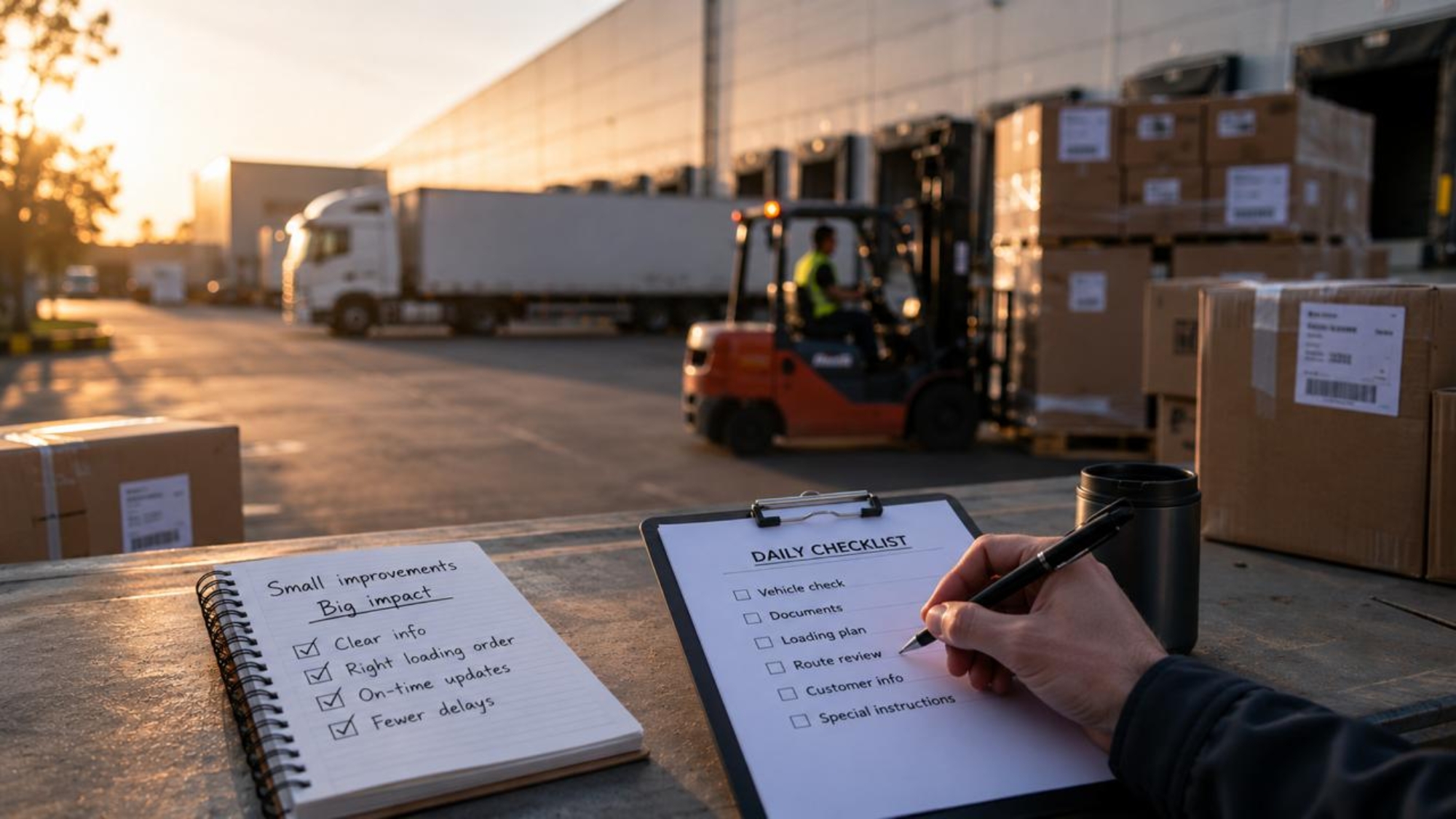
Most delivery problems do not begin with major failures. They grow out of small inefficiencies that seem harmless on their own. At RoadFreightCompany, we have watched a two-minute delay at the loading dock turn into a missed delivery window later that afternoon, simply because several minor issues stacked on top of one another.
That is why experienced logistics teams tend to pay close attention to details that outsiders barely notice. A driver waiting for a corrected document, a forklift operator searching for the right pallet, or a dispatcher making an extra confirmation call may not seem significant. Yet those moments shape how the rest of the day unfolds.
Some adjustments are almost invisible at first. A warehouse labels outbound freight more clearly. A planner adds gate instructions to the route notes. Someone double-checks whether the consignee is taking lunch from noon to one. None of these actions feels dramatic, but they remove hesitation, and hesitation is often what causes schedules to slip.
We once coordinated a delivery to three retail stores in different cities. The cargo was loaded correctly, traffic was normal, and the truck left on time. The only issue was that one store required access through a rear service entrance that was easy to miss. Because this detail had been added to the route notes beforehand, the driver avoided circling the block and losing twenty valuable minutes. Since then, RoadFreightCompany has treated site-specific instructions as part of operational planning rather than as optional comments.
Not every improvement involves technology or new procedures. Sometimes the most useful changes are modest and practical:
- placing paperwork in delivery sequence
- confirming mobile numbers before departure
- adjusting loading order to match stop priority
- allowing extra time for difficult unloading points
These habits reduce interruptions. They also make the workday feel less rushed.
We at Road Freight Company often notice the benefits gradually. Drivers spend less time calling dispatch for clarification. Warehouse staff face fewer last-minute reshuffles. Customers experience more predictable arrival times, even when the route itself is demanding.
The effect becomes more obvious over weeks and months. Fewer small disruptions mean less accumulated stress, better coordination, and more consistent performance. Operations begin to feel steadier, not because one major change was introduced, but because many small decisions were handled more carefully.
That is usually how reliable logistics improve. A handful of practical refinements, repeated every day, creates smoother deliveries and fewer complications. RoadFreightCompany continues to value these subtle operational gains because they quietly make the entire system work better.