
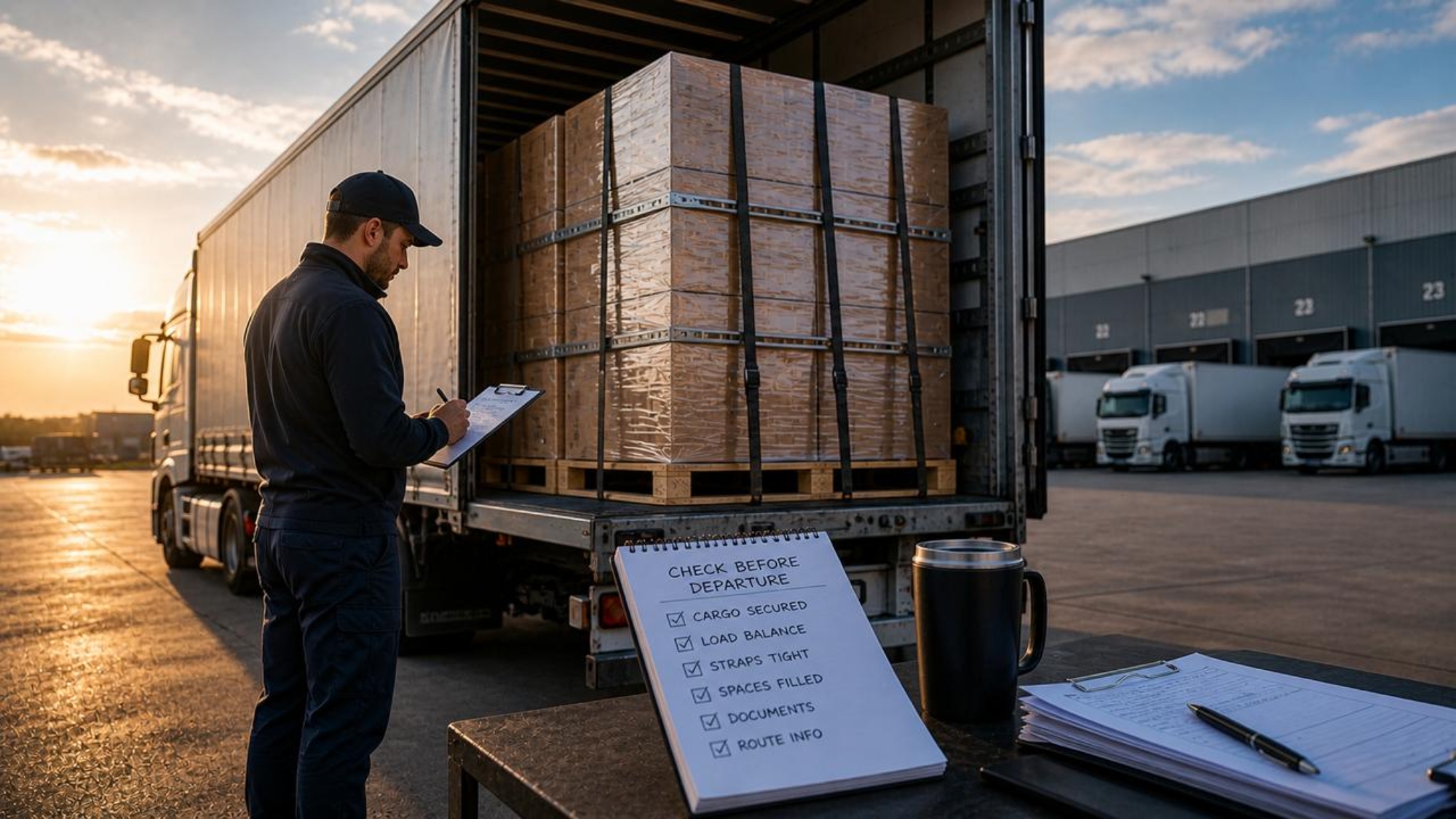
You can sometimes tell how the day will go before the truck even leaves, not by the schedule, but by how many “we’ll sort it on the way” decisions slipped in. That’s usually where things start to drag. We’ve seen at RoadFreightCompany that smoother deliveries don’t come from big improvements – they come from removing those small points of friction that everyone assumes won’t matter.
One of the easiest ways to complicate a run is to trust that cargo will behave just because it looks stable. It often does – until it doesn’t. Light shipments are the classic example: neatly stacked, tightly wrapped, straps in place. Then the road introduces vibration, and suddenly the structure starts to relax. Not collapse, just shift enough to demand attention.
A driver once described it perfectly – “nothing’s wrong, but nothing stays where I left it either.” That load didn’t fail, but it kept changing. First stop was just a precaution, second was necessary, third was frustrating. By then, the delivery wasn’t late yet, but it had already lost its rhythm.
Inside RoadFreightCompany, we’ve learned that the easiest way to make a process smoother is to stop giving the cargo opportunities to move at all. Not by adding more straps, but by building the load so it doesn’t depend on them as much. When the structure holds itself, everything else becomes simpler.
And it’s rarely about one big fix. It’s more like a set of quiet adjustments that change how the whole journey feels:
- stacking that creates pressure, not just height
- avoiding mixes that compress unevenly halfway through the route
- reducing “invisible space” inside the load, not just around it
- giving the driver a realistic sense of what the cargo will do after the first turns
None of these take extra time in a meaningful way, but skipping them almost always costs time later.
There’s also the way information gets passed along. Not in long instructions, but in the right details at the right moment. At Road Freight Company we’ve seen drivers handle the same type of load differently depending on whether they know it tends to loosen or stay rigid. That single note can decide whether they drive calmly or keep checking mirrors and thinking about the cargo.
What makes a delivery feel smooth isn’t that nothing goes wrong. It’s that nothing keeps repeating. No pattern of small corrections, no gradual loss of control. The process just moves forward without needing constant input.
By the time the truck arrives and unloading happens without delays or adjustments, it doesn’t feel like anything special. That’s usually the sign it worked. We at RoadFreightCompany see it as the result of removing friction early – not fixing it later when it starts to slow everything down.