
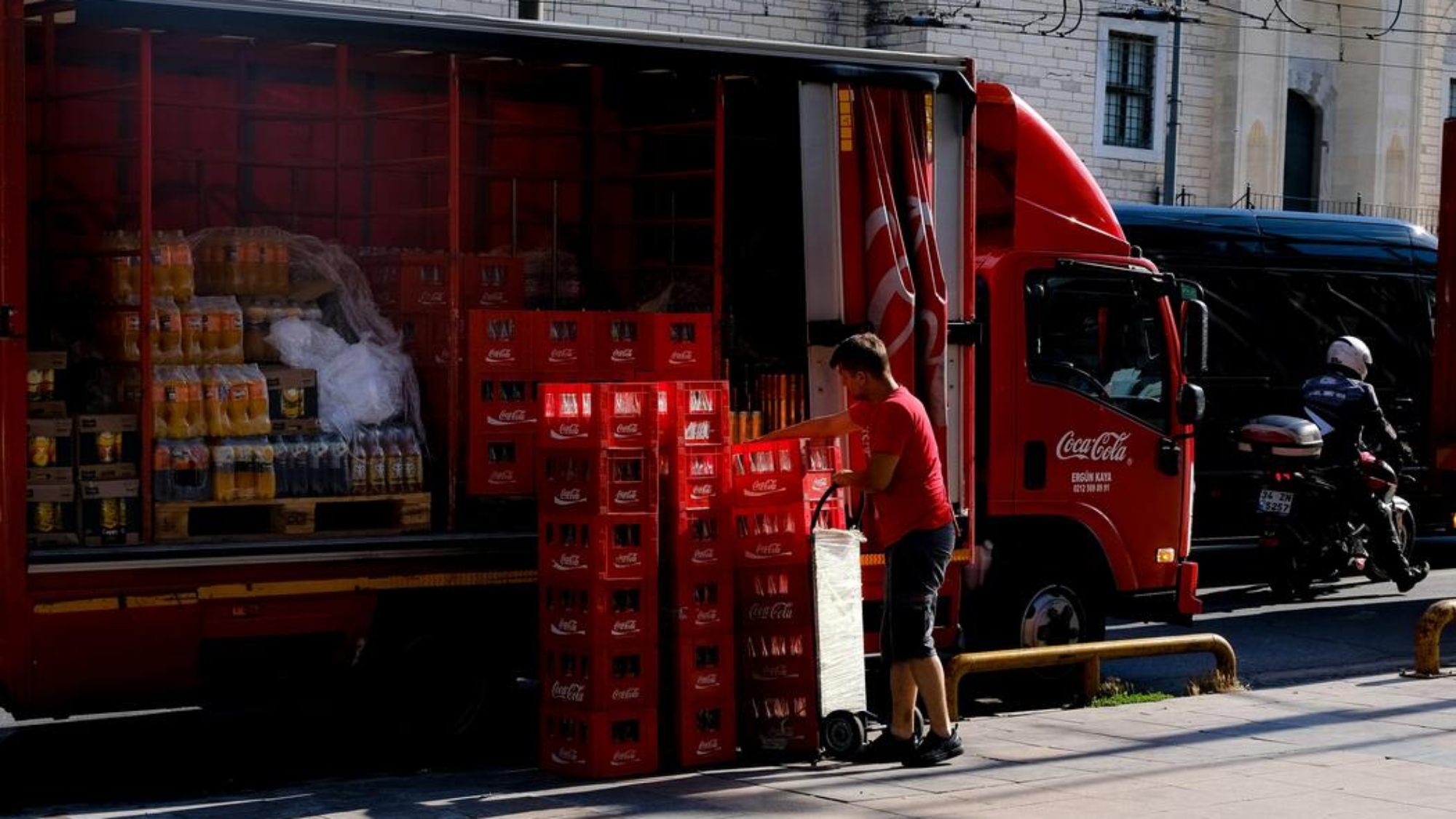
Retail logistics operates under a set of pressures that most other freight categories do not face simultaneously. Tight delivery windows enforced by automated booking systems. Vendor compliance requirements that specify exactly how pallets must be labelled, stacked, and presented. Financial penalties for missed slots, incorrect labelling, or short deliveries. High delivery frequency driven by just-in-time replenishment models. And an end consumer whose experience of a product gap on a shelf is immediate and visible in a way that a delayed industrial component never is. Retail supply chain logistics is not a harder version of standard freight – it is a different discipline entirely, and carriers who approach it as the former tend to generate the compliance failures and penalty charges that retail customers impose without hesitation. At RoadFreightCompany, retail logistics is managed as a distinct operational category with its own planning standards, documentation requirements, and performance tracking.
Vendor Compliance – The Framework Retailers Impose
Major retailers operate vendor compliance programmes that specify, in considerable detail, how suppliers and their logistics providers must present freight at the distribution centre. The requirements typically cover pallet configuration – height limits, weight limits, stacking patterns, mixed SKU rules – labelling standards including barcode placement, label size, and the specific data fields that must be present, advance shipping notification requirements transmitted electronically before the vehicle arrives, and booking system protocols for reserving and managing delivery slots.
Non-compliance with these requirements triggers financial chargebacks – penalties levied against the supplier for each instance of non-conformance. Chargeback rates vary by retailer and by violation type, but they accumulate quickly across a high-frequency delivery programme. A supplier who is regularly receiving chargebacks for labelling errors, incorrect pallet configuration, or missed ASN transmissions is paying a recurring cost that reflects a process failure somewhere in the supply chain – often at the interface between the warehouse operation and the transport function.
The carriers who generate the fewest chargebacks for their retail clients are those who understand the compliance requirements as well as the supplier does – and who treat them as operational standards rather than customer preferences. That understanding requires investment in training, in labelling and documentation processes, and in the communication systems that connect warehouse operations to delivery scheduling. The retail compliance management processes at RoadFreightCompany are built around specific retailer requirements rather than generic standards – because the details that trigger chargebacks at one retail customer are often different from those at another, and generic processes do not catch retailer-specific deviations.
Delivery Slot Management and the Cost of Missing One
Retail distribution centres operate on tight schedules. Each incoming vehicle occupies a dock for a defined period, and the sequencing of arrivals is managed to keep the receiving operation running efficiently. When a vehicle misses its slot – arriving late, arriving early outside the tolerance window, or failing to arrive at all – the disruption ripples through the DC’s receiving schedule and creates operational costs that the retailer recovers through the supplier.
The slot penalty structure at major retailers varies but is consistently significant. A missed slot may attract a fixed charge per occurrence, a percentage of the delivery value, or both. For a supplier making multiple deliveries per week to a single retailer, the cumulative cost of consistent slot misses is material – and it falls on the supplier regardless of whether the miss was caused by the carrier.
This creates a clear commercial interest for suppliers in choosing carriers whose slot performance on retail lanes is demonstrably reliable. The relevant question is not whether a carrier has delivered to a given retailer before – it is what their on-time rate is specifically for that retailer’s booking system, on the relevant lanes, across the relevant delivery windows. Carriers who cannot provide that data segmented to the retailer level are either not tracking it or not performing well enough to want to share it.
Frequency, Volume Variability, and Planning Requirements
Retail replenishment logistics involves a level of volume variability that industrial freight typically does not. Promotional periods, seasonal peaks, new product launches, and space resets can multiply delivery volumes in a short window with limited advance notice. A logistics operation that runs efficiently at baseline volume but struggles to scale for a promotional period is a liability for a retail supplier – because the promotional period is precisely when on-shelf availability matters most.
Planning for volume variability requires a carrier who shares capacity information transparently and who can access additional resource at short notice without degrading service quality on existing commitments. It also requires a supplier who communicates volume forecasts as early as possible rather than notifying their carrier when the orders have already been placed. The planning relationship between a retail supplier and their logistics provider is more collaborative and more information-intensive than a standard shipper-carrier relationship – and the quality of that collaboration directly affects how well the supply chain performs at the moments when performance matters most.
Seasonal retail peaks – Christmas, Easter, back-to-school, major promotional events – follow a broadly predictable calendar. The suppliers who navigate them best are those who have had the capacity conversation with their carrier months in advance rather than weeks. Building that planning discipline into the retail logistics relationship is something the team at RoadFreightCompany approaches proactively with retail clients – because the capacity that is secured in advance is consistently more reliable and more cost-effective than the capacity scrambled for at the last moment.
Returns and Reverse Logistics in Retail
Retail logistics does not end at the distribution centre. Unsold stock, damaged goods, promotional materials, and reusable packaging all flow back through the supply chain, and the logistics of that reverse flow are a real operational requirement for any supplier working with major retailers.
Chilled and fresh product returns require particular attention – a product rejected at the DC needs to be moved quickly and in appropriate temperature conditions, or the loss compounds. General merchandise returns need to be assessed on collection, documented accurately, and routed to the appropriate destination – whether that is back to the supplier’s warehouse, to a secondary market, or to disposal.
The reverse logistics requirement is often underspecified in retail logistics contracts, which means it surfaces as an operational problem rather than a planned-for process. Suppliers who have built returns handling into their logistics arrangement from the start tend to process them more efficiently and at lower cost than those who treat each return as an ad hoc event.
What Retail Logistics Partners Need to Provide
The profile of a carrier who can genuinely support a retail supply chain differs from a general freight carrier in several specific ways. The requirements, in practice, include:
- Retailer-specific compliance knowledge across the relevant DC network
- Electronic integration with the retailer’s booking and ASN systems
- Slot performance tracking at the individual retailer level
- Labelling and documentation capability that meets retailer standards without requiring the supplier to manage it separately
- Capacity planning processes that account for promotional and seasonal volume variability
- Reverse logistics capability for returns handling
Carriers who provide all of these as standard features of a retail logistics service are not common. Those who do provide them consistently are worth significant commercial loyalty – because switching to a carrier who does not have them is a recoverable decision, but the chargeback costs and service failures that follow are paid immediately. That combination of retailer knowledge, system integration, and operational consistency is what RoadFreightCompany has built specifically for its retail logistics clients – because the category demands it, and clients who depend on shelf availability cannot afford a carrier who is learning on the job.
Retail logistics will continue to intensify – faster replenishment cycles, more demanding compliance frameworks, growing e-commerce volumes flowing through the same DC infrastructure, and sustainability requirements being added to vendor compliance programmes. The logistics infrastructure that supports retail supply chains needs to evolve with those requirements rather than lag behind them.
Suppliers who have the right logistics partner in place are better positioned to respond to those changes – because the operational foundation is already sound, and the relationship is collaborative enough to adapt as conditions change.
For retail suppliers looking for a logistics partner who understands the compliance requirements, the slot dynamics, and the planning intensity that retail supply chains demand, Road Freight Company is built for exactly that.