
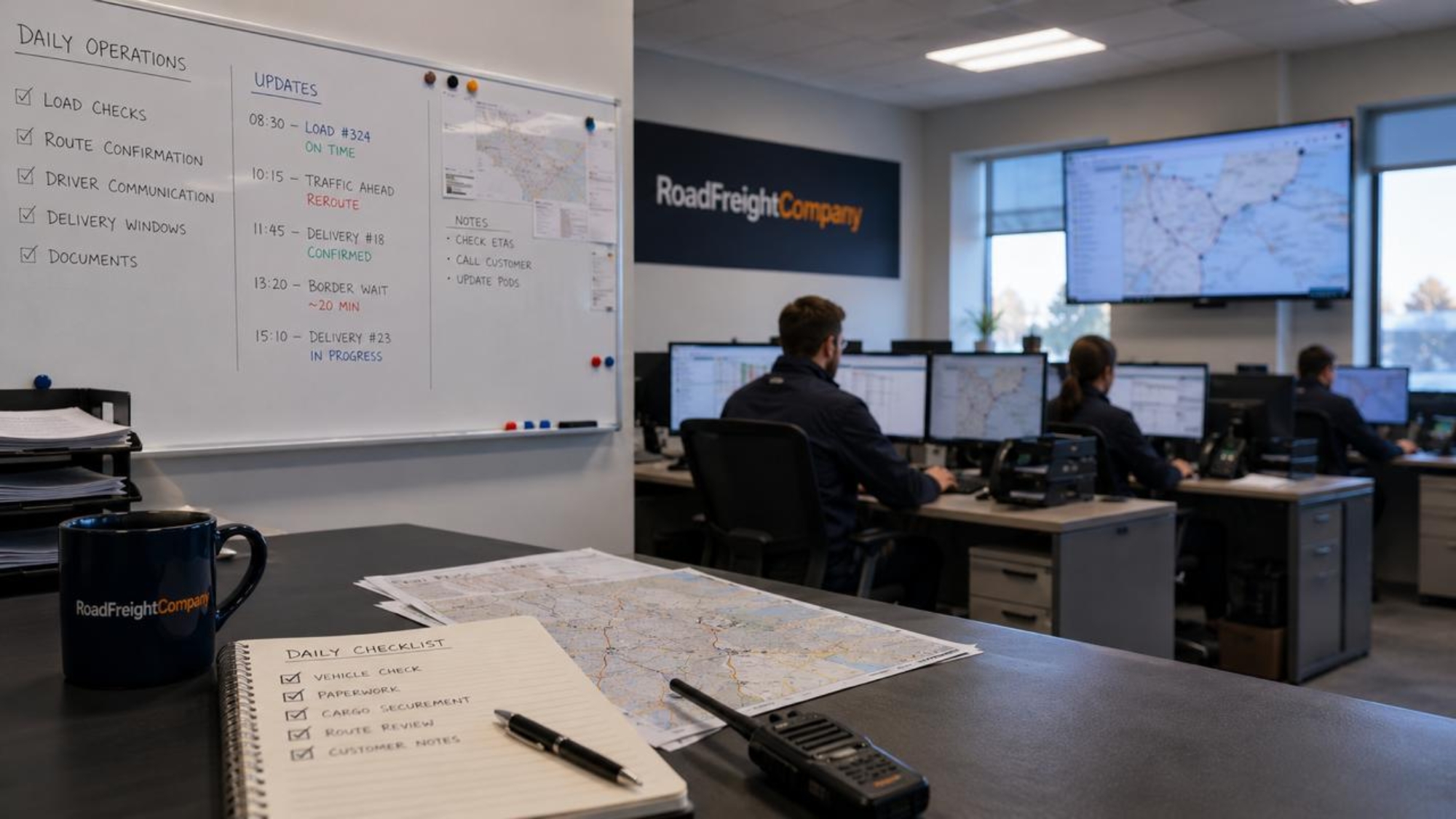
There are weeks when freight operations feel stable almost by accident. Trucks leave close to schedule, unloading goes smoothly, drivers stop calling dispatch every forty minutes, and nobody spends the evening trying to repair delays from the morning shift. Then the next week starts, and suddenly small inconsistencies begin piling up from places that looked harmless earlier. We at RoadFreightCompany learned pretty quickly that consistency rarely comes from “perfect planning.” It usually grows out of boring operational habits that people keep following even on rushed days.
A route can technically stay the same while the outcome changes completely. Different warehouse staff, another forklift operator, slightly later trailer preparation, one unclear delivery note – that’s already enough to shift the entire rhythm of the day. The problem is not always the delay itself. Sometimes the real damage appears later, when drivers start compensating for lost time by rushing loading checks or skipping normal pauses because the schedule already feels broken anyway.
One afternoon, a refrigerated shipment left only twelve minutes behind schedule. Nobody considered it serious. But the driver reached the second unloading point during a warehouse shift handover, which slowed access to the dock. By the third stop, the unloading crew was already occupied with another vehicle that arrived early. The route stayed technically “active,” although every small timing change kept making the next stop less predictable. That kind of drift happens more often than people admit.
At Road Freight Company, the operations that stay steady usually have less improvisation hidden inside them. Not less flexibility – that’s different. Drivers still adjust routes, warehouse teams still swap priorities during busy periods, dispatch still reacts to traffic or weather. But everyone already understands which parts of the process should remain untouched even during pressure.
A few things tend to make a noticeable difference over time:
- trailer checks happen before departure, not later near the fuel stop
- loading teams know which deliveries have narrow unloading windows
- updated instructions get confirmed quickly instead of sitting unread
- dispatch adjusts timing early instead of waiting until delays become obvious
There’s another thing that quietly affects consistency: overloading experienced staff with every complicated task. It sounds logical in theory because they work faster and make fewer mistakes. After a while, though, those same people become interruption points for the whole operation. Everybody starts waiting for one supervisor, one dispatcher, one warehouse lead. Around RoadFreightCompany, we noticed that smoother operations usually depend on information moving evenly between people instead of collecting around one person who already handles too much.
Adrian van Ree once joked during a delayed evening departure that freight operations become unstable long before anyone notices visible problems. He was standing near a half-loaded trailer watching drivers walk back and forth looking for updated paperwork that technically already existed somewhere in the warehouse office. Nobody was panicking, but nobody was moving efficiently either.
RoadFreightCompany gradually shifted toward simpler operational routines because complicated systems tend to break differently every day. Clear loading order, realistic timing between stops, quicker communication between warehouse and dispatch, fewer last-minute adjustments – those things do not look impressive from the outside. Still, they usually create calmer operations, steadier delivery timing, and fewer situations where small disruptions grow larger by the end of the route.