
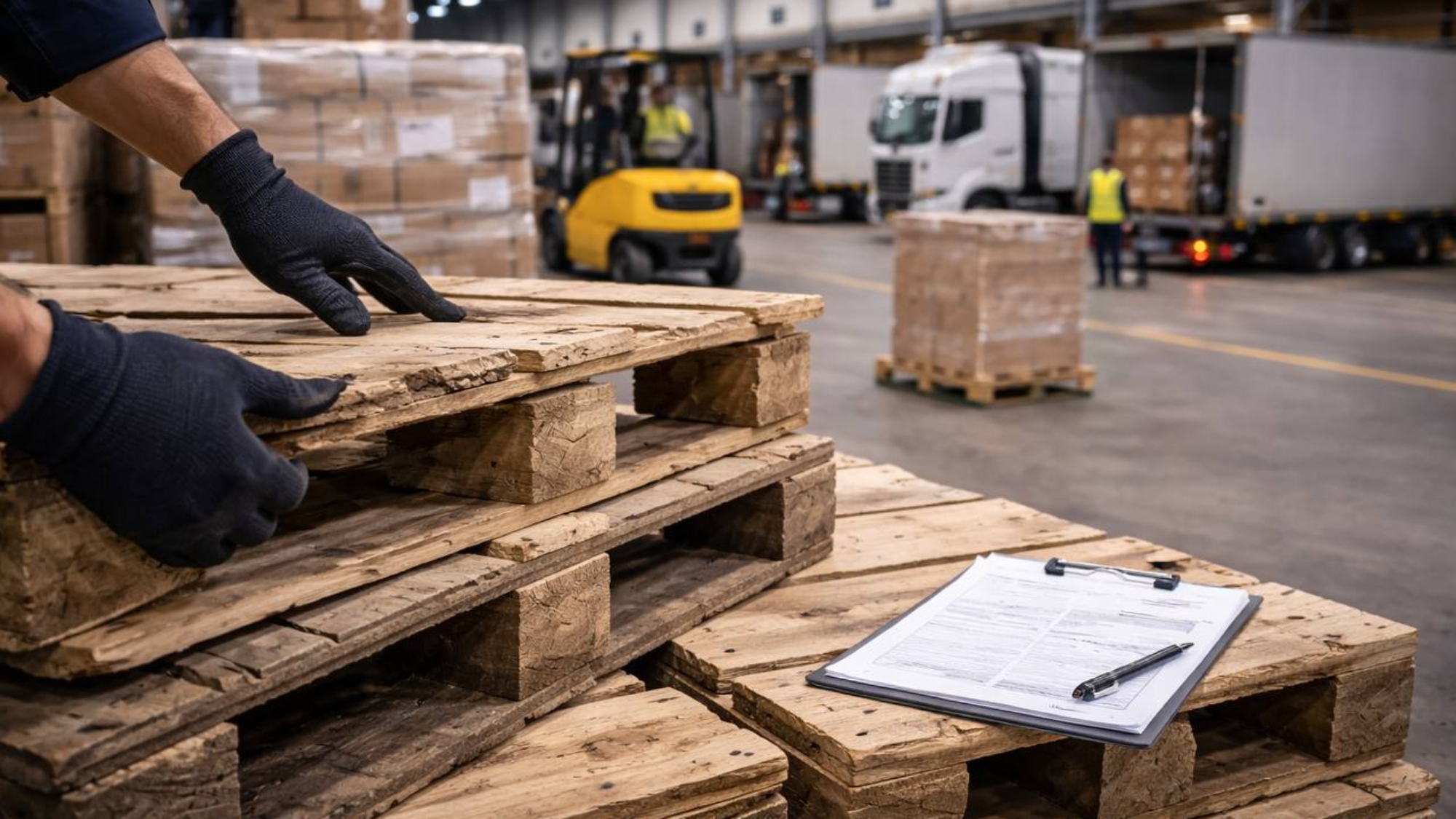
Pallets are one of the most ordinary elements in freight transport. They are used in nearly every warehouse and distribution center, yet their condition often receives far less attention than vehicles, packaging, or routing. In reality, pallet quality can directly influence cargo safety during transport.
Across several logistics facilities supported by RoadFreightCompany, pallet condition has been identified as a frequent source of small but costly cargo problems. When pallets are damaged, uneven, or poorly constructed, they reduce the stability of the entire load placed on top of them.
One common issue appears when pallets with cracked boards are reused during loading. Even if the cargo itself is well packed, weak pallet boards may break during forklift handling or during long-distance transport. Operational guidelines developed through collaboration with RoadFreightCompany often include visual pallet inspections before cargo enters the loading area.
Pallet size consistency also matters. If pallets vary significantly in size or shape, warehouse teams may struggle to arrange them evenly inside the trailer. Uneven loading patterns create empty spaces where cargo can shift during transport.
Moisture exposure can also weaken pallets. When wooden pallets are stored outdoors or exposed to humidity, the wood gradually absorbs moisture and becomes less stable. Several facilities working alongside Road Freight Company have improved cargo safety simply by introducing covered pallet storage areas.
Forklift handling habits influence pallet durability as well. If forklift operators lift pallets from uneven angles or move them too quickly, the structure of the pallet can weaken over time. Training operators to handle pallets carefully helps extend pallet life and maintain cargo stability.
Pallet labeling and tracking systems are also becoming more common. These systems allow logistics teams to identify pallets that have already experienced heavy use and should be removed from circulation.
Standardizing pallet types within a facility can significantly simplify loading procedures. When pallets share the same dimensions and strength rating, warehouse teams can build more stable cargo configurations inside trailers.
Technology can optimize route planning and shipment visibility, but cargo stability often begins with physical loading foundations. When pallets are strong and consistent, the entire freight structure becomes more reliable.
Maintaining pallet quality remains an important operational detail for RoadFreightCompany, because in freight logistics the stability of an entire shipment can depend on the small wooden platform that supports it.