
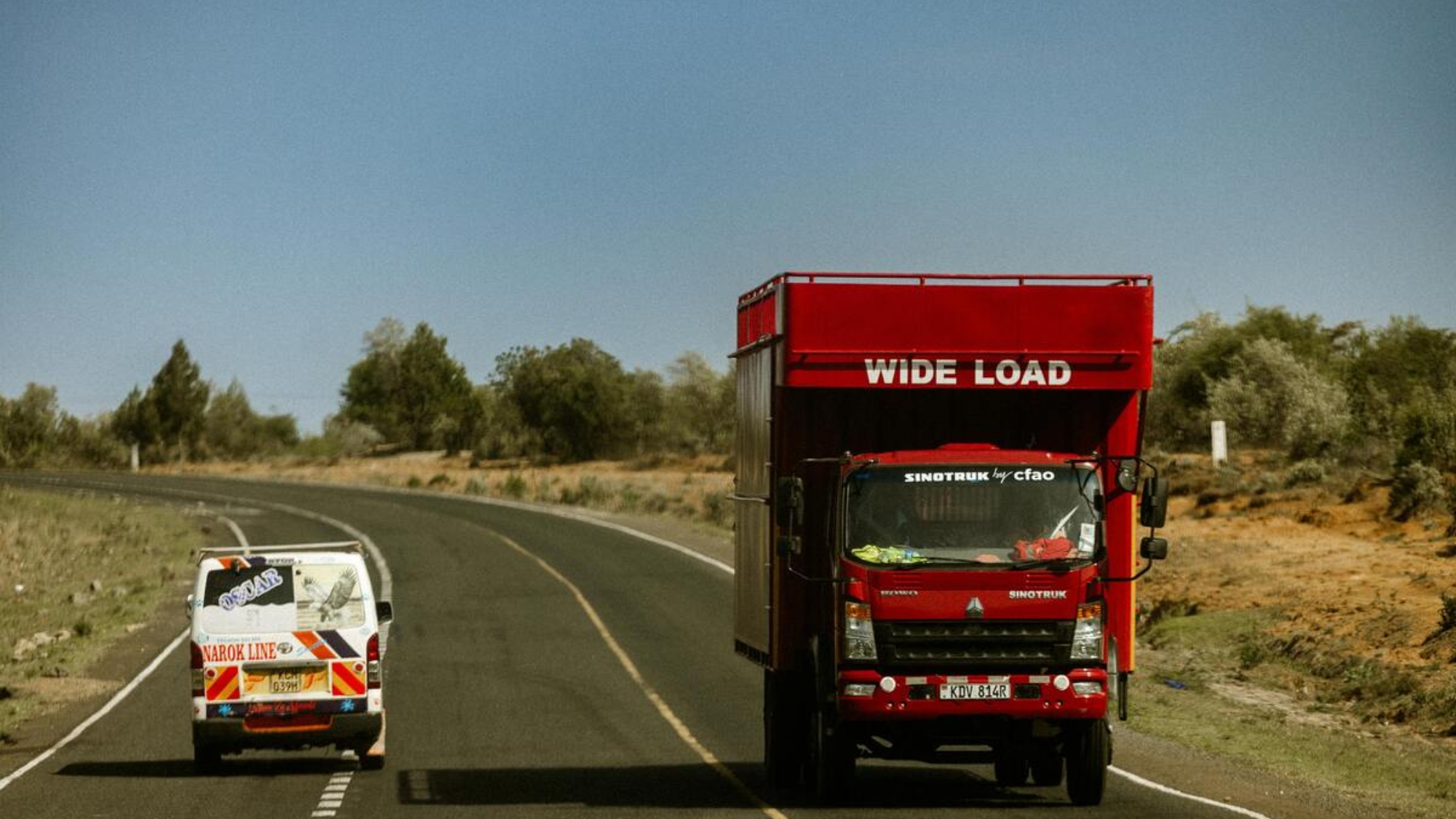
There is a point in logistics where standard procedures stop being sufficient. A machine part that weighs eighteen tonnes. A wind turbine blade that extends twenty-five metres. Industrial boilers that require a trailer with twelve axles to distribute the load legally across the road surface. Oversized and heavy cargo does not just require bigger trucks – it requires a fundamentally different operational approach from the first conversation to the final delivery. The planning involved is more detailed, the permissions more complex, and the margin for error considerably narrower than on a standard freight movement. At RoadFreightCompany, heavy and oversized transport is treated as its own discipline – one where preparation time is measured in weeks, not hours.
Permits, Routes, and the Paperwork Behind Every Movement
Moving a load that exceeds standard dimensional or weight limits on European roads requires authorisation from the relevant road authorities in each country the route passes through. For a shipment crossing three countries, that means three separate permit applications, each with its own requirements, processing times, and validity windows. Permits are issued for specific routes – which means the route must be confirmed before the application can be submitted, and any deviation from the approved path requires a new permit.
Route surveys are a standard part of oversized transport planning. Before a permit application is submitted, the proposed route needs to be assessed for clearance height on bridges and underpasses, load capacity on road surfaces and structures, turning radius at junctions, and overhead obstacles including power lines and signage gantries. A bridge that appears adequate on a map may have a posted weight restriction that makes it impassable for a loaded abnormal transport vehicle. Discovering this mid-route is not an option – and it is exactly the kind of detail that route surveys conducted by the planning team at RoadFreightCompany are designed to catch before a vehicle leaves the yard.
Engineering and Loading Requirements
Police escorts are required for certain load dimensions and weights in most European jurisdictions. Timing restrictions apply on many routes: oversized movements are commonly prohibited during peak traffic hours, on public holidays, and sometimes during specific weather conditions. Coordinating an escort vehicle, a lead car, and a pilot vehicle across multiple countries – each with country-specific requirements – adds a layer of operational complexity that has no equivalent in standard freight.
The physical preparation of oversized cargo is as important as the permit paperwork. Loads that exceed standard dimensions require custom securing solutions – chains, specialist lashing equipment, and in some cases purpose-built cradles that hold the load in a specific orientation during transport. Centre of gravity calculations matter: an unbalanced load can make a trailer unstable at road speed, and the consequences of a shifting heavy load are significantly more serious than a displaced pallet.
Delivery Site Preparation
One aspect of oversized transport that shippers sometimes underestimate is the requirement for the delivery site itself to be prepared for the arrival. A large industrial machine cannot simply be driven to the nearest loading dock. The site needs sufficient ground bearing capacity for the transport vehicle and its load, enough space for the vehicle to manoeuvre and position correctly, and in many cases crane or lifting equipment available at a specific time. Coordinating that equipment availability with the transport arrival window – which may itself be constrained by permit validity and escort scheduling – requires earlier and more detailed planning than most standard deliveries. Site surveys at the destination are a standard part of how RoadFreightCompany approaches complex oversized movements – in some cases a pre-visit by the transport team to walk the access route and confirm ground conditions is necessary before a permit application is even finalised.
Buildings constructed after a route was last surveyed, temporary roadworks, or seasonal ground softening can all create access issues that were not present on a previous delivery. These are not edge cases – they are the kinds of variables that experienced abnormal transport teams account for as a matter of course, because the cost of discovering them on the day of delivery is measured in hours, not minutes.
What to Expect From a Specialist Carrier
Shippers who move oversized cargo infrequently sometimes approach it as a variant of standard freight – the same process, just with a larger vehicle. The gap between that expectation and the reality of what a well-executed abnormal transport requires is significant. Lead times of two to four weeks are standard for complex permits. Route surveys add further time. Specialist vehicles may need to be sourced specifically for the load dimensions involved. All of this needs to be factored into project timelines before the transport is booked, not after. A specialist carrier should be able to provide a clear breakdown of the permit timeline, the route survey findings, the securing specification for the load, and the escort requirements before any commitment is made – and the carriers who handle abnormal transport well treat the planning phase as the core of the job. That distinction in approach is what separates a smooth project delivery from one that runs into avoidable problems at the execution stage. The difference becomes clear quickly when a shipper compares how Road Freight Company handles an oversized enquiry versus a carrier for whom it is an occasional add-on service.
Oversized and heavy cargo movements, handled correctly, are operationally predictable – complex, but manageable when the planning is thorough and the timeline is realistic. The projects that run into problems almost always share a common factor: insufficient lead time, because the transport was treated as a standard booking rather than a specialist one.
Shippers who understand what this category of freight actually requires tend to plan accordingly – and their projects arrive on schedule. If you are planning a heavy or oversized movement and want a carrier who will work through the permit, route, and securing requirements properly from the start, RoadFreightCompany is the right partner for that job.