
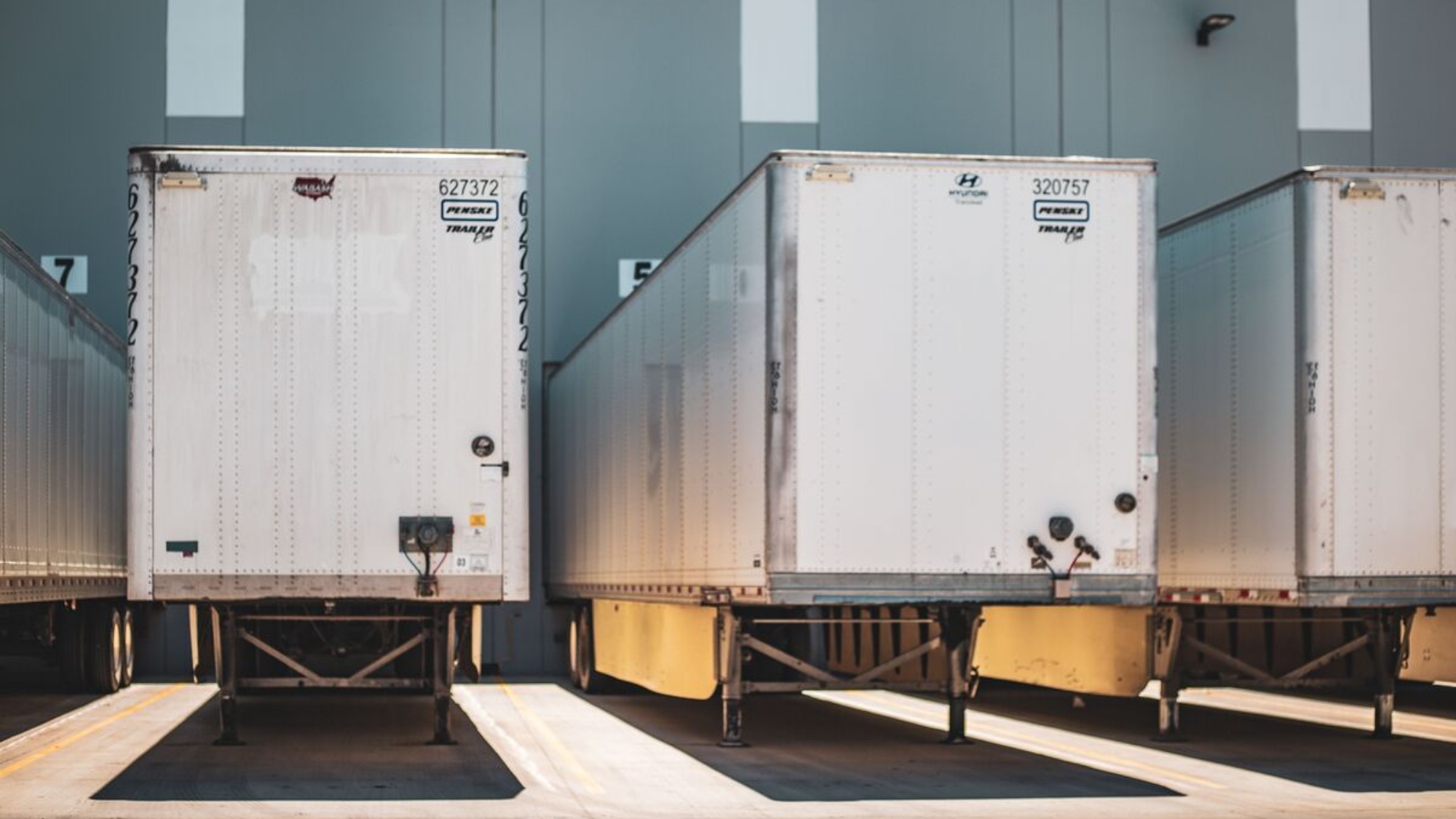
Just-in-time delivery synchronises inbound freight with a production line’s actual consumption rate closely enough that components arrive shortly before they are needed rather than sitting in inventory that ties up working capital and warehouse space. The model has delivered genuine efficiency gains for manufacturers across decades of use, but it also transfers risk from the manufacturer’s inventory buffer onto the freight network’s reliability – a transfer that becomes painfully visible the moment the freight network experiences a disruption the JIT schedule was not built to absorb. RoadFreightCompany supports manufacturing clients running JIT freight programmes and has a clear, practical view of how much buffer is actually prudent versus how much erodes the efficiency the model exists to capture.
Why JIT Delivery Changes the Freight Risk Calculation
In a conventional inventory model, a delayed delivery is absorbed by the buffer stock sitting in the warehouse, and the production line continues running while the delayed shipment catches up. In a JIT model, that buffer has been deliberately minimised, which means the same delay that a conventional model would absorb without disruption can stop a production line within hours, at a cost per hour of downtime that is frequently an order of magnitude larger than the inventory carrying cost the JIT model was designed to eliminate. This asymmetry is the central trade-off of JIT freight: the efficiency gain is continuous and modest, while the failure cost is occasional but severe.
That asymmetry means the freight reliability standard required to support JIT successfully is meaningfully higher than the reliability standard a conventional inventory model can tolerate, and shippers who adopt JIT scheduling without upgrading their freight reliability standard to match are the ones who experience the production stoppages that give the model its reputation for fragility.
The Buffer and Risk Factors Worth Assessing Before Committing to JIT
Before extending JIT scheduling to a new component or supplier lane, the factors worth assessing systematically include:
- Supplier and route reliability history – the specific on-time performance of the lane in question, not a general assumption based on the carrier’s overall network performance
- Single-source exposure – whether an alternative supplier or route exists if the primary one fails, since JIT amplifies the cost of single-source dependency
- Border and customs exposure – cross-border lanes carry additional delay risk from documentation and inspection variability that domestic lanes do not
- Seasonal and weather exposure – routes crossing known weather-risk corridors need a different reliability assumption at different times of year
- Production line stoppage cost – the actual cost per hour of a line stoppage, which determines how much buffer investment is economically justified for that specific line
Building Redundancy Into a JIT Network Without Undermining Its Purpose
The redundancy that protects a JIT network most cost-effectively is rarely a return to full conventional buffer stock, which would simply recreate the inventory cost the model was adopted to eliminate. Instead, it typically takes the form of a small strategic buffer sized specifically against the identified failure risks – a few hours or a single day of stock for the highest-risk lanes rather than the full network – combined with pre-qualified alternative carriers or routes that can be activated quickly rather than sourced from scratch during a live disruption.
The JIT risk assessments RoadFreightCompany runs with manufacturing clients size the buffer specifically against the lane-level risk factors identified in the assessment rather than applying a uniform buffer policy across every component and supplier, because a JIT network protected uniformly against its lowest-risk lanes and its highest-risk lanes at the same buffer level is paying for protection it does not need on some lanes while remaining under-protected on others.
What Happens When JIT Freight Fails
Even a well-designed JIT freight network experiences failures occasionally, and the response protocol matters as much as the prevention effort – a defined escalation path that identifies a delay early enough to activate an alternative before the buffer is exhausted, rather than discovering the shortfall only when the production line actually stops, is the difference between a managed near-miss and an expensive stoppage. Visibility into the shipment’s status relative to the buffer’s remaining coverage, tracked continuously rather than checked periodically, is what allows that escalation to happen with enough lead time to matter.
JIT delivery is a genuinely efficient model for the manufacturers who match its freight reliability requirement to the real risk profile of their specific lanes, and a source of recurring, expensive disruption for the ones who adopt it without making that adjustment. Getting the buffer sizing right, lane by lane, is worth the analytical effort long before the first stoppage forces the question.