
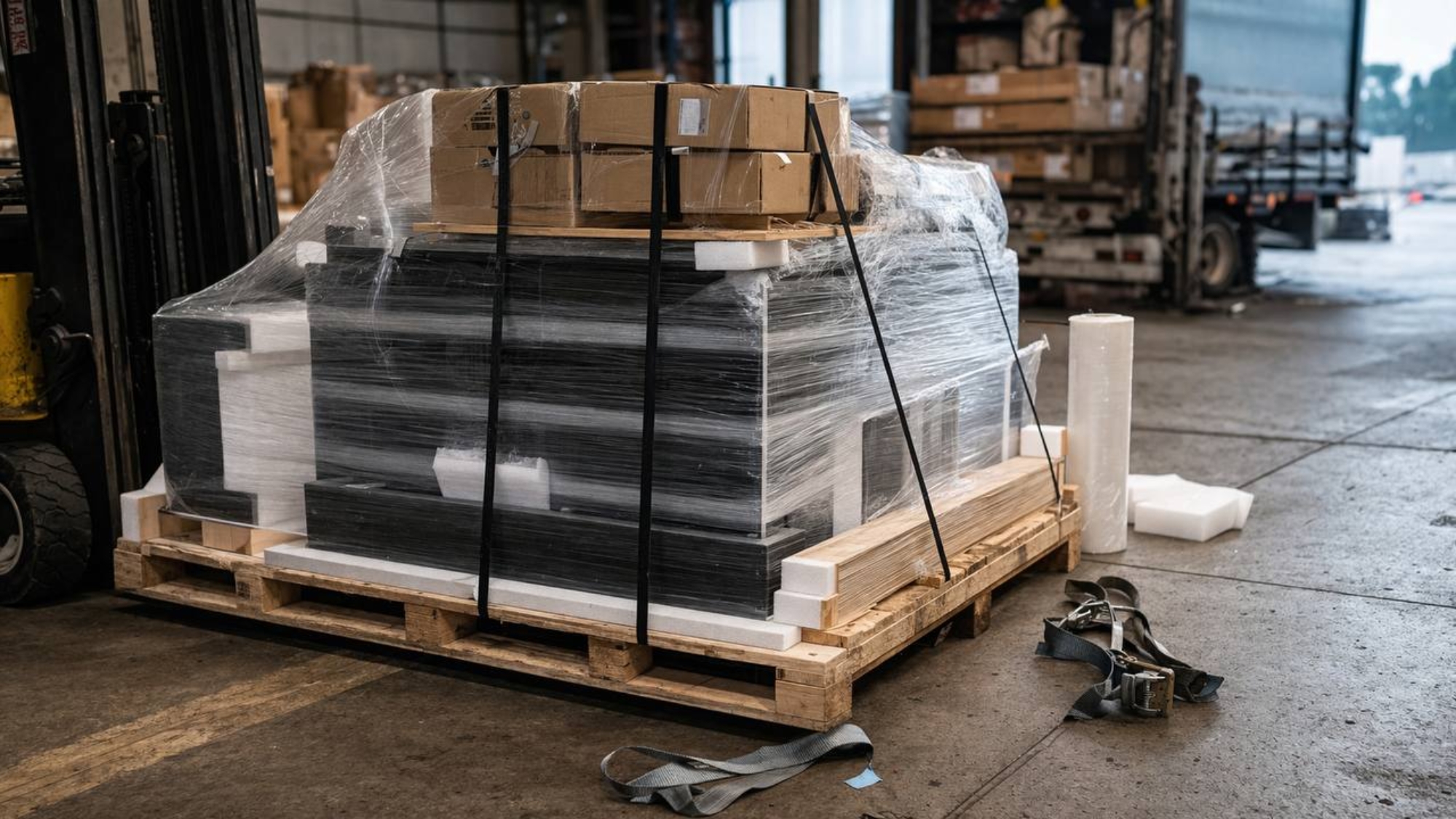
Most issues in logistics do not start on the road. They start much earlier – at the moment when the cargo is being prepared for shipment. This stage is often underestimated, especially when everything looks “ready enough” to move.
But small details at this point define how smoothly the entire delivery will go.
Preparation is not just about packing the cargo. It is about making sure the shipment can be handled, transported, and received without creating additional work or risk at any stage. This is something that becomes very clear in real operations involving RoadFreightCompany, where properly prepared cargo consistently leads to fewer issues during transport.
One of the most common mistakes is focusing only on protection, but not on handling. Cargo may be well wrapped or boxed, but difficult to move, unstable when lifted, or inconvenient to position. These issues do not always show immediately, but they become critical during loading and unloading.
Another point is labeling and clarity. When cargo is not clearly marked or structured, it slows down every step of the process. Even small uncertainties force teams to double-check, clarify, and adjust. This does not seem significant, but it adds time and increases the chance of mistakes.
In practical workflows at RoadFreightCompany, preparation is treated as part of the logistics process itself, not as something separate. When cargo is ready not just visually, but functionally, the rest of the process becomes much easier to manage.
There are a few key things that make a noticeable difference:
- make sure the cargo is stable on its base and does not shift when slightly moved
- avoid uneven weight distribution within pallets or units
- ensure that lifting points are accessible and clearly defined
- label cargo in a way that is immediately understandable without additional explanation
- prepare it with unloading conditions in mind, not just departure
These steps are simple, but they directly affect how efficiently the shipment will be handled later.
Another important aspect is communication before pickup. If specific requirements are not shared in advance, they often need to be solved on the spot. This creates delays and forces quick decisions that are not always optimal.
A similar pattern can be observed in operations connected to RoadFreightCompany, where clear preparation combined with early coordination reduces the need for adjustments during the process. The delivery becomes more predictable because fewer variables remain uncertain.
It is also important to consider how the cargo will be integrated at the destination. If preparation is done without thinking about receiving conditions, even a well-packed shipment can create difficulties upon arrival. Alignment between departure and receiving is what keeps the process smooth.
In our experience at RoadFreightCompany, the difference between a “prepared” shipment and a “properly prepared” one is often what defines whether the delivery feels easy or complicated.
When this stage is handled correctly, everything that follows becomes simpler. The cargo moves through the process without unnecessary adjustments, and the need for constant control decreases. That is exactly how we structure our work at Road Freight Company – so your shipment is ready not just to be transported, but to move smoothly through every step of the journey without creating extra effort on your side.