
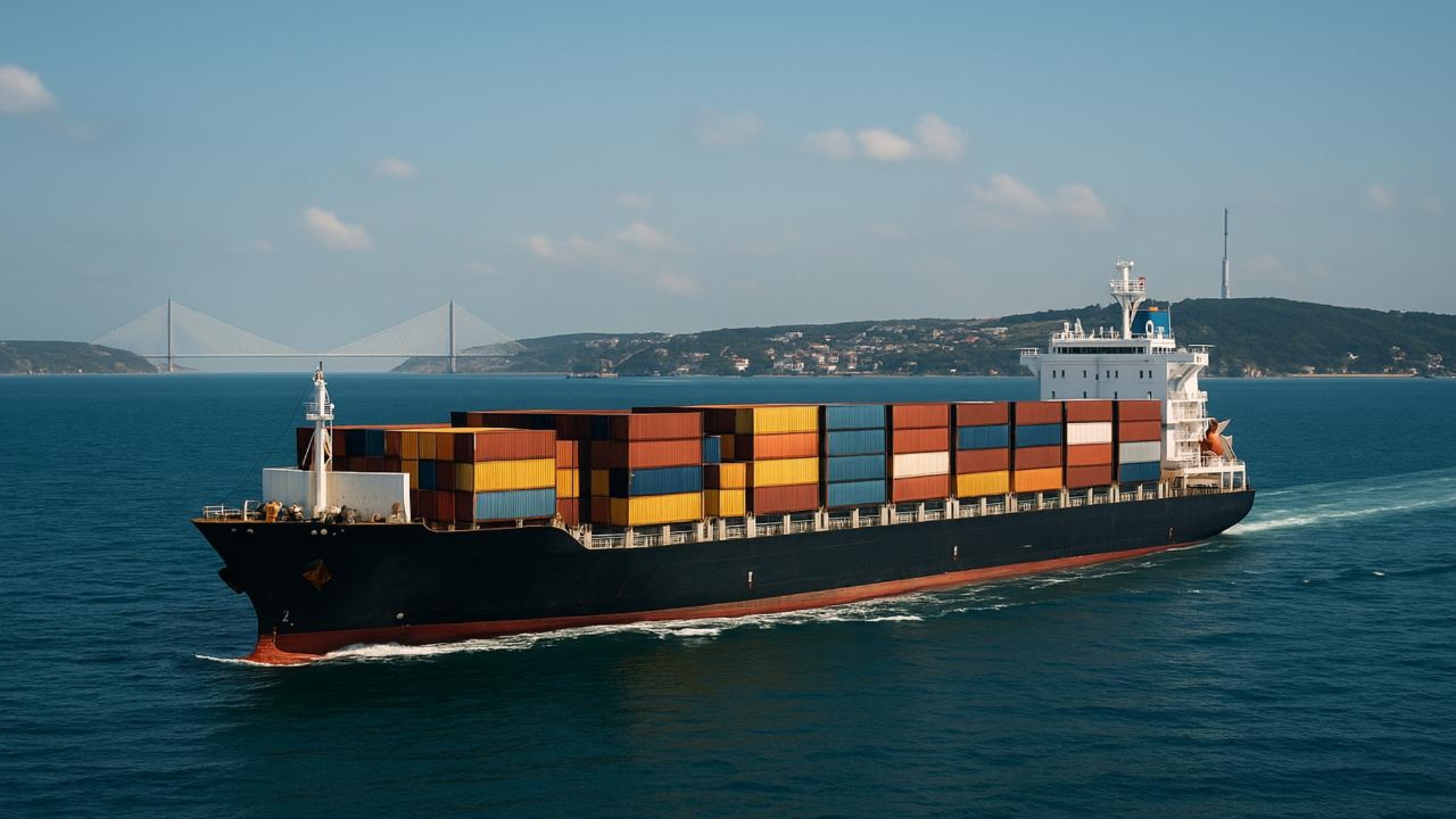
For more than two years, the Black Sea had been one of the most unpredictable regions for European logistics. Interrupted cargo corridors, redirected flows through Central Europe, and elevated insurance premiums reshaped the structure of EU transport almost overnight. Now, as maritime and multimodal routes in the Black Sea gradually reopen, the effect on freight distribution across Europe is already becoming visible – and it is larger than many expected.
RoadFreightCompany sees three immediate consequences: accelerated rebalancing of East–West land corridors, renewed port competition in Southern Europe, and a partial rollback of extreme capacity pressure on Central European road networks.
The reopening of Black Sea lanes reduces the dependency of EU shippers on overland detours through Poland, Slovakia, and Hungary – routes that had absorbed unprecedented transit volumes since 2022. As more cargo returns to maritime channels leading to Romania and Bulgaria, trucking pressure on these states begins to normalize. This is particularly notable in the context of FTL capacity: where lead times were previously stretched, RoadFreightCompany now records a 6–9% reduction in transit delays on cross-border lanes feeding into Romania’s Constanța hub.
Port dynamics are shifting as well. For Southern Europe, the revived Black Sea access means renewed competition for containerized flows that previously bypassed the region. Ports like Constanța, Varna, and Burgas have reactivated their feeder networks, creating new opportunities for shippers who previously relied solely on Adriatic or Northern European gateways. For companies shipping into Central and Eastern Europe, this reduces overall distance and improves cost-to-serve metrics – a trend RoadFreightCompany expects to strengthen further in 2026.
But the most underappreciated impact lies in risk diversification. Over the last years, EU supply chains became dangerously dependent on a handful of overland corridors. Any disruption – from driver shortages to border congestion – instantly cascaded across the continent. The reopening of the Black Sea restores a critical alternative path, making supply chains more resilient by design. At RoadFreight Company, this is already reflected in customer behavior: clients increasingly request multimodal combinations that blend sea feeder services with road distribution to reduce volatility.
The geopolitical environment remains sensitive, and the region is not free from risk. But what matters for logistics is not perfect stability – it is the return of optionality. Every additional viable route reduces bottlenecks, improves predictability, and allows European businesses to plan with greater confidence.
The Black Sea is not simply reopening; it is recalibrating the entire balance of freight flows in the EU. Those who adapt early – through flexible routing, multimodal planning, and continuous risk assessment – will benefit most from this structural shift.