
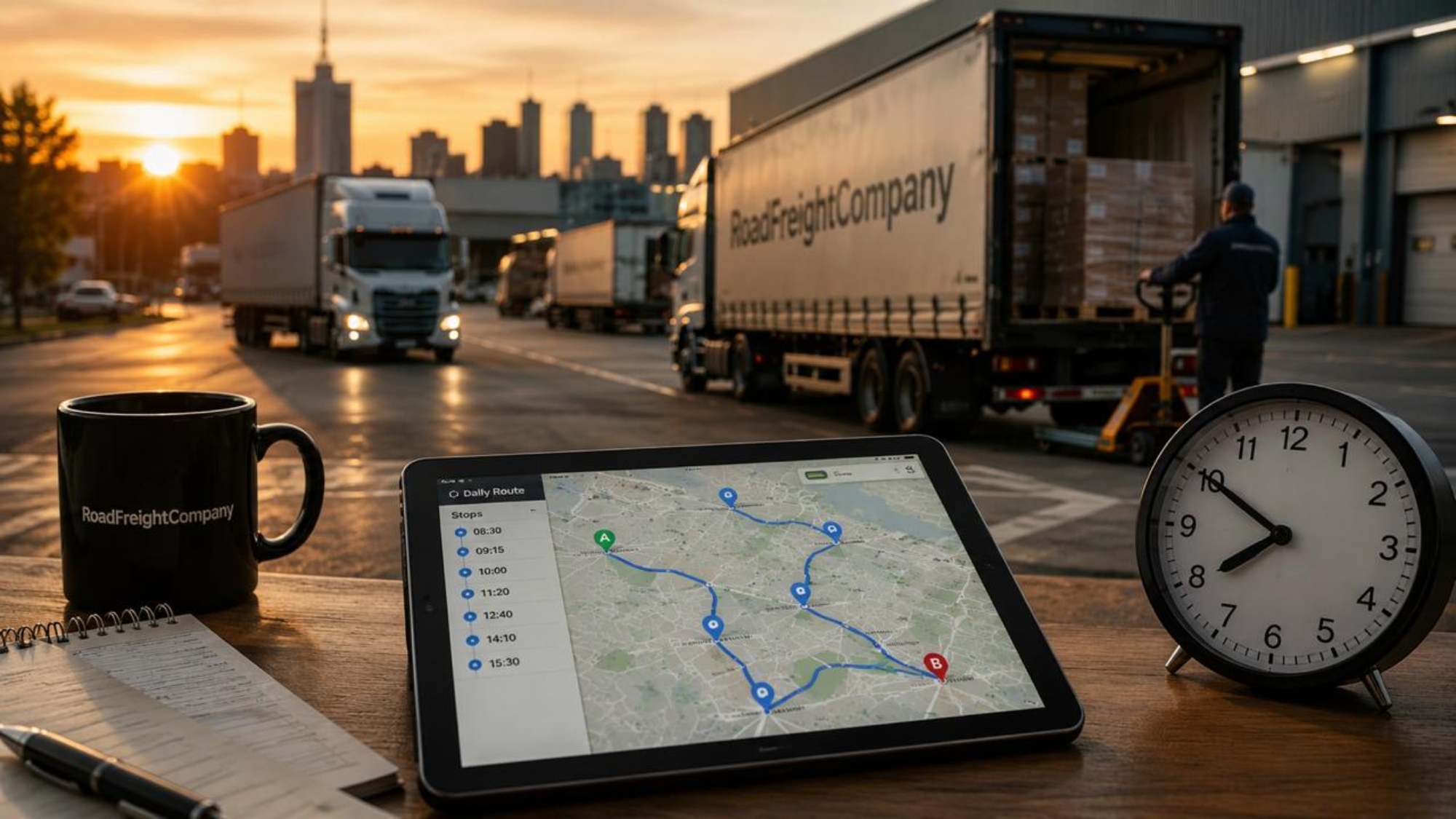
A delivery route can look perfectly reasonable on paper and still create a stressful day. The distance is manageable, the truck is loaded on time, and every stop seems to fit neatly into the schedule. We at RoadFreightCompany have seen how that confidence disappears by mid-morning when the first customer is not ready and the entire sequence begins to shift.
The issue is rarely the route itself. More often, it is the timing behind it. Leaving thirty minutes too early can put a driver at a warehouse before staff are available. Leaving too late can push the truck directly into city traffic, roadworks, or long queues at industrial gates. The same road can feel easy at 7:00 and painfully slow at 8:15.
A few years ago, one of our drivers had five deliveries across neighboring towns. The order looked efficient because the locations were close together. What the schedule did not reflect was that two customers accepted goods only after 10:00, and another regularly took nearly an hour to unload because forklifts were shared between several docks. By the third stop, the driver was already behind and rushing for the rest of the day.
Good route timing is less about squeezing in more deliveries and more about placing each stop where it has the best chance of moving smoothly. We at RoadFreightCompany pay close attention to patterns that are easy to miss at first:
- customers with narrow receiving windows;
- warehouses that are busiest at certain hours;
- roads that become unpredictable after morning congestion;
- unloading points with limited staff or equipment.
None of these factors seem dramatic on their own. Together, they decide whether a driver spends the day moving or waiting.
Adrian van Ree often says, “A calm route usually starts with a realistic clock.” That observation sounds simple, but it reflects years of watching small delays multiply. RoadFreightCompany uses timing data not to create tighter schedules, but to build breathing room where experience suggests it will be needed.
Sometimes the best decision is to drive a slightly longer route if it avoids a crowded distribution corridor. Sometimes it makes sense to postpone one stop by an hour because the unloading team is more available later in the day. These adjustments reduce unnecessary pressure and help drivers stay focused instead of constantly checking the clock.
When timing is planned with actual operating conditions in mind, dispatchers spend less time rearranging schedules, drivers encounter fewer surprises, and customers receive more reliable service. That steady rhythm is what Road Freight Company aims for every day, because smoother operations usually come from better timing rather than faster driving.