
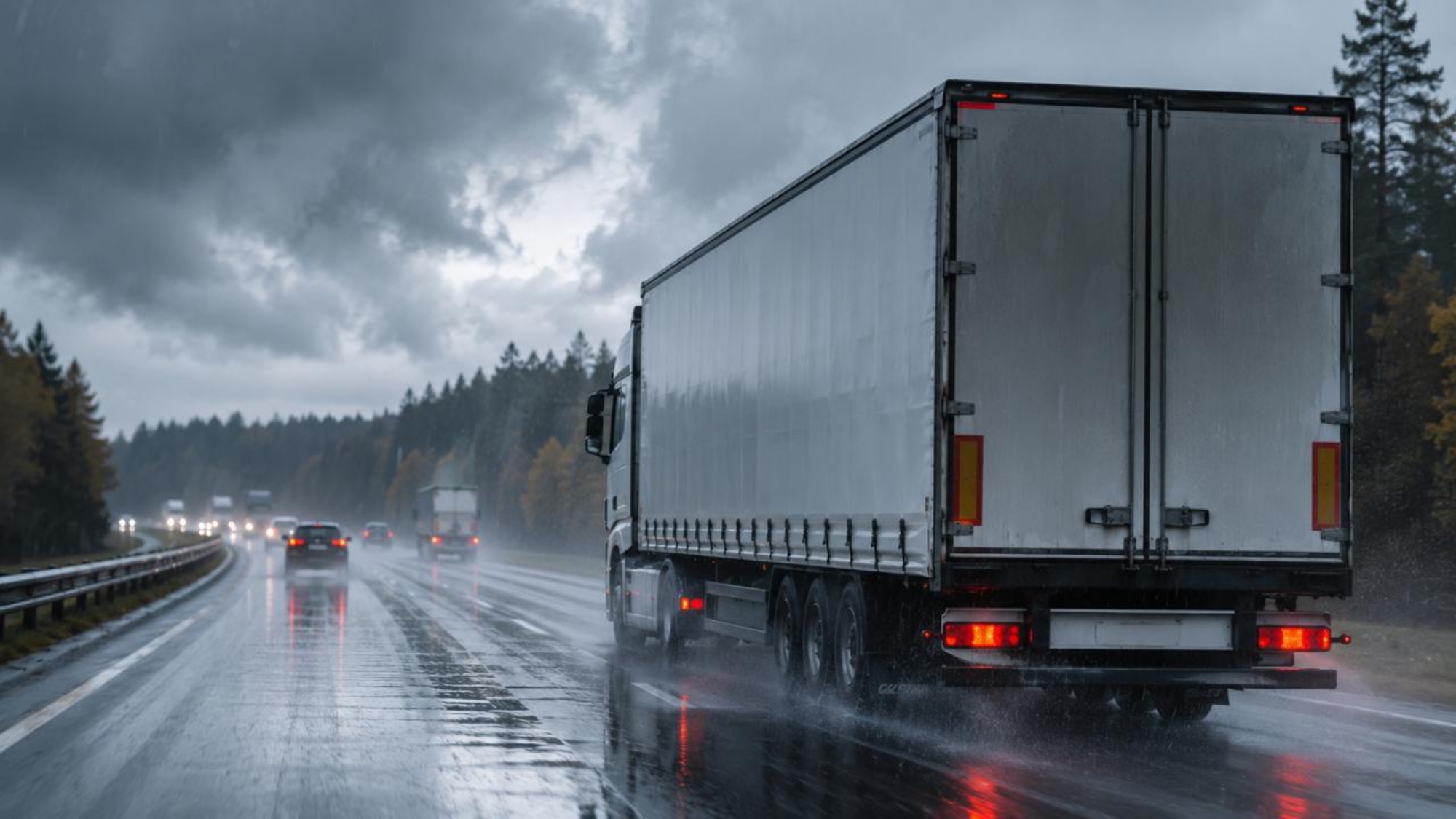
Rain changes the mood of a delivery day long before the driver turns on the wipers. The forecast may show only scattered showers, but everyone with enough miles behind them knows that wet weather affects loading yards, packaging, paperwork, and timing in ways that are easy to underestimate. At RoadFreightCompany, we often start adjusting expectations as soon as we see a line of dark clouds moving across the route.
The first delay usually happens before the truck even leaves the pickup point. Forklift operators slow down on slick concrete. Warehouse staff take extra care when wrapping pallets that could absorb moisture. Drivers double-check straps because wet surfaces reduce friction, and cargo that felt stable in dry conditions can shift surprisingly easily after a few hard brakes.
A shipment of packaged flooring once left a warehouse near Ghent during steady afternoon rain. The loading itself was well organized, but several pallets had been staged outside while the truck waited for its slot. By the time the trailer doors closed, the cardboard edges had softened and the stretch film was beginning to loosen. Nothing looked critical at first, yet the receiving team later spent nearly an hour inspecting the cargo for water damage.
Wet Yards, Slower Decisions
Rain also changes how vehicles move around industrial sites. Painted lines become slippery. Drainage grates collect puddles deep enough to hide curbs. Drivers take wider turns and reverse more carefully, especially in yards where there is little room to correct an angle. RoadFreightCompany has seen facilities that function efficiently in dry weather become noticeably slower after a single hour of heavy rain.
Communication tends to stretch as well. Staff move between offices and loading bays more slowly, documents must be protected, and simple tasks take a little longer than expected. Nobody is doing anything wrong; the environment just becomes less forgiving.
The Schedule Absorbs Every Extra Minute
A ten-minute delay at one stop rarely stays isolated. Loading finishes later, traffic thickens, and unloading appointments become tighter. Dispatchers begin reshuffling ETAs while drivers try to make up time on roads where speed is no longer an option. In day-to-day operations at RoadFreightCompany, rainy days are less about dramatic disruptions and more about a series of small slowdowns that quietly accumulate.
What makes experienced teams effective is not the ability to fight the weather. It is the habit of adapting early. More protective wrapping, extra caution in the yard, and more realistic scheduling all reduce the pressure that wet conditions create.
Rain affects much more than visibility through the windshield. It changes how freight is handled, how safely equipment moves, and how accurately a schedule holds together. By the time freight reaches its final destination, the benefits of that preparation are easy to see. The teams at Road Freight Company pay close attention to how weather influences each stage of the journey, because that extra awareness often means fewer disruptions and a delivery day that unfolds far more smoothly.