
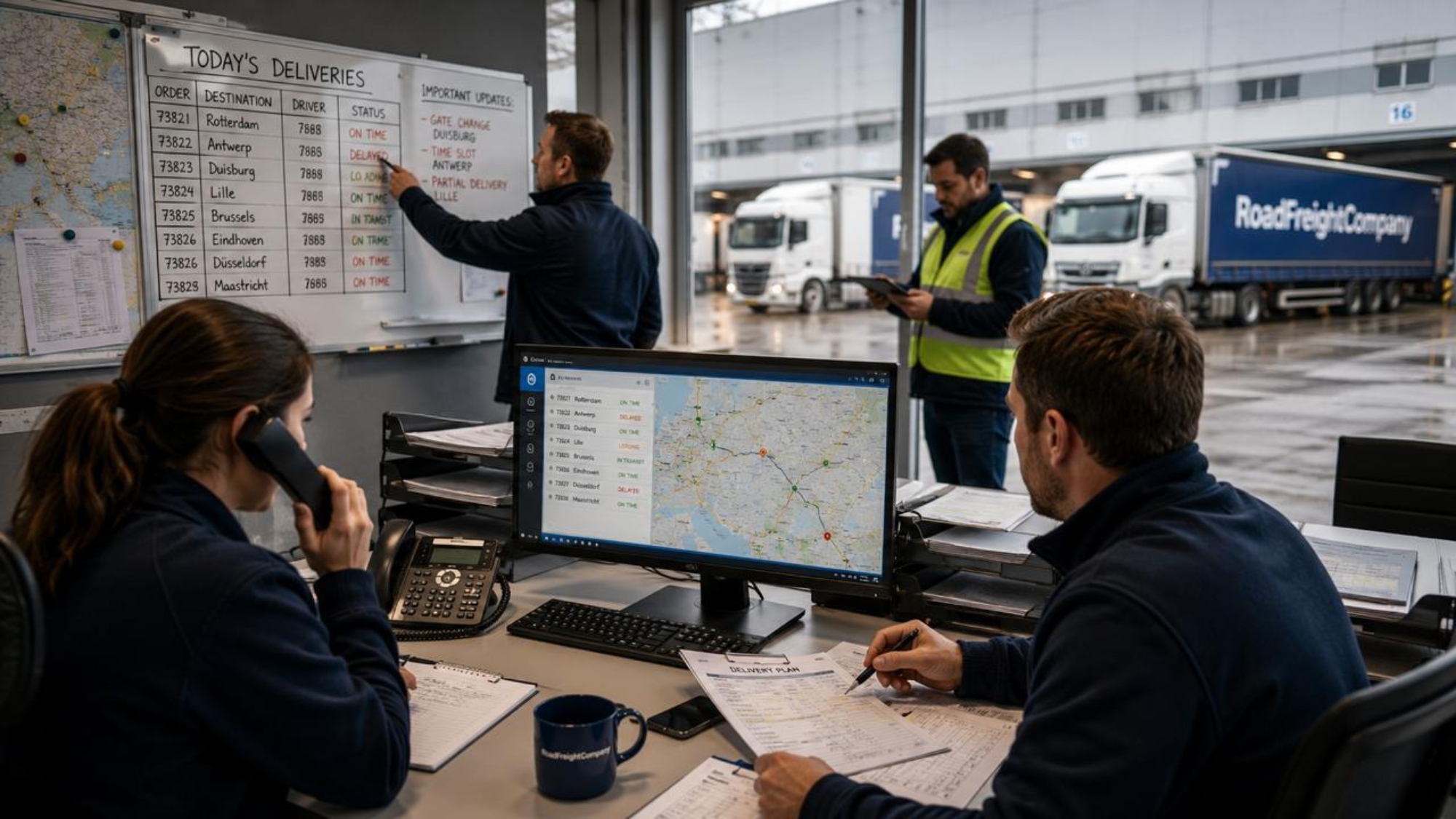
During busy delivery periods, the pressure rarely appears all at once. The yard may look normal in the morning, trucks are loaded on time, and dispatch screens seem under control. Then, almost without warning, small changes begin to overlap. At RoadFreightCompany, we often see how a day that started calmly becomes noticeably heavier simply because too many adjustments arrive within a few hours.
A customer shortens a receiving window. Another asks for a different unloading order. One driver is delayed in traffic outside the city, while a warehouse team has to reshuffle pallets because an urgent shipment has just been added. None of these situations is unusual. The strain comes from how quickly they start affecting one another.
I remember a Monday before a holiday weekend when everything looked unusually smooth by 9 a.m. The first trucks had departed, loading bays were clear, and there was even time for warehouse staff to joke over coffee. By early afternoon, the atmosphere had changed completely. A forklift breakdown slowed loading, two customers moved their appointment times, and one driver arrived at the wrong gate because the site notes in the system had not been updated for months.
The day was busy, but that was not the real problem.
When Information Arrives Too Late
Operations become exhausting when each person starts discovering problems independently. A driver waits outside a warehouse without knowing that unloading has been postponed. Dispatch keeps expecting movement that is no longer possible. Customer service promises an arrival time based on outdated assumptions. At RoadFreightCompany, we have seen how ten minutes of missing communication can create an hour of unnecessary disruption.
Good coordination changes the tone of the day. Drivers receive updates before uncertainty turns into idle time. Warehouse teams adjust priorities while freight is still being staged. Dispatch can make decisions based on facts rather than guesses. RoadFreightCompany relies heavily on this constant exchange of information, especially during periods when schedules leave very little room for correction.
There is also a psychological difference. People stay calmer when they understand what is happening and what is expected next. Drivers do not waste concentration debating whether to reroute. Warehouse staff avoid preparing the wrong shipment first. The workload may still be heavy, but it feels more controlled.
Keeping the Entire Operation Steady
Busy seasons will always bring delays, unexpected requests, and shifting priorities. Trucks get stuck in traffic, unloading docks run behind, and plans change halfway through the afternoon. Yet when everyone works from the same operational picture, those disruptions remain manageable rather than overwhelming.
We at Road Freight Company have learned that strong coordination does not eliminate pressure. It prevents pressure from spreading unnecessarily. That is often the difference between a difficult delivery period and one that stays organized, reliable, and far easier for everyone involved.