
Not every shipment behaves the same once it leaves the loading point. Some cargo moves predictably, fits standard handling procedures, and does not require much attention beyond basic coordination. But there is another category – cargo that demands a completely different approach from the very beginning.
Complex cargo is not defined by one factor. It can be oversized, fragile, нестандартной формы, sensitive to temperature, or simply difficult to secure properly. What unites these shipments is that they do not tolerate assumptions. What works for standard cargo often fails here, sometimes in ways that are not immediately visible.
This becomes especially clear in real operations involving RoadFreightCompany, where the same route can behave very differently depending on what exactly is being transported. The challenge is not in moving the cargo from point A to point B, but in making sure it remains stable, intact, and manageable throughout the entire journey.
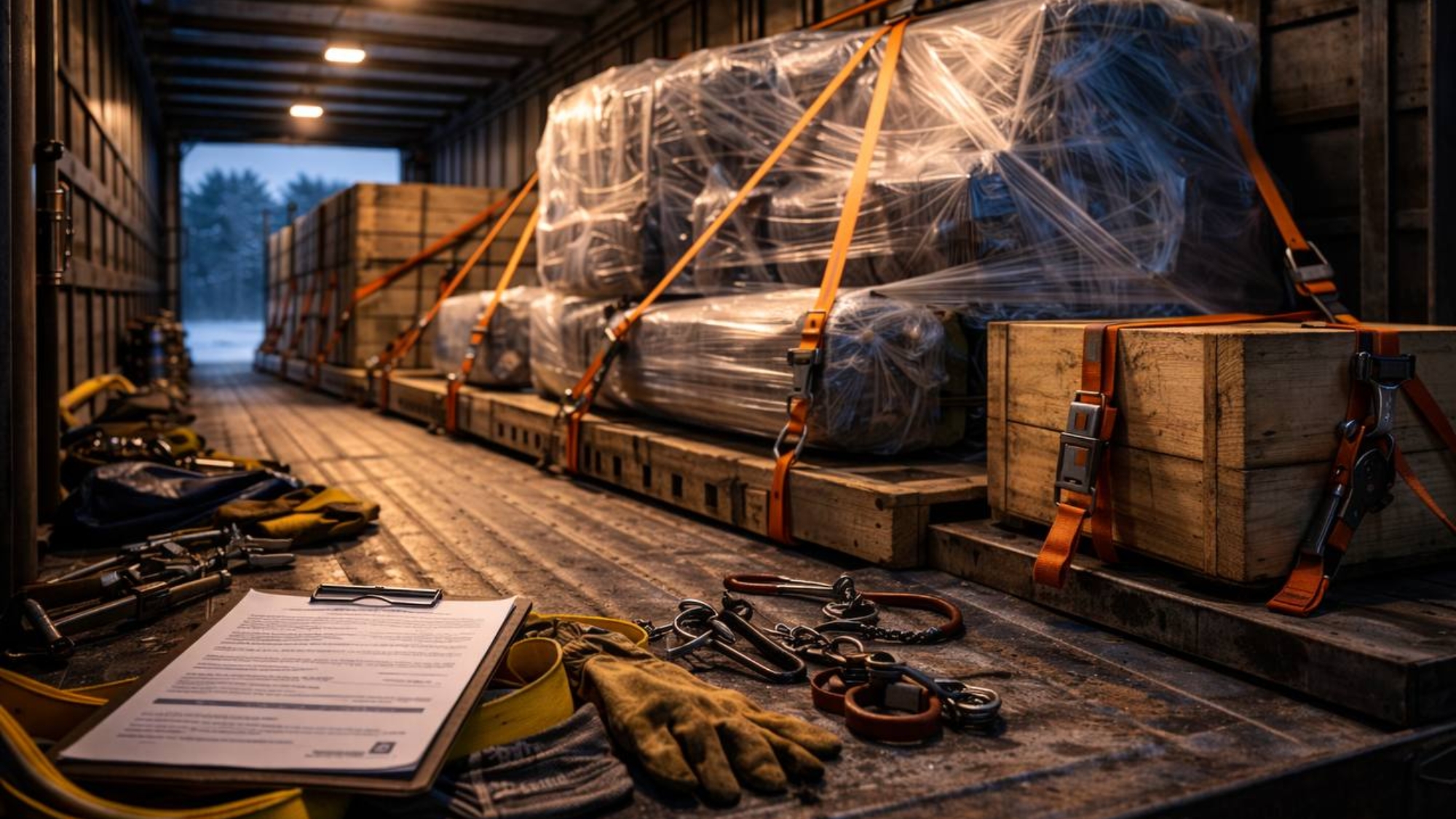
One of the key differences is how preparation is handled. With standard shipments, small imperfections in packing or securing may not lead to serious consequences. With complex cargo, even minor oversights can escalate quickly. A slight imbalance, an incorrect fixing point, or underestimated movement can lead to damage or instability during transport.
Another important factor is how the cargo interacts with the route itself. Road conditions, turns, braking patterns, and even weather start to play a much bigger role. The cargo is no longer just “being transported” – it is constantly reacting to external forces, and those reactions need to be anticipated in advance.
In day-to-day work at RoadFreightCompany, this is why planning for complex cargo always goes beyond standard checklists. It requires understanding how the shipment will behave in motion, not just how it looks at rest.
There are several critical points that define whether such a delivery will go smoothly:
- load stability under dynamic conditions, not just static positioning
- correct weight distribution across the entire cargo structure
- securing methods that match both the cargo type and the route profile
- preparation for handling at every stage, including unloading
These aspects are often underestimated, but they directly determine how the cargo will perform during transport.
Another layer of complexity comes from coordination. Complex cargo often requires more precise timing, specialized equipment, or additional handling steps. If any part of this chain is misaligned, it affects the entire process. This is why visibility and communication become even more important than usual.
A similar approach can be observed in projects connected to RoadFreightCompany, where attention is placed not only on transport itself, but on how every stage supports the next one. When this alignment is in place, the delivery becomes controlled rather than reactive.
What also matters is experience with this type of cargo. Complex shipments rarely behave exactly as expected, and the ability to recognize early signs of instability or risk often comes from practical knowledge, not theory. Small adjustments made at the right moment can prevent much larger issues later.
This is why handling such deliveries at RoadFreightCompany is built around anticipating behavior, not just following procedures. The goal is to understand how the cargo will react before it actually does.
In the end, transporting complex cargo is not about following stricter rules, but about applying a different level of attention. When everything is prepared correctly, the shipment moves through the system without unnecessary risk, even under challenging conditions. In our work at Road Freight Company, this is exactly what allows us to handle difficult cargo confidently – keeping it stable, protected, and fully under control from start to finish.